AUMISM
MANDAROM
The monastery, its temples and its monuments.
“I respect and love pilgrims of all traditions, whatever their way of seeking God.
May this feeling of Unity be shared by all religious egregores, so that the ideal of bringing the religions of the Earth closer together may progress.”His Holiness Lord HAMSAH MANARAH
(Le Flambeau d’Unité, p. 421)
Mandarom Shambhasalem
A place
of unity
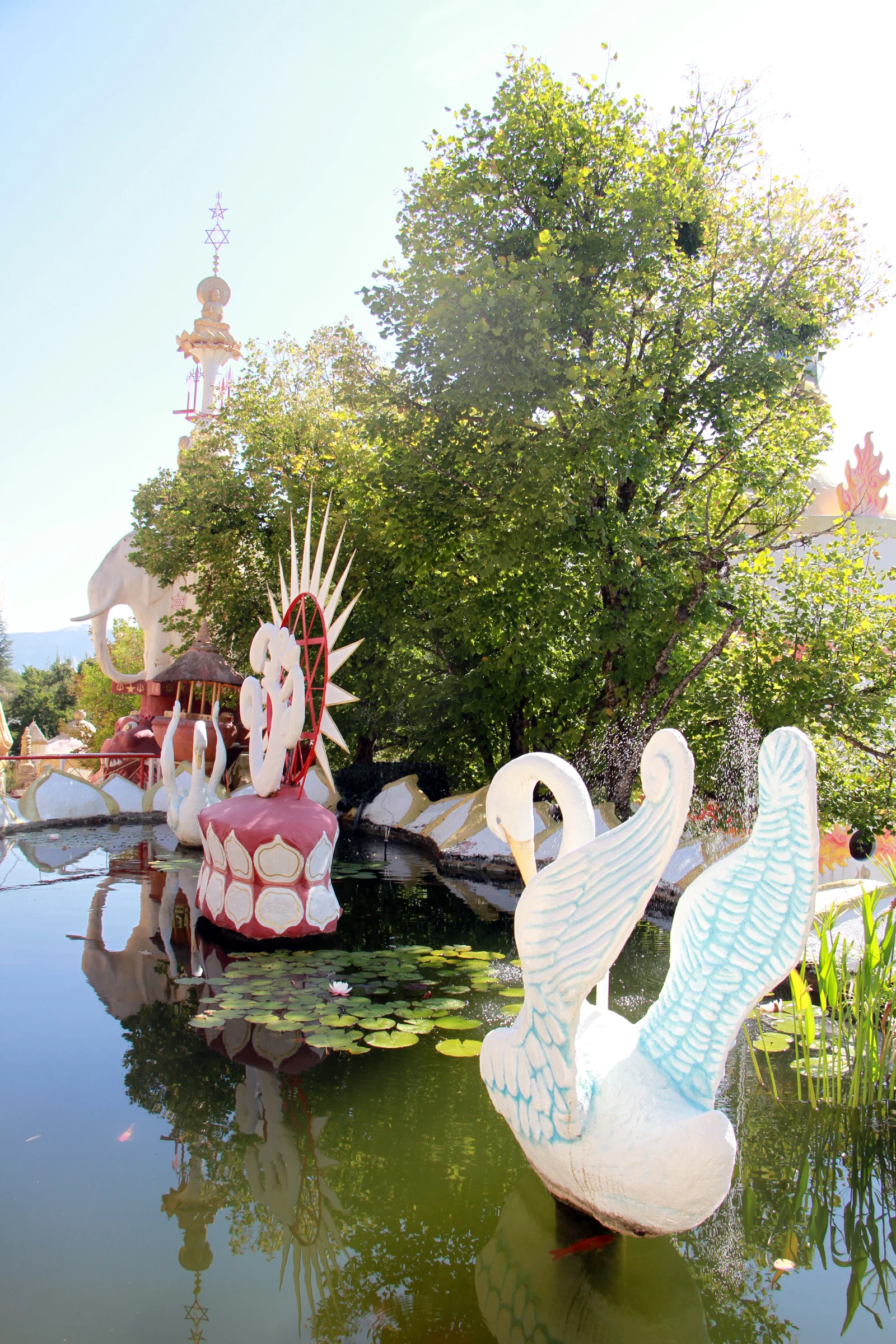
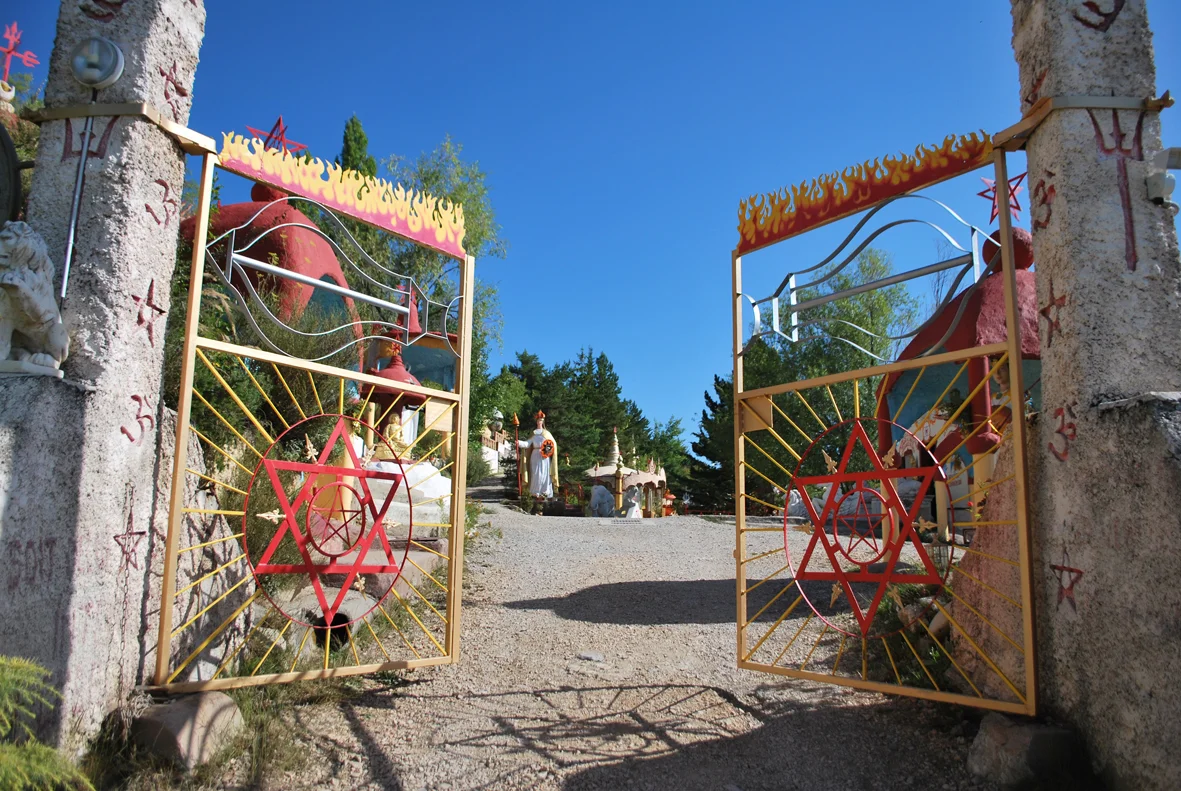
The monastery of Mandarom Shambhasalem was founded in 1969 by His Holiness Lord Hamsah Manarah. Located in the Alpes-de-Haute-Provence at an altitude of more than 1,200 metres, the Mandarom is a true open-air Temple where every Tradition has its place, expressing the universalist synthesis of Aumism, the religion of the Unity of the Faces of God.
From 1969 to 2026 · 57 years
The building
of the monastery
All the Temples of the monastery of Mandarom Shambhasalem were built by the monks, nuns and disciples, thus carrying on the tradition of the builder monks. They were very often helped by His Holiness Lord Hamsah Manarah himself, who lent a hand to the workers.
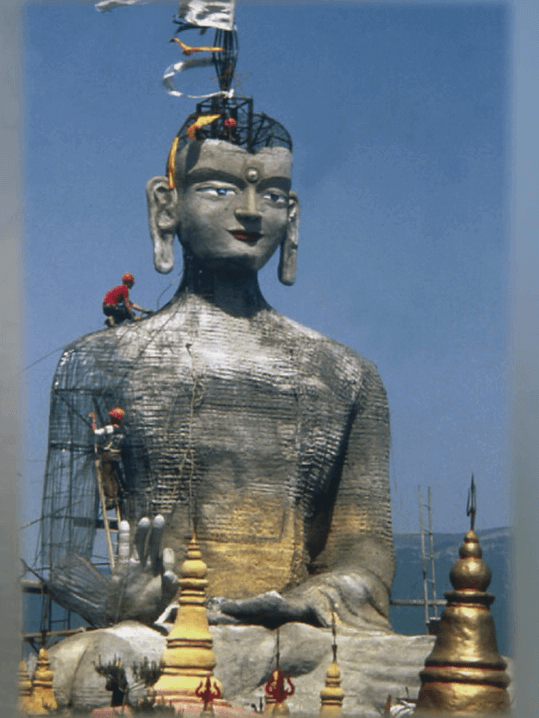
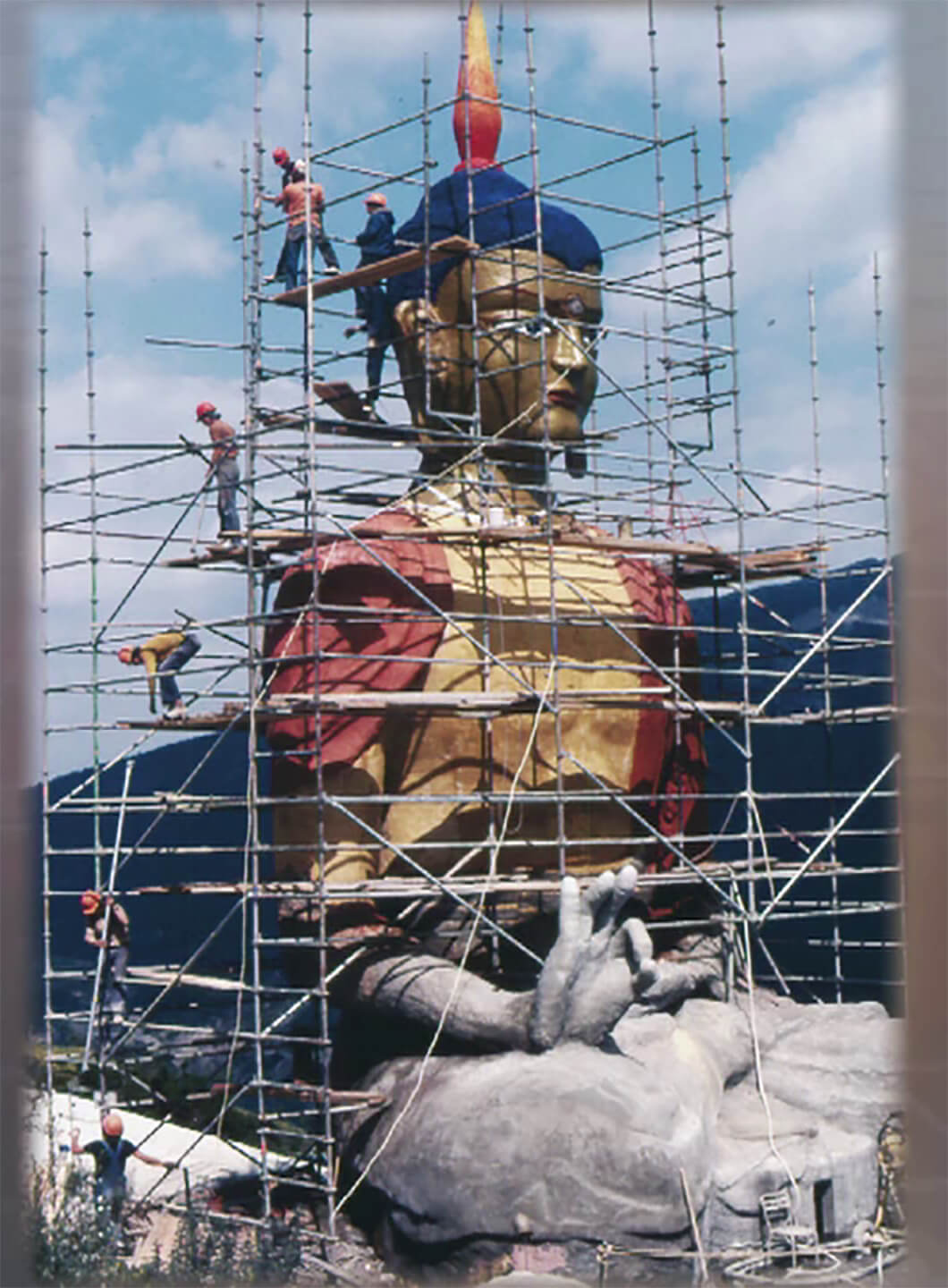
The building of the Maha Buddha
Mandarom Shambhasalem
Temples and
monuments
Unity of the Faces of God
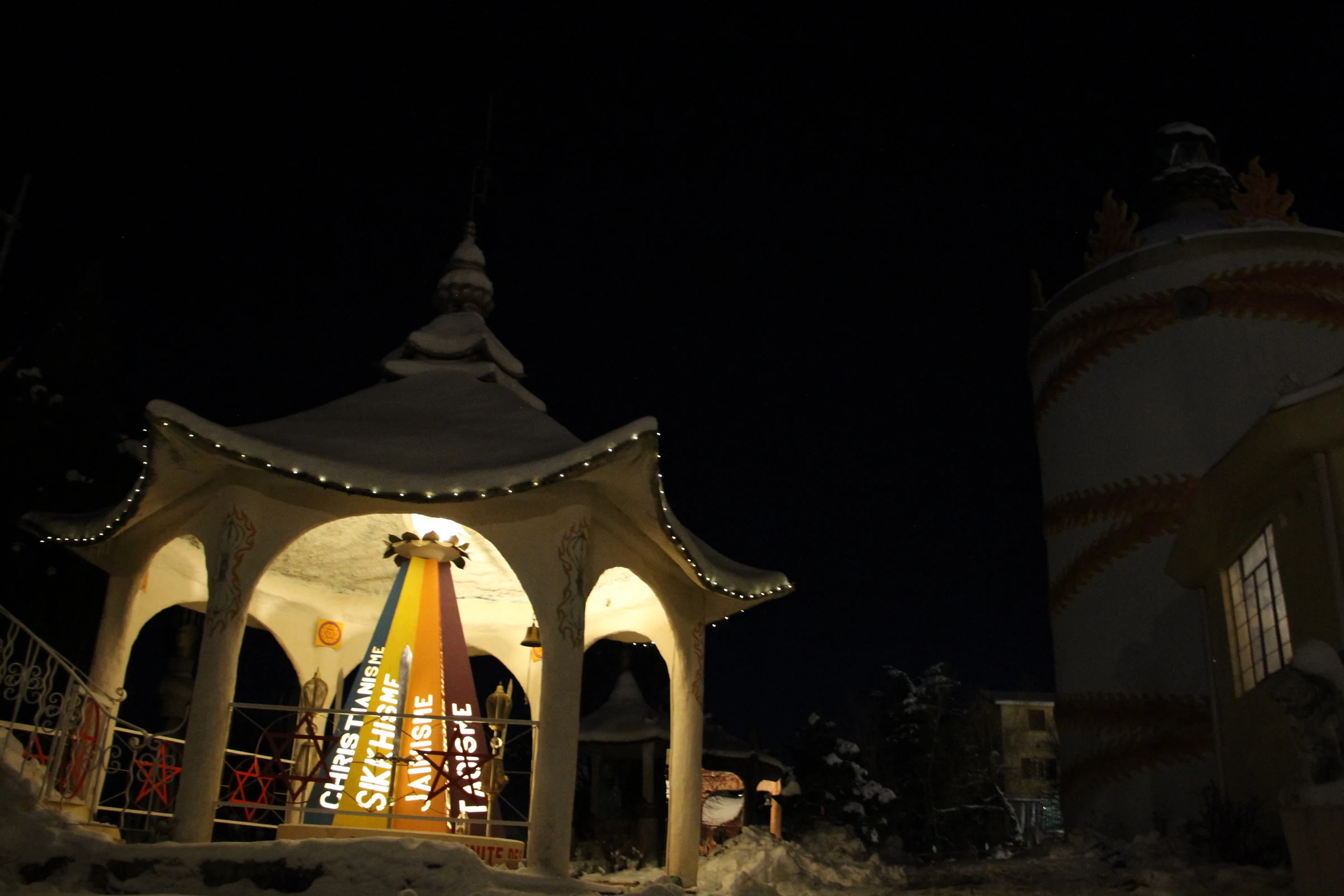
Traditions brought together

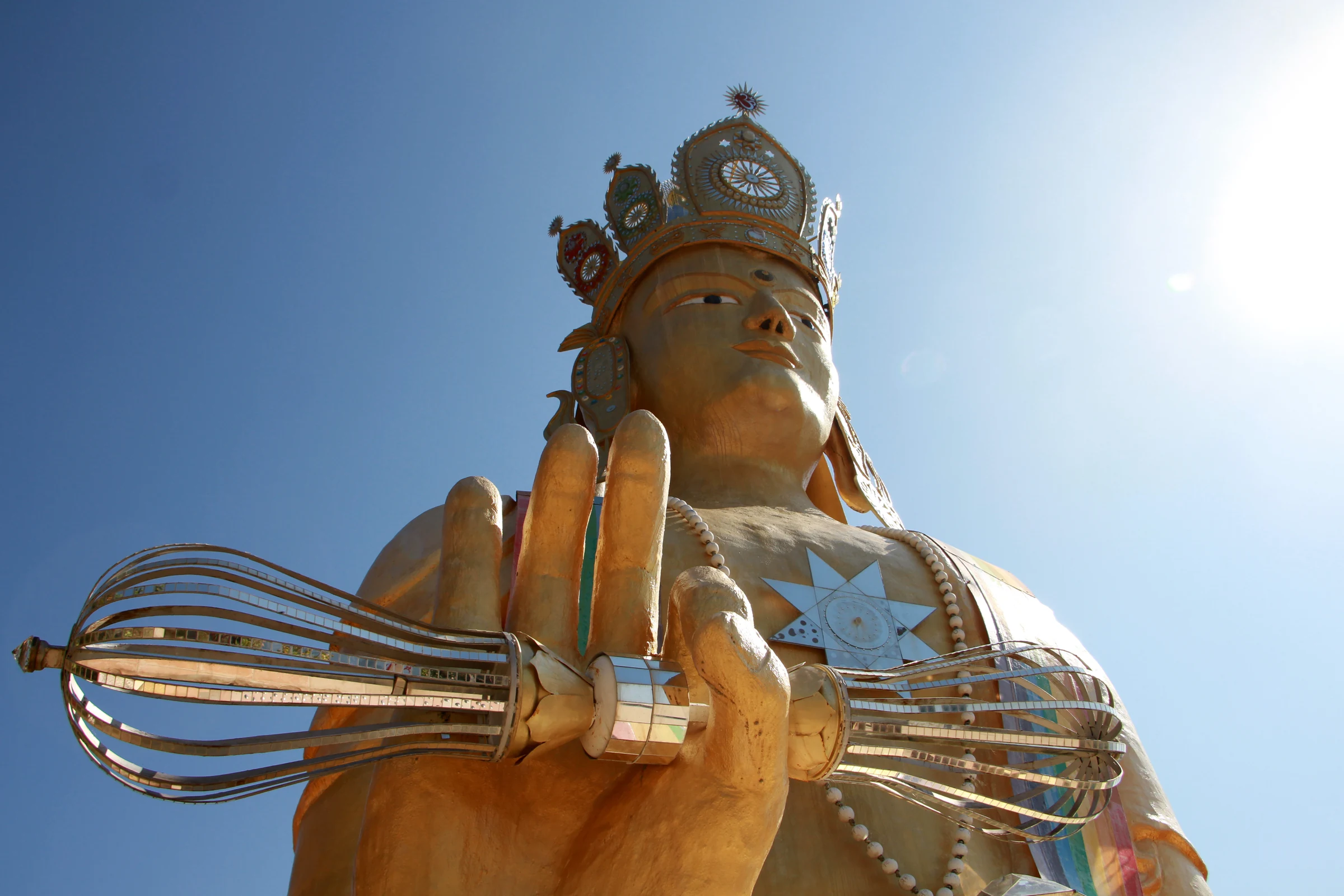
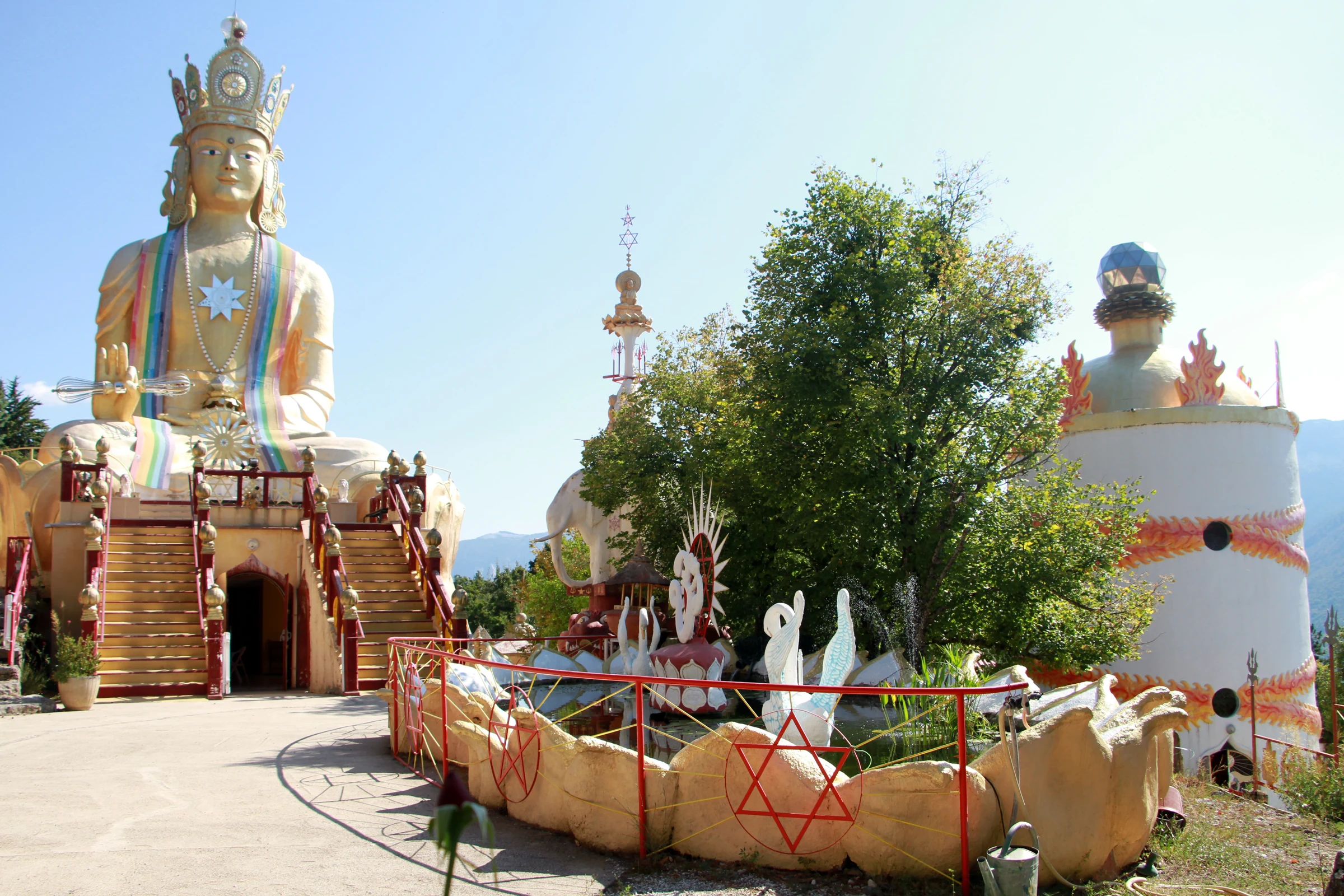
The statue of the MAHA BUDDHA MAITREYA
Construction of the statue of the Maha Buddha began on 1 March 1981 and was completed on 24 June of the same year. During the construction, Lord HAMSAH MANARAH fasted for seventy-two days while working on the site.
This 22-metre statue, an important symbol for Buddhism, symbolises the mystical East.
By its height, the Buddha of the monastery of Mandarom Shambhasalem is the tallest in the West and the 4th tallest seated Buddha in the world.
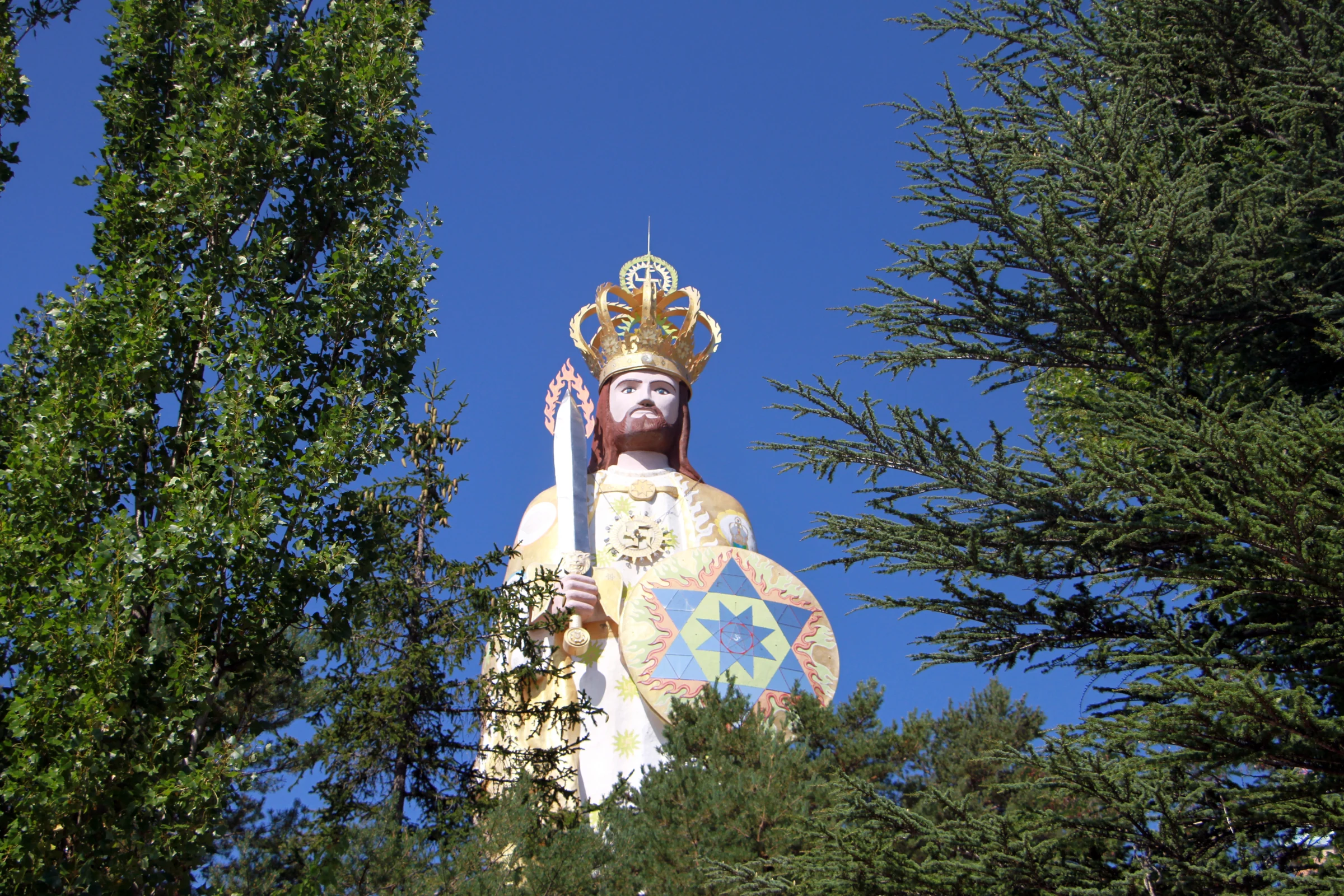
The statue of the COSMIC CHRIST
Built in 3 months during the summer of 1987, the 21-metre statue of Christ symbolises the mystical West and faces the Buddha.
In this way the ideal of peace and unity between the West and the East is represented:
“The gaze of the Christ merged with that of the Buddha is the symbol of tolerance and of the coming together of peoples.”
His Holiness Lord HAMSAH MANARAH
(L’Unité des Visages de Dieu, p. 96)


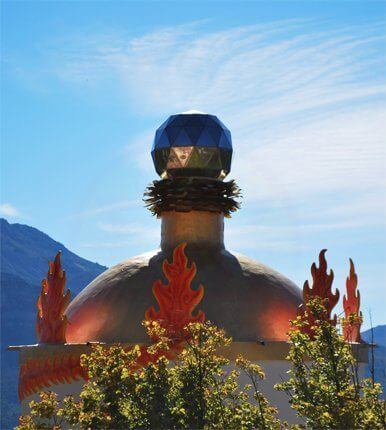
The mosque of the IMAM MAHDI
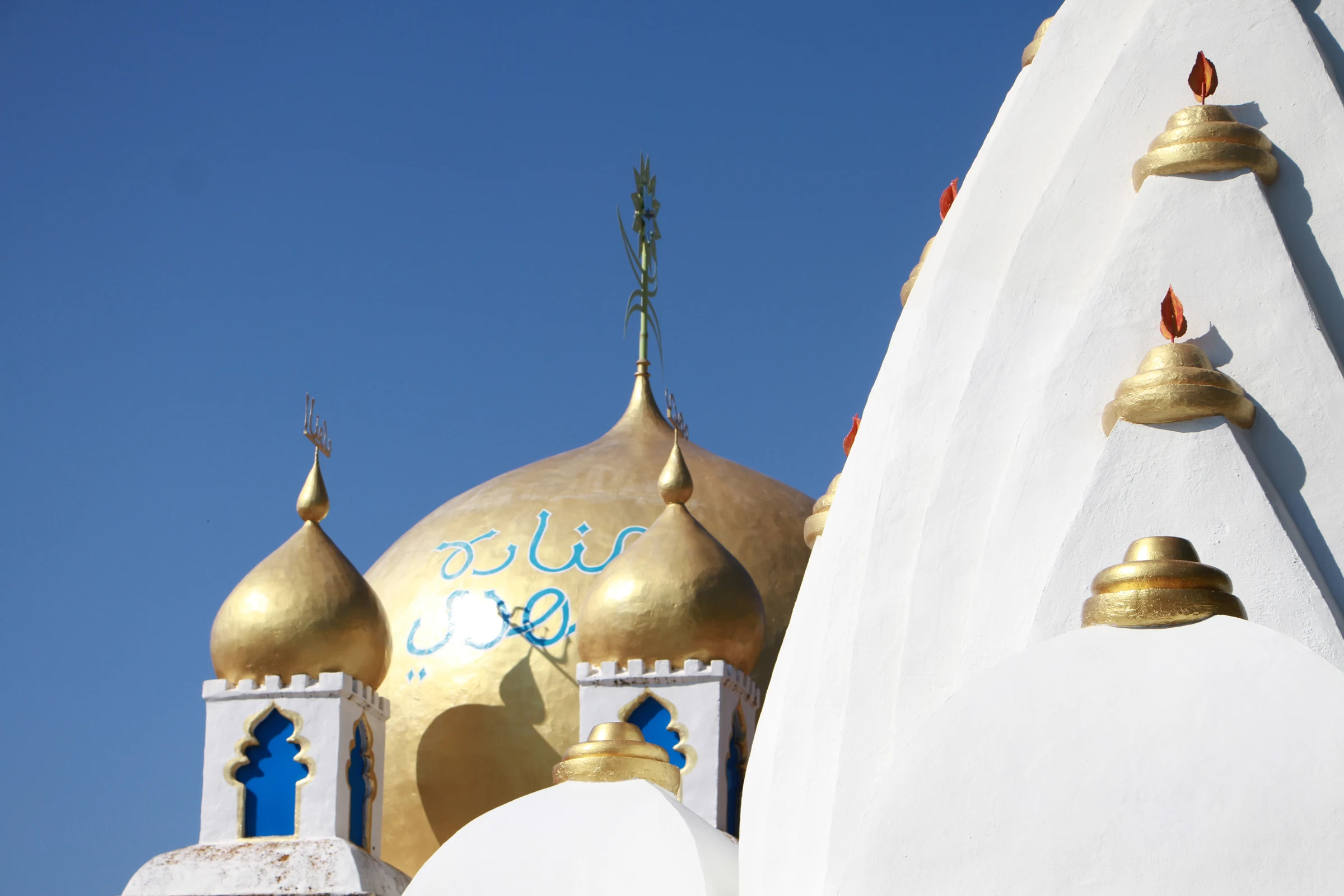
For Islam: this 11-metre-high mosque was built in July 1989.

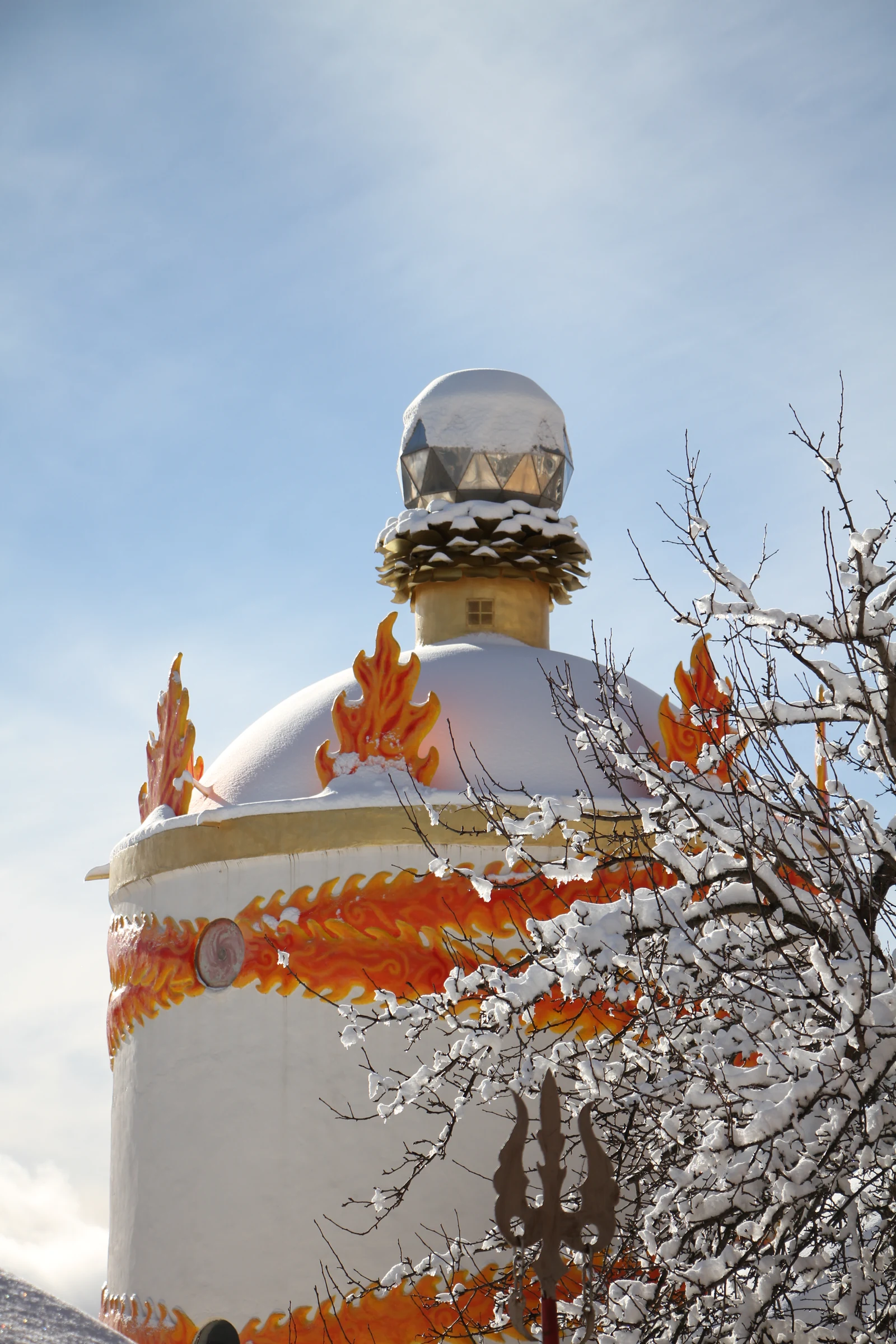
The Temple of the Avatar KALKI
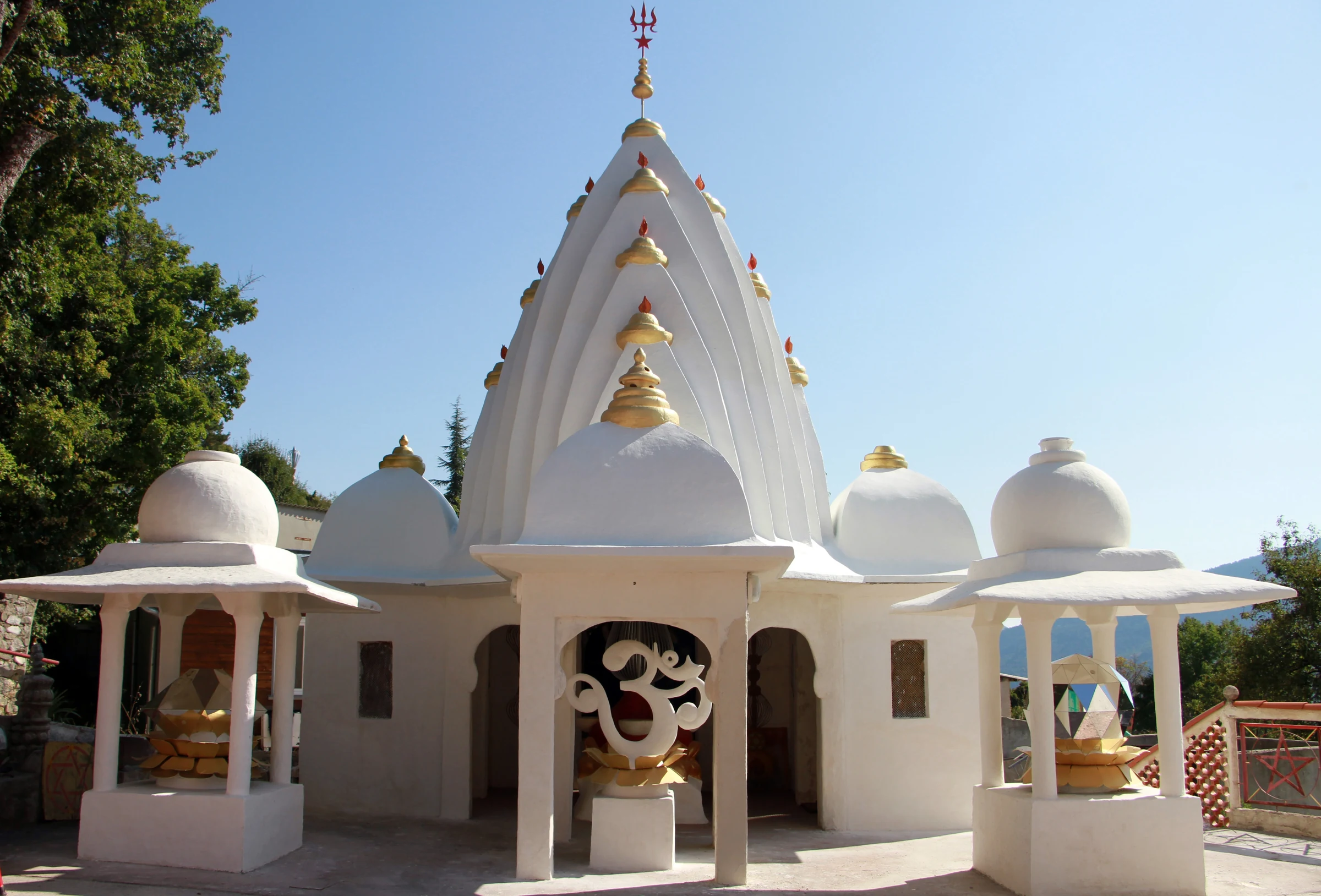
For Hinduism: this 15-metre-high temple in the shape of a Column of Fire was built in August 1989.

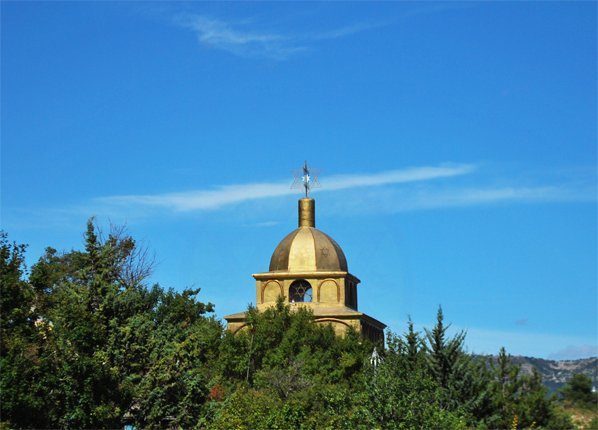
The Golden Temple of Lord MELCHIZEDEK
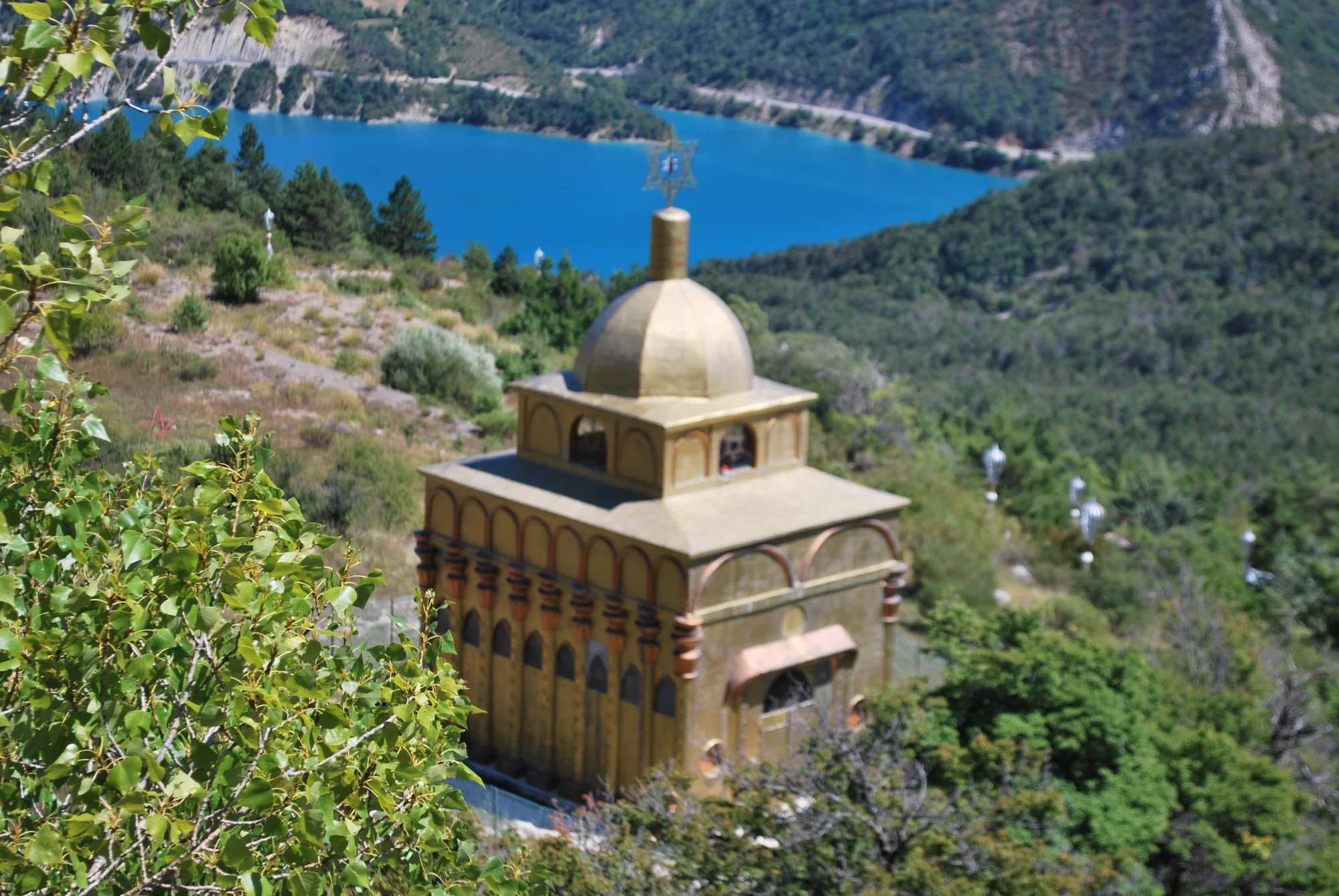
For Judaism: built during the autumn of 1989, the Golden Temple is dedicated to Lord Melchizedek, king of Justice and Peace.


A message of peace
The Cosmo-Planetary
Messiah
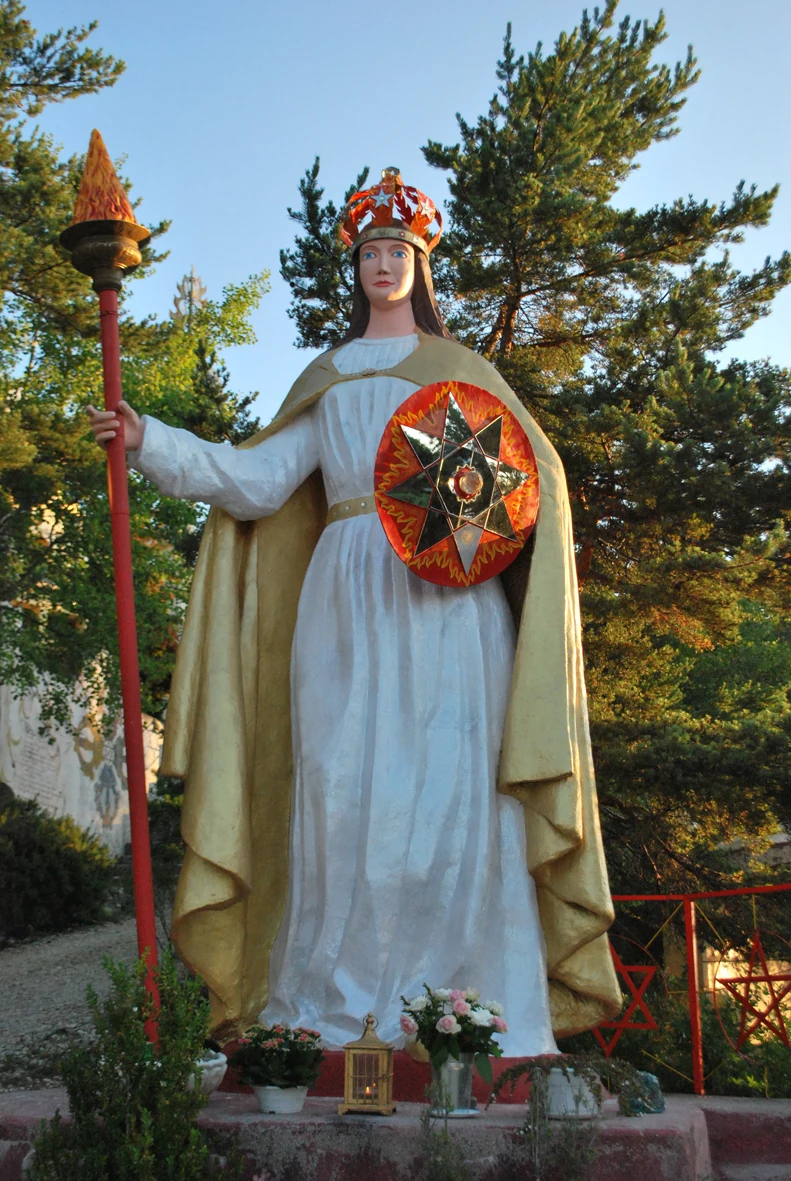
Built in 1990, the statue of the Cosmo-Planetary Messiah (33 metres high), one of the fundamental temples of the Aumist religion, symbolised the Unity of religions. It invites human beings to tolerance. It symbolises religious peace, the end of the atrocious scenes in which, in the Name of God, people kill, torture and massacre.
On 6 September 2001, it was destroyed by the public authorities on the pretext that there was no building permit. It was only in 2006 that the authorities admitted they had made a mistake and acknowledged the existence of a valid permit…
But the message lives on. Indeed, in a small temple, a statue of the Cosmo-Planetary Messiah can still be seen by visitors. It continues to remind everyone that one Light of the Eternal cannot be set against another Light of the Eternal.
“We wish that everyone who comes to us may find, according to their deepest inclination, the image that represents the Aspect of the Absolute they revere, the abstract symbol that speaks most to their heart.”
His Holiness Lord HAMSAH MANARAH
(Mémoires d’un Yogi, p. 308).
The Mandarom in pictures