SYMPOSIUMS
LECTURE
No. 1 – WHAT MEANING SHOULD WE GIVE TO THE ECOLOGICAL CRISIS?
No. 1 – WHAT MEANING SHOULD WE GIVE TO THE ECOLOGICAL CRISIS?
At the very start of the conference, this talk asks the question “What meaning should we give to the ecological crisis?”, because it is from meaning that the motivation needed for change is born. In French, the word sens means both “meaning” and “direction”. So we will look for the meaning of the “ecological crisis”, what it is trying to tell us and what direction it is showing us. Ecological uncertainty is one among others, at the social, economic, political, moral, religious and health levels… In this context, the word “crisis” is used in the sense of the Late Latin crisis: “a serious manifestation of an illness”.
We will therefore begin by applying this meaning to the ecological crisis.
Next, we will see that it also has another meaning…
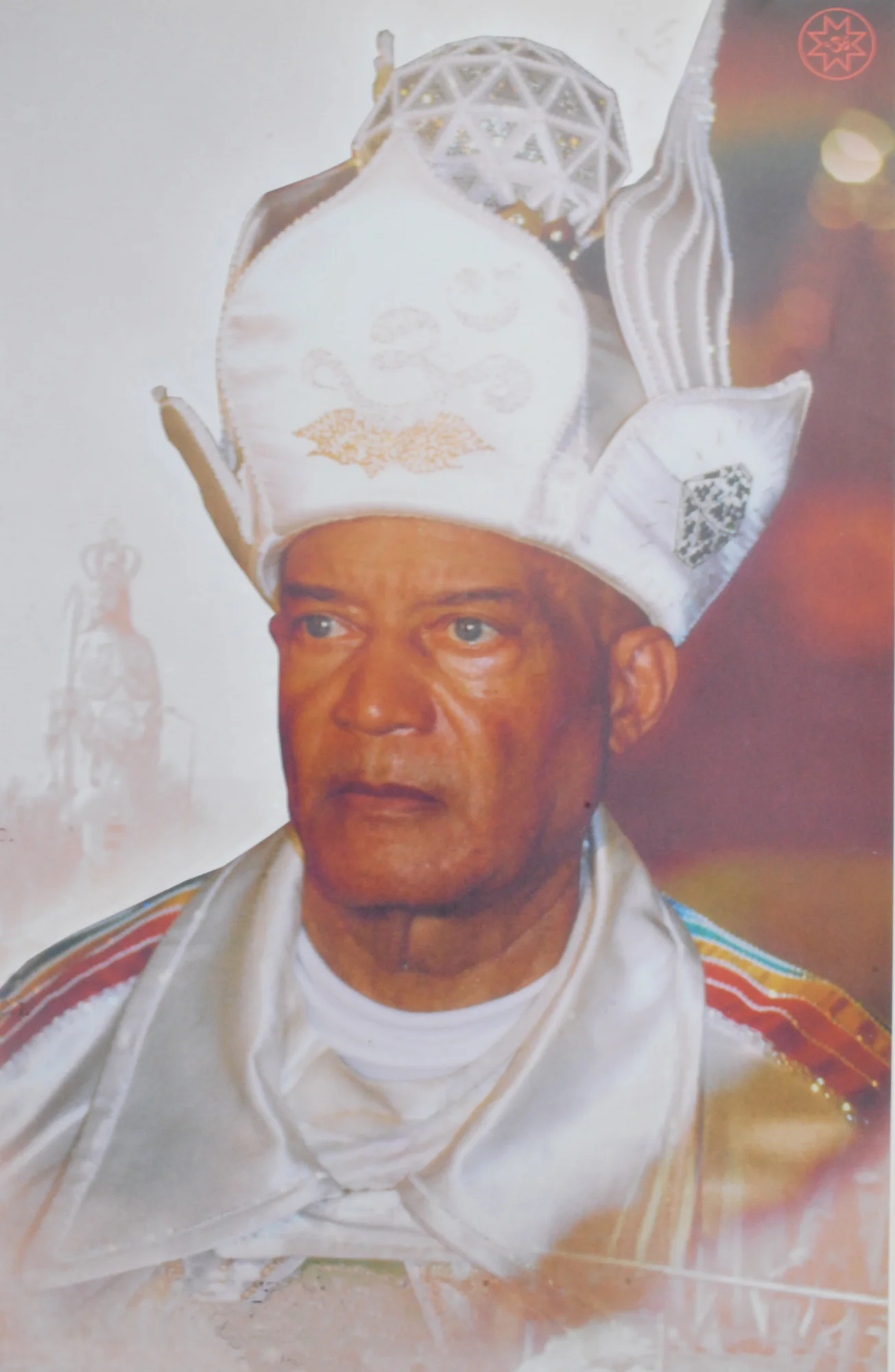
And finally, we will discuss the meaning it takes on according to the Teaching of His Holiness Lord HAMSAH MANARAH, founder of Aumism, in which ecology holds a central place.
I – THE ECOLOGICAL CRISIS AS THE MANIFESTATION OF AN ILLNESS
Ecology is the study of the relationships between living beings and their environment. But scientific studies show that nature is in danger, so today “ecology” is linked to its protection. You know the problems; let us simply recall, among others, that:
– air pollution causes about 9 million deaths a year[1]. One researcher speaks of an “air pollution pandemic”![2]
– ocean pollution has already created 500 dead zones, where life is no longer possible[3].
– as for our planet’s soils, about 33% are polluted[4].
The various forms of aggression against nature are intertwined and, broadly speaking, lead to two major problems:
– global warming[5]
– and an unprecedented degradation of biodiversity[6].
We know it, we suffer from it: the planet is in a critical state.
But catastrophism does not help.
When the media endlessly replay alarmist images and commentary, this feeds:
– individualism, which, fearing the future, clings to Everything, right now,
– defeatism, generated by the fear of a blind fate.
We end up sinking into a mental pollution that mixes anxiety, guilt and resentment towards those we hold responsible for the problems. This culminates in an apocalyptic imagination in which we forget that thought is creative.
“Man becomes what he thinks,” says Lord HAMSAH MANARAH; “what he sows in the present will be reaped in the field of his future.”[7]
Moreover, the state of our minds affects the state of the world, and the combination of selfish and hateful thoughts brings about the violence of wars and cataclysms[8]. Likewise, the combination of altruistic and kindly thoughts fosters peace. (On this subject, see Le Yoga de l’Amour dans la Force.)
So let us not be accomplices of catastrophism. Let us turn instead to the constructive meaning of the word “crisis”, from the Greek krisis, which means decision or choice, and calls on our discernment and our will to find a way out.
II – THE ECOLOGICAL CRISIS AS AN OPPORTUNITY FOR CHANGE
Environmental damage is largely linked to unbridled human behaviour. Consequently, and here is the opportunity to seize, human beings have the power to turn things around. It is a matter of adopting more responsible behaviour. Some people understand this.
The advances of a new ecological consciousness are multiplying.
We see associations concerned with the common good mobilising to protect endangered species, to denounce the sale of toxic products, to support sustainable development that is fair for all, and so on. Students are refusing to work for polluting companies[9]. Young people all over the world are proclaiming their right to a future[10]. The aspiration for change is emerging at the level of global organisations: let us mention IPBES, which speaks of the need for “transformative change” (2019 report), and the head of the UN Food and Agriculture Organization (FAO), who presents international cooperation as essential in the fight against food waste[11]. The world is moving, and this is very important! But it is not yet everyone. The response to the emergency is not yet massive.
So what is holding back change? Mainly divisions.
In everyday life, the ecological ideal often coexists with practices that are less so… Among citizens, there are those who, even though they have enough to consume reasonably, demand the means to consume “ever more”, and those who, on the contrary, want to preserve natural resources. Among governments, discussions about the environment are a step forward, but divisions lead to delays and withdrawals despite the urgency… And there are still too many who, in a posture of domination over the kingdoms of nature, claim the right to exploit it and profit from it at the expense of the poorest and of future generations.
“Profit, money, fame and power are the four plagues festering in the relationship between man and his living environment,” observes the founder of Aumism.
The divisions that have damaged the planet are hindering its healing… The Earth needs unity. And it is to help us find the path to a unity that respects diversity that His Holiness Lord HAMSAH MANARAH places His Teaching at the service of all human beings without distinction.
III – THE MEANING OF THE ECOLOGICAL CRISIS ACCORDING TO AUMISM, AND THE POSSIBLE WAY OUT
Accepting change in good time would have spared us the present trials. But the more we postpone change, the more the situation deteriorates, and the more effort it takes to climb back up the slope.
Today, the crisis is a mirror for human beings who have gone too far in their contempt for the living world.
It forces them to see that it is no longer possible to go on like this. When you are heading straight for the reefs, you absolutely must change course. This need to make a fresh start belongs to the history of humanity. It marks a change of Cycle. Humanity must change its mentality, break with the mental state of hatred and division, called here the Iron Age, and open up to that of reconciliation and fraternity, called the Golden Age.
The four Ages of humanity according to Aumism are presented in particular in Le Yoga de l’Amour dans la Force, chapter 12. The notion of Ages is also present in other Traditions. We are going through a period of transition in which a heavy energy that holds us in the violence of the past still overlaps with a new energy that raises us towards a future respectful of life. We must make a choice: for or against a liberating change, for or against the Golden Age.
In his “fight for the rights of future generations”, Commander Cousteau, that lover of the oceans, issued a call that is more relevant than ever: “Instead of repeating ‘after me, the flood’, let us have the audacity to cry: ‘After us, the Golden Age’.”[12]
Aumist ecology helps us make this fresh start. Aumism does not claim to be the only religion to advocate respect for the environment. In Jainism, for example, Ahimsa, non-violence towards all that lives, has come down through the millennia. Various religions today speak out in favour of nature; in particular, one may read Pope Francis’s encyclical Laudato Si’[13]. What we share with you here that is specific is an essential Teaching of Lord HAMSAH MANARAH, who states: “Ecology and the protection of the environment are an integral part of Aumist mysticism, for man can no longer squeeze Nature dry and abuse her riches.”[14]
1 – Aumist ecology recalls the Unity of the Living, which changes our relationship with ourselves and with all the kingdoms.
– On the one hand, the Divine is present in everyone: “The sound OM (the creative Sound, the Word of Life) beats in every mineral, every plant, every animal and every human being.”[15] This implies respect for the different forms of life.
– On the other hand, the human being is not outside nature: he evolves in such close interdependence with all the kingdoms that if he destroys them, he destroys himself. (This will be explained in the next talk with the Evolutionary Pyramid of the Kingdoms of Nature.)
Our way of dividing everything and setting everything in opposition generates human violence, which provokes nature’s reactions. That is why Lord HAMSAH MANARAH gives us this key: “Think collectively of your intrinsic Unity, and you will be preserved from all natural disasters.”[16] Everyone can feel this unity to some extent by recharging in a place that is still wild. The explorer Paul-Émile Victor, for his part, testifies: “I was alone on the ice cap. (…) For the first time, I had the feeling of being part of this living globe…”[17] Changing our relationship with Nature means helping it through action and through prayer. The prayer of OM, in particular, fosters harmony between the different kingdoms and the evolution of all.
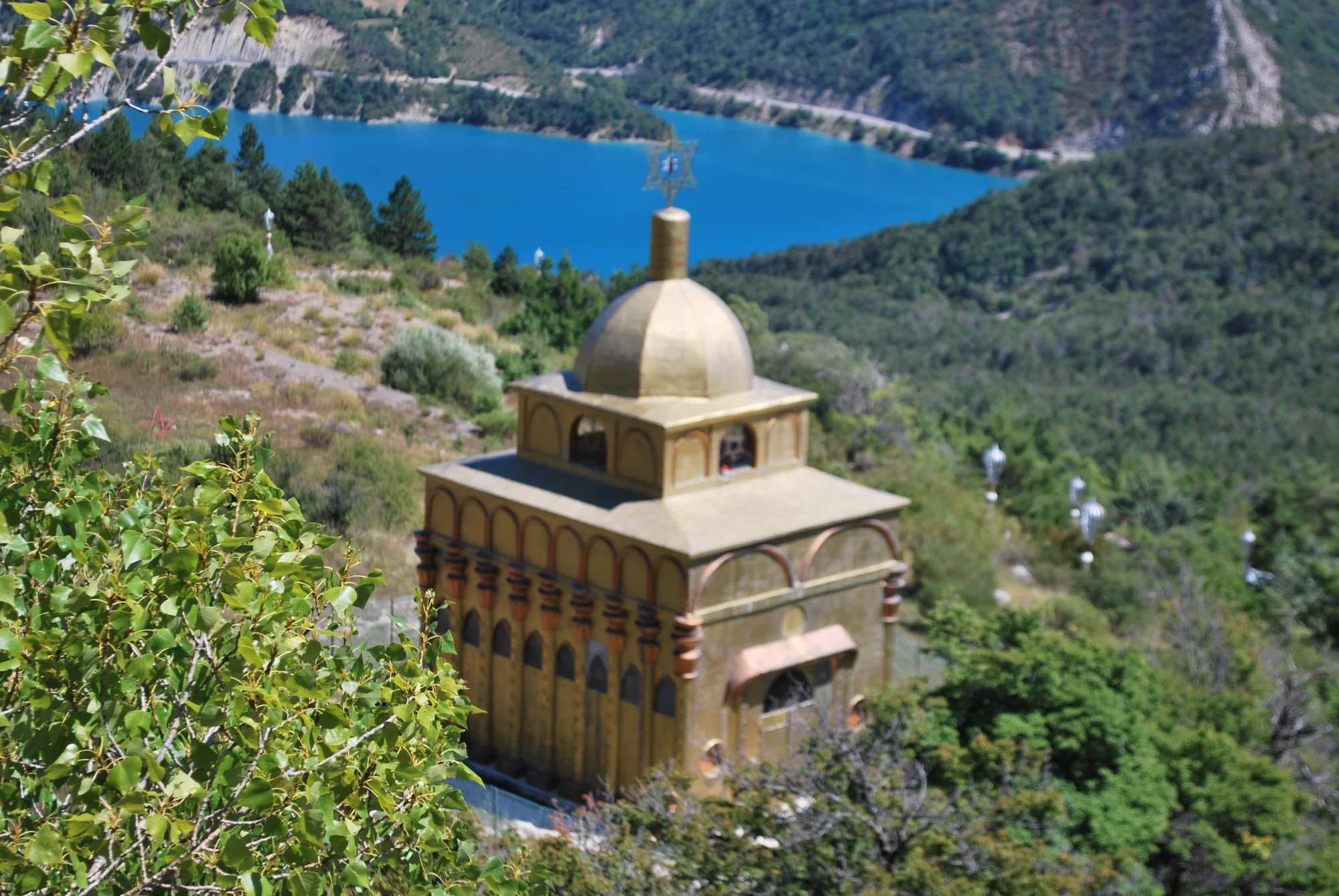
At the universalist monastery of the Mandarom, founded by His Holiness Lord HAMSAH MANARAH, the blessing for human beings as well as for minerals, plants and animals is repeated several times a day.
2 – Aumist ecology shows the need to change our relationship with others and to move beyond divisions.
“Beyond their differences, human beings must know how to unite at the bedside of their living environment, sick from being overexploited and polluted.”[18]
This common goal, centred on the general interest, requires cooperation. We experience this during disasters, when mutual aid is spontaneous. At the global level, let us note this success: the only treaty ratified by all UN members, the Montreal Protocol, led to the international ban on CFCs (chlorofluorocarbons), shrinking the hole in the ozone layer![19]
The founder of Aumism calls on all human beings to show “international and interreligious solidarity, a solidarity that ignores borders and the barriers of race and religion”[20]. This is a profound change of hearts and minds. It is each person’s inner change that drives collective changes and makes them last. What would happen if individuals remained stuck in the divisions of the past, even within an ecological project? The motives would be different, but selfishness and intolerance would recreate exclusion, injustice and violence that would again disturb the planetary environment. We must break out of the cycle of hatred. In support of right action, Lord HAMSAH MANARAH invites believers and non-believers alike to help, through kindly thoughts, “heads of State, peoples and nations, so as to prepare a future of social harmony and peace”[21].
From now on we must open ourselves to what connects us, and respect in each person the Divine, which is the same for all. If one is not a believer, one must respect in each person the principle of Life. It is a matter of growing in humanity, of restoring the moral and spiritual meaning of the notion of growth, of developing more love, which, in Aumism, is both the goal of life and an indispensable step on the inner path towards the “divinisation of Man”.
TO CONCLUDE
The “great reconciliation between all the kingdoms” that characterises the Golden Age is the only thing that can preserve life on the planet.
During this conference, which cannot be exhaustive, we will therefore discuss some concrete avenues for change according to the Aumist Teaching, with regard to animals, agriculture, food, climate disruption and an ethics that can be applied in daily life. The written Teaching of Lord HAMSAH MANARAH gives everyone, because all human beings are concerned, not only the Knowledge needed at this turning point in our history but also practical advice and spiritual keys that ease the passage to the Golden Age, both inner and planetary.
“If only,” He tells us, “I could give every human being the idyllic vision of what the Golden Age is, and of the joy there is in living in a world of peace, fraternity and solidarity, I am convinced there would be no man and no woman able to say no to the Golden Age…”[22] But He adds that while He opens the way for us, He cannot take it in our place.
For every responsible change rests on the act of choosing. Today, if we want to save our planet, the most realistic choice is that of the solidarity that unites, of love for all that lives, of love in Strength. And it is up to us. As a matter of urgency.
V. Mandaja
Doctor of Education Sciences
*******
[1] Study published in the European Heart Journal.
[2] “Our findings show that there is an air pollution pandemic“, says Thomas Münzel (University of Mainz, Germany), co-author of the study published in the journal of the European Society of Cardiology, Cardiovascular Research.
[3] www.unesco.org (marine pollution).
[4] http://www.fao.org (Food and Agriculture Organization of the United Nations). Maria Helena Semedo, at World Soil Day 2018 in Rome.
[5] See the 2018 report of the IPCC (Intergovernmental Panel on Climate Change).
[6] See IPBES (Intergovernmental Science-Policy Platform on Biodiversity and Ecosystem Services).
[7] S. HAMSAH MANARAH, La Révolution du Monde des Vivants et des Morts, p. 428.
[8] S. HAMSAH MANARAH, Le Maître Spirituel et le disciple, p. 285.
[9] See the Manifeste pour un réveil écologique (Manifesto for an ecological awakening, 2018).
[10] See the climate marches with Greta Thunberg in 2018.
[11] Mr Qu Dongyu, 7 November 2018 in Rome, “Global Symposium on Soil Pollution”.
[12] Commander Cousteau, leaflet: Un combat pour les droits des générations futures (A fight for the rights of future generations), 1993.
[13] See also the collective works Écologie et spiritualité (Albin Michel) and Faire la paix avec la terre (Jouvence).
[14] S. HAMSAH MANARAH, L’Aumisme, la Doctrine de l’Âge d’Or, p. 199.
[15] S. HAMSAH MANARAH, La Révolution du Monde des Vivants et des Morts, p. 198.
[16] S. HAMSAH MANARAH, Vers un Âge d’Or d’Unité, p. 275.
[17] Paris Match magazine, March 1995.
[18] S. HAMSAH MANARAH, La Révolution du Monde des Vivants et des Morts, p. 443.
[19] Sciences et Avenir, 8 January 2018.
[20] S. HAMSAH MANARAH, Une Loi pour détruire le Mal, p. 88.
[21] See S. HAMSAH MANARAH, Le Yoga de l’Amour dans la Force, p. 302.
[22] S. HAMSAH MANARAH, Une Loi pour détruire le Mal, p. 234.