SYMPOSIUMS
LECTURE
No. 1 – ECONOMIC JUSTICE, A LEVER FOR PEACE
No. 1 – ECONOMIC JUSTICE, A LEVER FOR PEACE
Economic justice can be defined as a principle of fairness in the redistribution of economic benefits at national or international level. It is linked to social justice, which is founded on equal rights for all peoples.
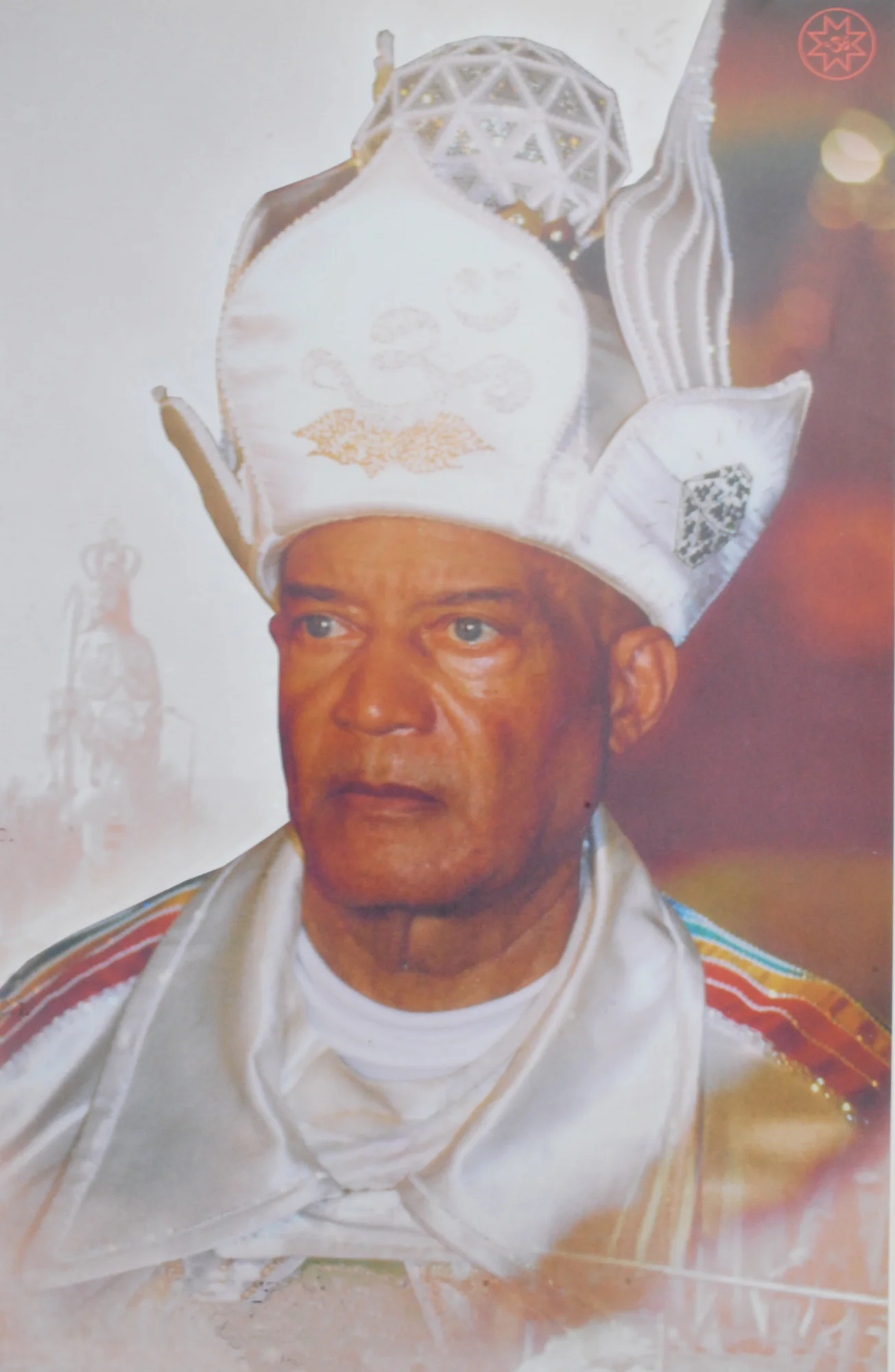
Lord HAMSAH MANARAH tells us: “The Golden Age requires better economic justice, a better balance of the world’s wealth.” [1]
We will therefore look at:
– The link between economic inequality and conflict
– The link between economic justice and peace
– The struggle for greater economic and social justice
– Economic and social justice according to the Aumist Teaching
I – THE LINK BETWEEN ECONOMIC INEQUALITY AND CONFLICT
Global economic inequality poses a major challenge to our humanity.
A few observations:
– World wealth is concentrated in the hands of a minority. According to the World Inequality Lab, the richest 10% alone hold 75% of global wealth. [2]
– The gap between poor and rich countries leads to unequal access to basic necessities, housing, health care and education: in poor countries, children are 13 times more likely to die before the age of five than in rich countries. [3]
– The gap between men and women [4]: according to some estimates, it will take another 134 years to achieve equality of income and legal rights! [5]
1 – The absence of economic justice causes conflict
Economic inequality is a source of tension and confrontation. Among other things:
– Poverty combined with frustration and a sense of injustice can lead to riots and revolutions.
– The marginalisation of young people in precarious situations can put them in the pay of violent, antisocial groups.
– Poverty can lead to mass migrations of people who are poorly received in other countries.
In the end, the absence of economic justice, which creates unequal human relationships, is a source of conflict: some set themselves up as dominators, while others are forced into dependence.
2 – In turn, conflicts increase economic inequality
A few facts:
– “Up to 21,000 people die every day around the world from hunger made worse by conflict.” [6]
– Countries thousands of kilometres away from a conflict can pay a high price. For example, as soon as the war with Russia began, part of Ukraine’s grain exports intended for emerging countries was blocked.
– Wars may be aimed at seizing precious resources (minerals, diamonds, rare earths), with some seeking to enrich themselves at the expense of others.
Having looked at some of the relationships of cause and effect between wars and inequality, let us now consider:
II – THE LINK BETWEEN ECONOMIC JUSTICE AND PEACE
1 – Economic development fosters peace
Our first reflex is to think that it is enough to boost growth in order to increase overall wealth and therefore the standard of living. But economic growth does not automatically reduce inequality. It may benefit only the wealthiest and heighten the tensions caused by injustice!
To contribute to peace, growth must strengthen economic and social justice for all. When living conditions improve, frustration decreases, trust and cohesion grow, and conflicts subside.
Two telling examples:
– Land reform in Costa Rica in the 1940s and 1950s: a fairer redistribution of farmland reduced the economic gap between large landowners and peasants. The country enjoyed a period of social stability.
– Microcredit, introduced in Bangladesh in 1983 with the Grameen Bank, the Village Bank, by Muhammad Yunus, Nobel Peace Prize laureate: millions of people, especially women, gained access to small loans to start economic activities. This created a climate of peace in rural areas. The chairman of the Nobel Committee stressed: “Lasting peace cannot be achieved unless large population groups find ways in which to break out of poverty. Micro-credit is one such means.”
Indeed, the motto of the International Labour Organization is: “If you desire peace, cultivate justice”!
2 – Peace creates an environment favourable to positive growth
Countries with very high levels of peace have achieved stronger growth in GDP per capita. Conversely, countries with low levels of peace have seen GDP growth fall (Vision of Humanity, 2024, “Peace and prosperity: an essential partnership for nations”).
One example: when Japan chose economic development over military development, it became one of the world’s leading economic powers.
The World Day of Social Justice, on 20 February, linked to economic justice, recalls that “social development and social justice are indispensable for the achievement and maintenance of peace and security within and among nations…” [7]
“Development is the new name for peace,” said Pope Paul VI. [8]
III – THE FIGHT FOR ECONOMIC JUSTICE: A STRATEGY FOR PEACE
1 – Reducing inequality must meet new challenges
Society has changed since the strong growth of the 1990s, in particular with:
– global warming, which hits the most vulnerable first,
– the Covid-19 health crisis, which deepened inequality in a world where half the population has no access to basic health care, [9]
– financial crises,
– armed conflicts, economic wars and widespread rearmament, which require budgetary efforts at the expense of social aid.
All these events have widened inequality despite global wealth.
Fortunately, we can pay tribute to the men and women of goodwill who continue, in every country, to work to reduce inequality.
2 – Economic justice is on the move!
In the face of systems founded on private interests and national selfishness, voices are being raised to show the need for reasoned growth that improves living standards for all.
A few examples:
For Amartya Sen, Indian philosopher and 1998 Nobel laureate in economics, a “welfare economics” goes beyond measuring development by income growth: other values must be added, such as access to education and health.
Jean-Paul Maréchal, honoured by the Académie des sciences morales et politiques, outlines both the theory and the practice of a humanised economy. [10]
For Esther Duflo, 2019 Nobel laureate in economics and a field scientist, “only a better distribution of wealth will make it possible to help the poorest.”
Éloi Laurent, a researcher at the French Economic Observatory (OFCE), brings together ecological challenges and social issues in his book Économie pour le XXIe siècle. Manuel des transitions justes [11]:
Gender equality is put forward as a strategy for economic development. [12] According to the NGO CARE, “reducing gaps in employment and entrepreneurship could increase global gross domestic product by more than 20%.” [13]
A “global justice project to think about and build a fairer, more democratic and sustainable twenty-first century” is planned by the World Inequality Lab. [14]
There is no shortage of solutions for putting human beings back at the heart of the economy: more than ever, justice is essential as a duty of solidarity and as a condition for planetary peace.
IV – ECONOMIC AND SOCIAL JUSTICE ACCORDING TO THE AUMIST TEACHING
Lord HAMSAH MANARAH confronts humanity with the consequences of its excesses:
“You have built your human justice on disregard for the laws of God (…) That is why injustice reigns everywhere in your worlds.” [15]
The Golden Age cannot be built “on a world of social and economic injustice, on an Earth where extreme wealth and extreme poverty live side by side. On an Earth subject to the god of money and the goddess of profit”. [16]
Hence the need for a change in our behaviour, and for clear-sighted responsibility at every level.
Choosing to share
In the 5th law of the Golden Age, the 2nd principle is: “You shall never be like the miser, sitting on his treasure chest, leaving the world to starve or souls to take their own lives in despair.” [17]
A global rebalancing requires “restraint and wisdom” [18] at the level of States and at the individual level.
In daily life we can put sharing and sobriety into practice. As Gandhi said: “Live simply so that others may simply live.“
A right attitude towards money
According to the Aumist Teaching, it is not money itself that is at fault, but the way human beings use it.
Money should be neither an object of contempt nor of guilt. In today’s society, it is desirable and legitimate to earn money to ensure a decent life for oneself and one’s family. We should wish for prosperity for all on this Earth.
But the appetite for money for its own sake must not make us forget all moral and spiritual values: those who become slaves to the “god of money” seek to satisfy their greed for material goods and their desire for power and glory by any means, even the most dishonest.
As for profit, it proves necessary to “reduce profit among the privileged without seeking to cancel the motivation of those who own money, the engine of the economy.” [19] Without being abolished, profit can help the most deprived.
Fortune can go hand in hand with wisdom for those who know how to “regard themselves as the temporary managers of the goods they have acquired”, making solidarity an act of redistribution. [20]
Social aid as help towards autonomy
“Social aid weighs on every country,” says Lord HAMSAH MANARAH. [21]
States “must prepare to intervene to help the poor and the deprived”, but this is not a matter of dependency on handouts. They must “help the citizens of each nation to take charge of themselves” and to win their autonomy, among other things through “the development of natural resources and their rational and intelligent use”.
World Federalism, the keystone of economic justice
In this age of globalisation, people are able to unite to fight scourges that cross borders. But when it comes to sharing wealth more fairly, individual and national selfishness are major obstacles, not to mention economic warfare, fertile ground for the domination of one country over others.
It is time to move beyond the economic and social inequalities that stand in the way of lasting peace. This requires representatives of all countries, people of integrity motivated by international peace, whose mission is to safeguard the collective interest of the planet.
The founder of Aumism says on this subject: “The great world Economic Power presupposes the adoption of a world Federalism. This system presupposes that nations wish to live together and in peace. It further presupposes the acceptance of new rules.” In particular, “pooling efforts to maintain a social and economic balance, a distribution of wealth, and the safeguarding of the different parts that make up the heritage of humanity.” [22]
“This international community organisation must include in its programme:
– Eliminating poverty and economic and social injustice.
– Achieving lasting prosperity.
– Raising the standard of living: increasing the happiness of the people of the Earth.” [23]
IN CONCLUSION
Faced with the state of the world and with fatalistic discourse that highlights human powerlessness, many struggle to imagine that a better world could emerge and that everyone could contribute to it.
But the Golden Age is nothing other than a change of mentality, accompanied by a moral and spiritual renewal and a will for Unity.
This change of mentality is an immeasurable force for moving towards greater justice and towards peace. It is expressed in this text by Lord HAMSAH MANARAH:
“I am one with Almighty God
Present in the rich and the poor of the Earth,
May prosperity with fairness
Be granted to all.
May everyone have enough to eat.
May national selfishness recede.
May avarice recede.
May the relations between
Humankind and money become moral.
And may it be given to each
According to the Law of abundance, which is:
‘If you know how to give, you will receive,
If you know how to love, you will be loved.’ (…)
May economic and social justice be restored
And may every people be self-sufficient,
May the law of sharing and solidarity become planetary
So that the Golden Age of brotherhood may come.” [24]
OM
V. Shambara
*******
[1] L’Aumisme, La Doctrine de l’Âge d’Or, p. 281
[2] https://www.inegalites.fr/inegalites-patrimoine-monde
[3] https://www.who.int/fr/news/item/06-05-2025-health-inequities-are-shortening-lives-by-decades
[4] https://www.weforum.org/publications/global-gender-gap-report-2024/
[5] https://blogs.worldbank.org/fr/voices/relever-les-ambitions-du-groupe-de-la-banque-mondiale-en-faveur-de-l-egalite-homme-femme
[6] https://www.oxfamfrance.org/communiques-de-presse/21000-personnes-meurent-chaque-jour-dans-le-monde-a-cause-de-la-faim-aggravee-par-les-conflits/
[7] https://www.un.org/fr/observances/social-justice-day
[8] Encyclical Populorum Progressio, 87, 26 March 1967
[9] https://www.oxfam.org/fr/comment-la-pandemie-de-coronavirus-exploite-les-inegalites-extremes
[10] Jean-Paul Maréchal, Humaniser l’économie, Desclée de Brouwer, 2008
[11] Éloi Laurent, Économie pour le XXIe siècle. Manuel des transitions justes, La Découverte, 2023
[12] https://reports.weforum.org/docs/WEF_GGGR25_Press_Release_FR.pdf
[13] https://www.carefrance.org/actualites/egalite-femmes-hommes-un-levier-essentiel-de-developpement-mondial/
[14] https://inequalitylab.world/fr/projets-et-outils/
[15] L’Aumisme, La Doctrine de l’Âge d’Or, p. 286
[16] Ibid., p. 283
[17] La Loi d’Évolution des Âmes, p. 316
[18] L’Aumisme, La Doctrine de l’Âge d’Or, p. 286
[19] Ibid., p. 274
[20] Le Yoga de la vie pratique, p. 236
[21] L’Aumisme, La Doctrine de l’Âge d’Or, p. 273
[22] L’Aumisme, La Doctrine de l’Âge d’Or, p. 279
[23] Ibid., p. 273
[24] Vers un Âge d’Or d’Unité, p. 43