SYMPOSIUMS
LECTURE
No. 5 – FACING CLIMATE CHANGE
No. 5 – FACING CLIMATE CHANGE
Introduction:
The year 2020 was the hottest year since 1873, when systematic temperature measurements began in Paris, at the Parc Montsouris. It is now certain: we will have to face a warming of the climate.
This talk has four parts.
The first part presents some natural climate variations, the greenhouse effect, and the influence of human activity on the greenhouse effect, which can disrupt the climate. The second part is devoted to a successful experience in developing scientific research in the countries of the South, to illustrate what is possible in the face of global warming. The third part offers avenues for collective action. Finally, we will conclude with the need for a collective consciousness to save the planet.
I – A little science
The climate of our planet goes through cycles of warming and glaciation with periods of several tens of thousands of years. Before we can understand the causes of these glacial periods, we need to introduce a few scientific notions. Our planet has many movements. Two main movements govern our daily lives: the rotation of the Earth on its axis, which produces the alternation of day and night, and the revolution of the Earth around the Sun over a year in the ecliptic plane, which is the plane containing the orbit of the Earth around the Sun[1].
In fact, the Earth has other movements, and three of them are important for climate variations: eccentricity, obliquity and precession.
See the figure at the bottom of the page, taken from the website http://glaciers-climat.fr/Glaciations_2/Periodes_glaciaires_2.html. It makes these variables easy to understand:
Eccentricity defines the shape of the orbit.
Obliquity describes the tilt of the Earth relative to the ecliptic, and it varies between 21.8° and 24.4°.
Precession is a change in the direction of the Earth’s axis of rotation (the spinning top effect).
These three movements have different periods: 100,000 and 413,000 years for eccentricity, 41,000 years for obliquity, and 23,000 and 19,000 years for precession.
Milutin Milanković’s theory uses these three movements to calculate the sunlight received by the Earth. This theory made it possible to describe the Earth’s glacial cycles[2], which have periods of tens of thousands of years. With these three movements, the Earth’s temperature can rise by 2 degrees above an average value (warm period) and fall by 6 degrees (cold period). We are currently in an interglacial period and the Earth’s temperature will decrease, but this may take several hundred years, or even longer. In the years to come, it will not be able to offset the rise in temperatures we are now observing.
Other factors act on the climate more occasionally: volcanoes and sunspots.
Volcanoes
Volcanoes send “dust” into the atmosphere that forms a screen and prevents solar radiation from reaching the Earth, so temperatures cool.
Tambora is a volcano that forms the Sanggar peninsula on the island of Sumbawa in Indonesia. It produced the largest eruption ever recorded, with an explosion equivalent to 800 megatons of TNT. The most powerful atomic bomb ever detonated was the Soviet Tsar Bomba, at 50 megatons. The atomic bomb dropped on Hiroshima was 0.2 megatons. The volcanic winter caused by the eruption of Tambora in 1815 led to enormous food shortages throughout the Northern Hemisphere. Global temperatures fell by 0.4 to 0.7°C. Note that this decrease was temporary.
Sunspots
Sunspots follow an 11-year cycle, with maxima and minima. In the 17th century, from 1645 to 1715, there was a period during which sunspots practically disappeared (known as the Maunder Minimum). The Earth’s temperature fell by about 1°C, producing the “Little Ice Age”. Some of the solar radiation that floods the Earth is emitted around these sunspots. The disappearance of sunspots for several decades produced a 1°C drop in temperatures. This phenomenon has been observed only once[3] since 1610, the date of the first systematic observations of sunspots.
The greenhouse effect
The greenhouse effect is a natural phenomenon. Energy from the Sun passes through the atmosphere. Part of this energy is sent back into space. The surface of the Earth is warmed by the Sun and radiates heat back towards space. The greenhouse gases in the atmosphere (water vapour, carbon dioxide (CO2), ozone, methane, nitrous oxide…) retain part of the heat radiated by the Earth. Without the greenhouse effect, the Earth’s average temperature would be -18°C. With the greenhouse effect, the average temperature is 15°C.
The causes of global warming
Human activities create gases that strengthen the greenhouse effect, because these gases take a long time to leave the atmosphere. Carbon dioxide (CO2)[4] accounts for half of the polluting gases. It comes from activities that burn coal, oil or gas (heating, transport, factories, household life…) and from deforestation, since forests absorb carbon. Methane also strengthens the greenhouse effect. It comes from the decomposition of certain materials (rubbish dumps, flatulence from cows, buffalo, goats…, marshes, melting ice, leaks from oil wells, coal mines). Other gases come from refrigerators and air conditioners or from the use of fertilisers. All these polluting gases raise the Earth’s temperature and have serious consequences: ever more intense droughts and floods, melting ice, rising sea levels, endangered animal species…
The model of development we chose has certainly improved life for many human beings, but it has also led to the degradation of our planet and the loss of biodiversity with the disappearance of many animal species, to the pollution of the oceans, to a widening imbalance between rich and poor countries, and to climate disruption. It is now important to become aware of this, to change our behaviour and our relationship with nature and animals, and to change in order to restore the balance of our planet. The solutions are known (stop using fossil fuels, end intensive livestock farming, preserve our forests, protect biodiversity, etc.). They must be put into practice.
The IPCC, the Intergovernmental Panel on Climate Change, created in 1988[5], regularly warns governments of the urgent need to act to limit rising temperatures. In December 2015 in Paris, 195 countries adopted the COP21 agreement. The agreement aims to hold global warming “well below 2°C above pre-industrial levels and pursuing efforts to limit the temperature increase to 1.5°C” (Article 2 of the agreement).
II – A successful experience
In this part we present a successful experience showing that some collective behaviours can be changed by introducing ethical rules into projects and by working on synergies. This experience concerns scientific research. Some space-related subjects were developed only in rich countries. In 1991, the United Nations launched the development of space science across the planet, especially in Africa, where there were very few instruments for measurements in space, resources were scarce, and students wishing to pursue this field emigrated to rich countries and never returned home. In the past, some studies of the space environment in French-speaking Africa had been carried out by French researchers who brought in the instruments or made airborne measurements, then went back to France with the data to use them for their own benefit, very rarely having trained a single African student.
These behaviours had to change and certain rules had to be imposed.
Scientists therefore organised projects bringing together countries of the North and the South, with researchers from some countries donating instruments, researchers organising schools, and researchers popularising science in schools. All of this was done within a scientific network. No structure was created to achieve this: researchers of goodwill from the North, ready to share their knowledge or their tools, were brought together. Training schools were held in various African countries, and after each school several highly motivated students were supervised for doctoral theses. The institutions of the professors taking part in these schools paid for their plane tickets. The professors were fed and housed by the host country and taught free of charge.
This network model, developed in the French-speaking area[6] since 1991, was then taken up worldwide in 2005. This network, called ISWI (International Space Weather Initiative), relies on the goodwill and motivation of its participants and brings together researchers from 90 different countries[7]. In the French-speaking network, 58 doctoral theses have been defended in some fifteen different countries, and all the students except two (who changed countries for family reasons) obtained positions in their home countries. The network is now self-sustaining, because the first students trained have become professors in their countries and have introduced new space science curricula in their universities. Young Africans no longer need to emigrate to have access to space science, a field in full expansion in the age of satellites, which are now used in many disciplines.
We will conclude with these words of Nelson Mandela:
“Education is the most powerful weapon which you can use to change the world.”
III – Ways to act collectively
Many public figures and associations are working for greater solidarity among all human beings and with nature, in an ecological approach. In this part we bring together their various proposals.
Religion
In his encyclical Laudato Si’, Pope Francis “invites everyone to cooperate in protecting our common home, and to understand how urgent the challenge before us is… We need a global educational pact that educates us in universal solidarity and a new humanism.“
The Pope is the spiritual leader of one and a half billion Christians, and for this global educational pact he has reached out to religious authorities of Islam.
Economy
An international network, the Network for Economic Method, created by Henry K. H. Woo[8] in 1989, brings together economists developing new methods for growth without inequality. This network works with the United Nations “promoting inclusive and sustainable economic growth, employment and decent work for all. Sustainable economic growth will require societies to create the conditions that allow people to have quality jobs that stimulate the economy while not harming the environment. Job opportunities and decent working conditions are also required for the whole working age population[9].”
Youth
Greta Thunberg[10], a young Swede, after persuading her parents to adopt a way of life that reduced their own carbon footprint, began in August 2018, at the age of 15, to spend school days in front of the Swedish parliament calling for stronger action against climate change, holding a sign that read “School strike for climate”. She was followed by millions of young people around the world, and many associations were created to support her action. “Youth for Climate”[11] groups have spread across the whole planet, bringing together young people who mobilise for climate and social justice and for the protection of the environment and biodiversity.
Politics
France has a Ministry for the Ecological Transition[12], and on 20 September 2020 the Minister, Barbara Pompili, announced a series of measures to the National Assembly.
Excerpts from her speech:
“I am here to announce that the Government is today making a major turn for wild animals in our society. Big cats, elephants, monkeys, dolphins and mink: it is time to open a new era in our relationship with these animals…
First measures taken:
– the gradual end of wild animals in travelling circuses;
– the end of the presence of orcas and dolphins in dolphinariums unsuited to their needs as marine mammals;
– the end of mink farming for fur in France;
– and support for the collective efforts of zoos to improve the conditions in which animals are kept.“
It should be noted that on the website of the Ministry for the Ecological Transition, in the public policy section, there is a part devoted to the climate, including adaptation to climate change.
International organisations
The Secretary-General of the United Nations, António Guterres, declared in New York on 9 March 2020: “Climate change: we must unite or we are lost.” António Guterres believes that the pandemic illustrates the harm done by disunity among States[13]. Everyone can act individually (reducing waste, sorting rubbish, eating less meat, insulating homes, etc.) and also collectively in all the areas covered in this part: religion, research, education, politics and international organisations.
IV – A great deal of consciousness
Today, more and more human beings have become aware
- that we must change to save our planet, overexploited by uncontrolled energy development
- that we must protect the decimated forests
- that we must protect the flora ravaged by fertilisers
- that we must protect endangered animal species
- that we must help one another and reduce inequalities
Ecology is a science defined as the study of the environments in which living beings live, and of the relationships between these beings and their environment (the ecologist’s field). It is also a doctrine that seeks a better balance between human beings and their natural environment, and the protection of that environment.
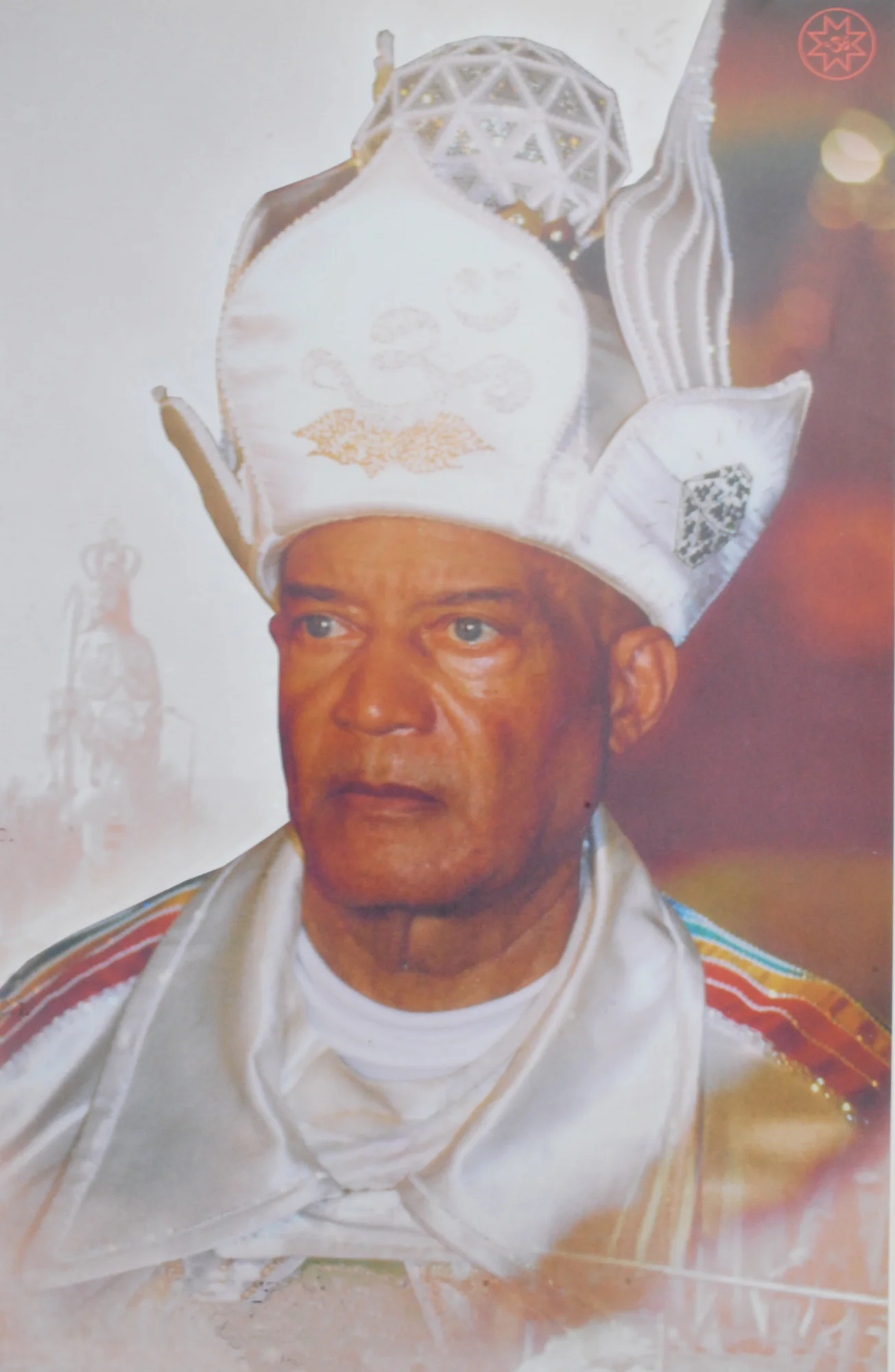
Aumism is a dynamic philosophy that includes ecology. In his book L’Aumisme, la Doctrine de l’Âge d’Or, His Holiness Lord HAMSAH MANARAH gives a code of honour for human beings towards the kingdoms of Nature[14]. He also defines the role of scientists, who must act in full consciousness[15], and addresses the essential role of education[16].
“In the face of the serious challenges of globalisation and the environment, it is urgent that ever more human beings open themselves to the universal message of Love and Peace advocated by Aumism, so that they can benefit from it and spread the positive and luminous techniques taught by the Messiah Hamsah Manarah, such as this one:
“It is enough, regularly, at least twice a day, to send thoughts of Peace and Love in the six directions of space, like this:
May Love, Peace, Happiness, Prosperity, Light, Knowledge, Felicity and Bliss be for all beings in all directions of space, to the north, to the east, to the south, to the west, to the zenith and to the nadir.
This way of blessing the world and the universe is a vital contribution to feeding the river of Love created by people of goodwill.”
Here is the link to this short video: https://aumisme.org/alimenter-le-fleuve-damour/
Conclusion
In this talk we have presented various natural causes of cooling and warming of the planet’s temperatures. We are currently living through a warming caused by human beings, which must absolutely be reduced if we are to give our children a liveable Earth. Scientists have warned us, and many of us are now concerned about the danger ahead if we do nothing. It is important to develop a collective consciousness among human beings, and with animals, plants and minerals.
Christine AMORY-MAZAUDIER
Expert to the United Nations on satellite navigation
Consultant at ICTP/UNESCO on space weather physics
*******
[1] The ecliptic plane is the plane that contains the centre of gravity of the Sun and the centre of gravity of the Earth orbiting the Sun. This plane, projected to infinity, is used to define a coordinate system for locating stars. It is so named because eclipses are observed in this plane.
[2] Milutin Milanković (often spelled Milankovitch), Serbian engineer, astronomer, geophysicist, inventor and climatologist, born on 28 May 1879 in Dalj, Austria-Hungary (now Croatia), and died on 12 December 1958 in Belgrade, Yugoslavia (now Serbia).
[3] Legrand J.P., M. Le Goff, C. Mazaudier, On the climatic changes and the sunspot activity during the XVIIth century, Annales Geophysicae, 8 (10), 637-644, 1990.
[4] The influence of CO2 on rising temperatures is explained (in French) on the website https://planet-terre.ens-lyon.fr/article/variations-climatiques-bases.xml.
[6] www.girgea.org
[7] www.iswi-secretariat.org
[8] https://www.routledge.com/authors/i16032-henry-woo#bio
[9] https://www.un.org/sustainabledevelopment/economic-growth/
[10] Greta Thunberg – Speech, Quotes & Activism – Biography
[11] Website: https://youthforclimate.fr
[12] Website: Ministry for the Ecological Transition (ecologie.gouv.fr)
[13] Reported by the Reuters agency. Source: Newswire/REX/SIPA.
[14] L’Aumisme, la Doctrine de l’Âge d’Or, p. 191: The code of honour of human beings towards the kingdoms of Nature.
[15] L’Aumisme, la Doctrine de l’Âge d’Or, p. 171: Science and spiritual evolution.
[16] L’Aumisme, la Doctrine de l’Âge d’Or, p. 235: Prepare children for the Golden Age.