SYMPOSIUMS
LECTURE
No. 6 – RESPECT FOR THE DIFFERENT RELIGIONS IN THE LIFE OF AUMISTS
RESPECT FOR THE DIFFERENT RELIGIONS IN THE LIFE OF AUMISTS
The theme of this talk is the respect that Aumists show to all religions. Indeed, “being an Aumist means developing the feeling of Unity and Universality; it means loving one’s country faithfully without forgetting to be a citizen of the World and of the Universe.”[1]
We believe that once people’s eyes are turned towards the same goal, oppositions fade away and forces combine to solve problems and give rise to new relationships. In this way, the many problems and debates that currently stir our societies can find a happy solution.
We will address:
- first, the Unity of the Faces of God and respect for religions;
- second, respect for each person’s religious freedom;
- third, respect for religions and spiritual practices in Aumism.
I. THE UNITY OF THE FACES OF GOD AND RESPECT FOR RELIGIONS
Aumism has a single dogma: the Unity of the Faces of God. His Holiness Lord HAMSAH MANARAH writes on this subject: “We have always taught this fundamental Unity of the Divine: venerating God under different Names and Aspects is a sign of openness of mind and heart, and can only enrich our spiritual experience.” (Le Yoga de la Divinisation)
Venerating the One God through His different Faces helps human beings evolve towards peace. For Aumism, all religions deserve to be studied, because their vocation is to offer moral values to our humanity. They also offer a teaching for reaching the absolute. This universalist approach to religions has been advocated in every era by the greatest Sages, showing the way to coexistence and shared prayer. His Holiness Lord HAMSAH MANARAH gives a convincing demonstration of it. All believers have their obligations and commandments. Mystics who commit themselves to the path of spiritual realisation try out different means of praying, of going beyond the limitations of the phenomenal world and of developing their faculties. The essential thing is to reach this knowledge: we are not separate from God, and the Divine is permanently within man.
The mystic’s journey is one of the finest forms of learning respect, because it places man in the higher levels of Creation, with all the duties this implies towards himself and others. It is a revelation of his own richness and complexity. It has been shown that man uses only a tiny part of his capacities, whereas he has unexplored treasures at his disposal.
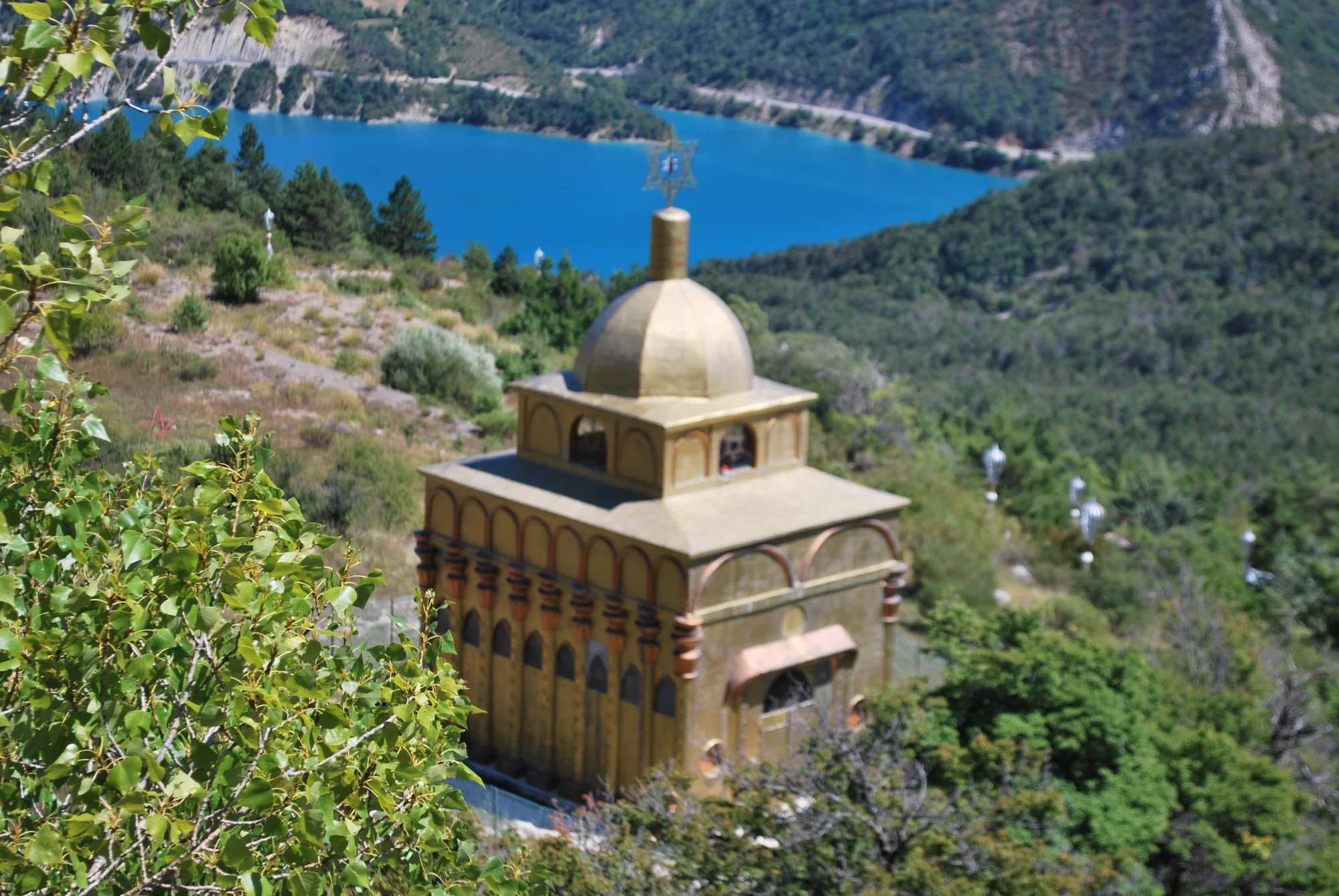
As we saw during the guided tour of the Mandarom yesterday morning, the Statues and Temples of the different religions stand side by side in perfect harmony. Visitors are generally very interested in this sight, which is unique in the world. This architectural picture, which delights the eye while winning hearts, is the concrete demonstration of the respect for religions that is dear to Aumists.
These constructions were an opportunity to deepen their knowledge of religious texts, but also of history, architecture and the arts in general. In 1989, for the monks living at the monastery and for external members, taking part in the masonry, ironwork and painting of the Mosque, the Hindu Temple and the Jewish Temple was, beyond an intellectual conviction, a concrete and simply logical act of building places of prayer that honour God and His different Messages.
These experiences are priceless, because they were accompanied by a questioning of preconceived ideas and an upheaval of values distorted by the prism of an incomplete and superficial religious education. It also meant overcoming feelings and moods when confronted with an “unknown”, a “different”, likely to broaden our familiar universe. We see that fear of “the foreigner” sometimes leads to regrettable excesses. Such disrespect scorns man in his ideals in the very depths of his soul.
At the same time, and fortunately, books and periodicals that study religions are offered to the public to satisfy the need to understand civilisations and peoples that are difficult to approach. These publications contribute to a collective effort of respect for others in their customs and religious practice. They create a current that unites people through the awareness that religion, beyond interpretations, is an essential component of these efforts towards Unity, which lead to respect for others. Careful study of the sacred texts of all religions serves in a positive way to find points of convergence on the Essential. “Whatever name is given to the Transcendent Consciousness, it remains the same.”[2]
We deepen our own religion by discovering other religions, because light often springs forth when we approach a subject from a new angle and in unexpected conditions. The invitation of ancient Wisdom, “Know thyself and thou shalt know the gods and the universe”, is the second aspect of knowledge, whose value has never been disproved as the civilising values of our societies have asserted themselves. Shaping the soul while shaping the intellect: these are the two indispensable ingredients in the formation and education of individuals that lead them to respect themselves and respect others.
The Pyramid Temple is the architectural project dear to Aumists since, after the building of the Temples of the main religions, this Pyramid Temple brings together the characteristics of the great religious buildings: the Egyptian pyramids and the pre-Columbian pyramids of Central America, the Temple of Solomon and the temples of Greek antiquity, basilicas and mosques.
“The Pyramid Temple of Unity will welcome all those, believers or not, who long to see harmony and fraternity reign in the world. Everyone will be able to meditate in this Temple of Unity, where all religions will be represented.”[3] Through its symbolism and architecture, this Pyramid Temple of Unity harmonises man’s relationship with his environment. It places him back within and at the summit of the evolutionary pyramid, with the animal, plant and mineral kingdoms as its foundation. The human kingdom acts through the sharing of prayers and, through the sound management of natural resources, sets the example of the efforts needed to rise back to God. The Pyramid Temple will therefore express respect for one’s inner God, the God present in each person, and the God omnipresent in the whole cosmos.
II. RESPECT FOR EACH PERSON’S RELIGIOUS FREEDOM
“The Aumist lives their faith without imposing it on others.” Everyone can have their own religious practice: respecting religions as a whole does not prevent one from praying to the aspect of the Divine that best meets one’s needs: Christ, Allah, the Buddha, and so on. Religions are paths that give access to the Divinity through prayer, works and methods of purification. On the essentials, they have many points in common. A seeker who comes to Aumism is not required to give up their religion of origin. Not only are they free to attend the place of worship they prefer, but they are encouraged to take an interest in other religions in all their diversity. One can also be an atheist and follow a path close to spirituality, insofar as it aims at the fulfilment of the being and at harmony in society.
Visitors of every background come to the monastery to discover Aumism, ask for advice and become familiar with traditions far removed from their own. These exchanges go both ways and are sources of knowledge.
A renowned yogi, Balyogi Premvarni, testifies: “As I feel a very close and very special connection between the Alps and my own home, the Himalayas, I felt very much at ease and happy during my stay here. I was also very pleased to see how Lord Hamsah Manarah has so successfully managed to express the synthesis and essence of so many of the world’s religions and traditions in this centre of Light and Wisdom of the Golden Lotus.”[4] Balyogi Premvarni had accepted an invitation from Lord Hamsah Manarah. Together they had practised Yoga in the Himalayas. His Holiness has moreover visited most of the great Holy Places while experiencing the various spiritual paths alongside Great Masters. It is this sum of experiences, this spiritual vision, that has been given material form in the Holy City of Mandarom Shambhasalem and whose philosophy is set out in the written work of His Holiness. The Lord was at ease in all traditions, but He did not want to be confined within a framework limited to a single religion. He therefore founded the Aumist religion, “which goes beyond dogmas and rites, because it will end up connecting beings born in different traditions, cultures, philosophies and religions”.[5]
Why compartmentalise and set against one another beliefs and religions that have influenced one another? Christianity and Islam could not have come into being without Judaism. Greek culture enriched the philosophy and thought of the three monotheistic religions. The initiatory rites surrounding the “Mysteries” of Greek, Eastern and Egyptian antiquity are the references to which many Western guilds and initiatory groups have linked themselves throughout the second millennium. Can we imagine Buddhism being born outside Hinduism? As for the first peoples, with their timeless cults and beliefs, they bring us back to the fundamentals of respect for one’s fellow human beings, for nature and for the Source of life. About Claude Lévi-Strauss, we read this winter: “The most fundamental of his contributions can be summed up in a word: the encounter with the other, with the one who seems so different, so impossible to assimilate, is the greatest of opportunities, an inexhaustible treasure.” (Libération, 4 November 2009, p. 2)
III. RESPECT FOR RELIGIONS AND SPIRITUAL PRACTICES IN AUMISM
Tourists who visit the monastery often ask us how we pray to celebrate God, whatever Name is given to Him.
We pray together in the temple at the regular hours required by monastic discipline, as in the monasteries of all Traditions. External members who come when they can join us. We pray individually in silence. And we pray each day in a different temple: one day in the Mosque, the next around the statue of Christ, the day after at the Golden Temple for Judaism, then around the Buddha, in the Temple of Kalki for Hinduism, and so on.
As for religious Festivals, they allow us to pray in a universalist spirit but in unity with the believers of the different Traditions. For example, during the Festivals of Easter and Christmas we pray more particularly to Christ. Wesak, in May, is devoted to the Buddha. Aumism, as a religion of Synthesis, is celebrated at the full moon of June, and at the full moon of October we celebrate Lord Hamsah Manarah Hierokarantine, who embodies the Energy of Unity and Peace that is to be perpetuated through various Incarnations of the Divine.
The Holy City of Mandarom Shambhasalem is a power station of energy reserved for prayer, to foster the coming together of religions and to celebrate the Unity of the Faces of God. “The Aumist is keen to celebrate and honour the different faces of God (…) in order to strengthen their Unity and universal Love. The respect due to each Face of God must not make one forget that God is ONE and that He has as many Names as the sun has rays.”[6] This unity in multiplicity must be rediscovered in order to reach religious peace.
The repetition of the Sound OM is therefore the basic prayer in Aumism. The Aumist symbol of the Hexamide, which was presented to you yesterday, shows that the different religions have a common origin: the Creative Word OM. It is the Mother Sound of all Sounds, which brings communion with the Divine, with the Unity of God at the origin of all Religions. This prayer heals the wounds of war and encourages forgiveness and concord among human beings.
This morning we also practised together one of the Triumphant Meditations offered by Lord HAMSAH MANARAH, the Meditation on the Unity of religions, which makes it possible to go beyond religious sectarianism and move towards Unity beyond differences by thinking intensely:
“I respect and love the pilgrims of all traditions, whatever their way of seeking God.”[7]
Those who wish can come and pray with us: once a month, the “spiritual encounter” day at the Mandarom is reserved for welcoming visitors who want to get to know us better.
This day offers an in-depth tour of the monastery and a discussion with members of the Community; there is also a vegetarian meal and Aumist chants. This very full day is a way of approaching Aumism and the monastic life of the Mandarom, where the different Traditions are respected. Above all, it allows visitors to take part in a Public Worship service with an Aumist meditation that celebrates God under the different names the religions give Him. At the beginning, for example, we chant “Om Christum, Om Buddha Om, Om Allah Om, Om Yahweh Om, Om Deum…”. This meditation, which fosters the development of Love and Knowledge in each person, makes it possible to move towards identification with the Divine present in each one, whatever their religion.
IN CONCLUSION
We have seen that the respect for religions in the life of Aumists is not a distant respect tinged with fear or constraint, but a respect coupled with sincere veneration. They respect their Spiritual Master and honour Him; they also respect the great Sages of the past and present, and all Traditions and all beliefs.
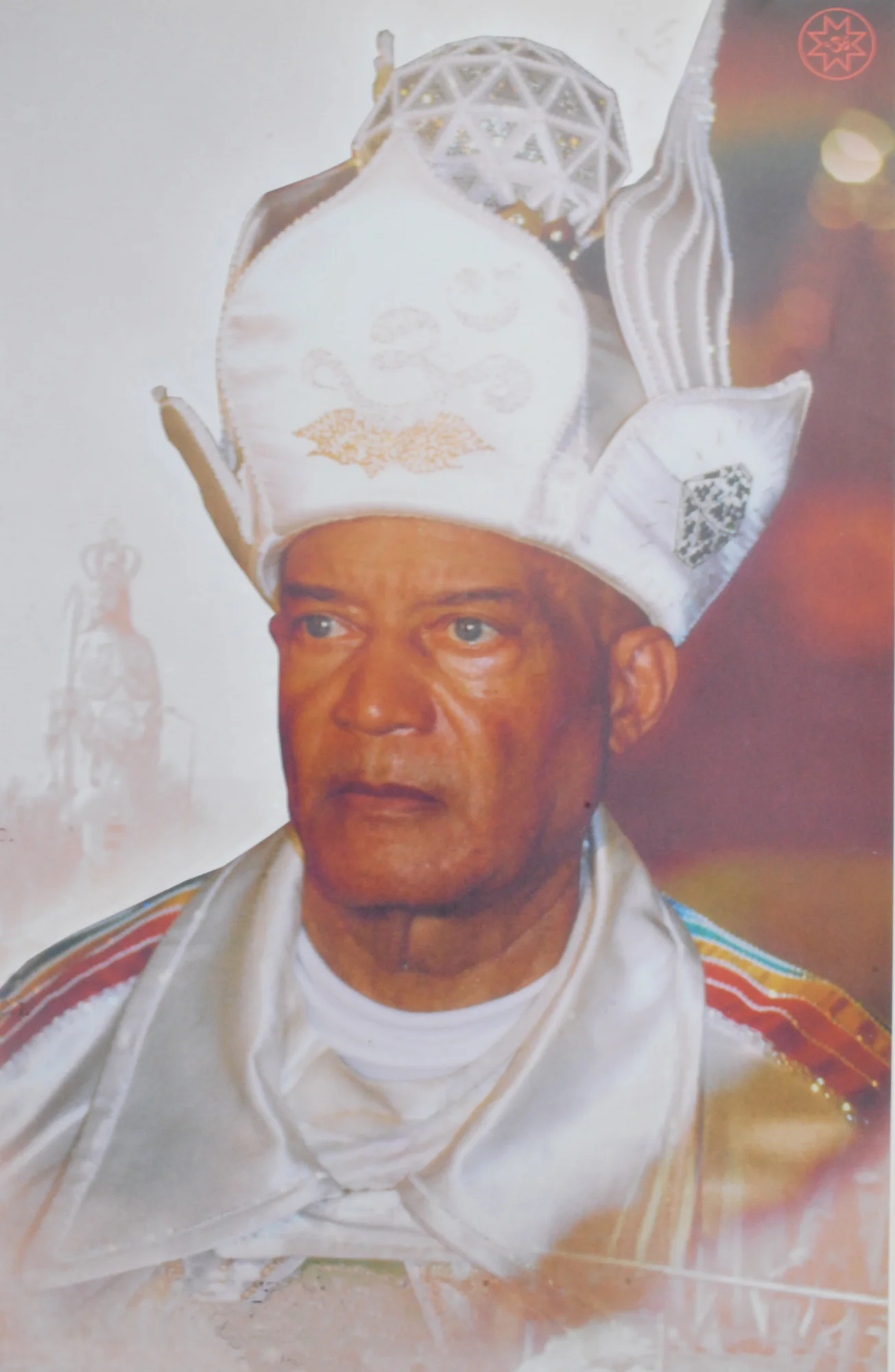
His Holiness Lord Hamsah Manarah is the Founder of Aumism, the Universal Religion, the Religion of the Unity of the Faces of God fused in the Messiah of Synthesis. He is the great Pontiff who links the Traditions of East and West, civilisations and human beings. He comes for all religions, to unite them in the New Covenant of AUM. This Messenger meets the growing need of our humanity to transcend borders and to develop a solidarity that takes the general interest into account, a solidarity in which resolving religious tensions is one of the major challenges for the future of the younger generations.
*******
[1] L’Aumisme, la Doctrine de l’Âge d’Or, p. 43.
[2] Yoga et Sagesse, p. 264.
[3] Le Livre des Sacrements, p. 171.
[4] Périple d’un Yogi et Initié d’Occident, p. 151.
[5] Ibid., p. 18.
[6] Le Livre des Sacrements de l’Aumisme, p. 19.
[7] Le Flambeau d’Unité, p. 421.