SYMPOSIUMS
LECTURE
No. 1 – THE SUFFERING OF DIVISION: FINDING A WAY OUT
No. 1 – THE SUFFERING OF DIVISION: FINDING A WAY OUT
Thank you to all of you here, and to all those who wish to hasten the coming of better times for our humanity.
There is no recipe for getting through crises. Trials are more or less hard to bear; they differ, and each person experiences them differently according to their history, their sensitivity and their living conditions.
But everyone can, as during this symposium, share in all humility what, in their eyes, can help us face the upheavals of today’s world as well as possible.
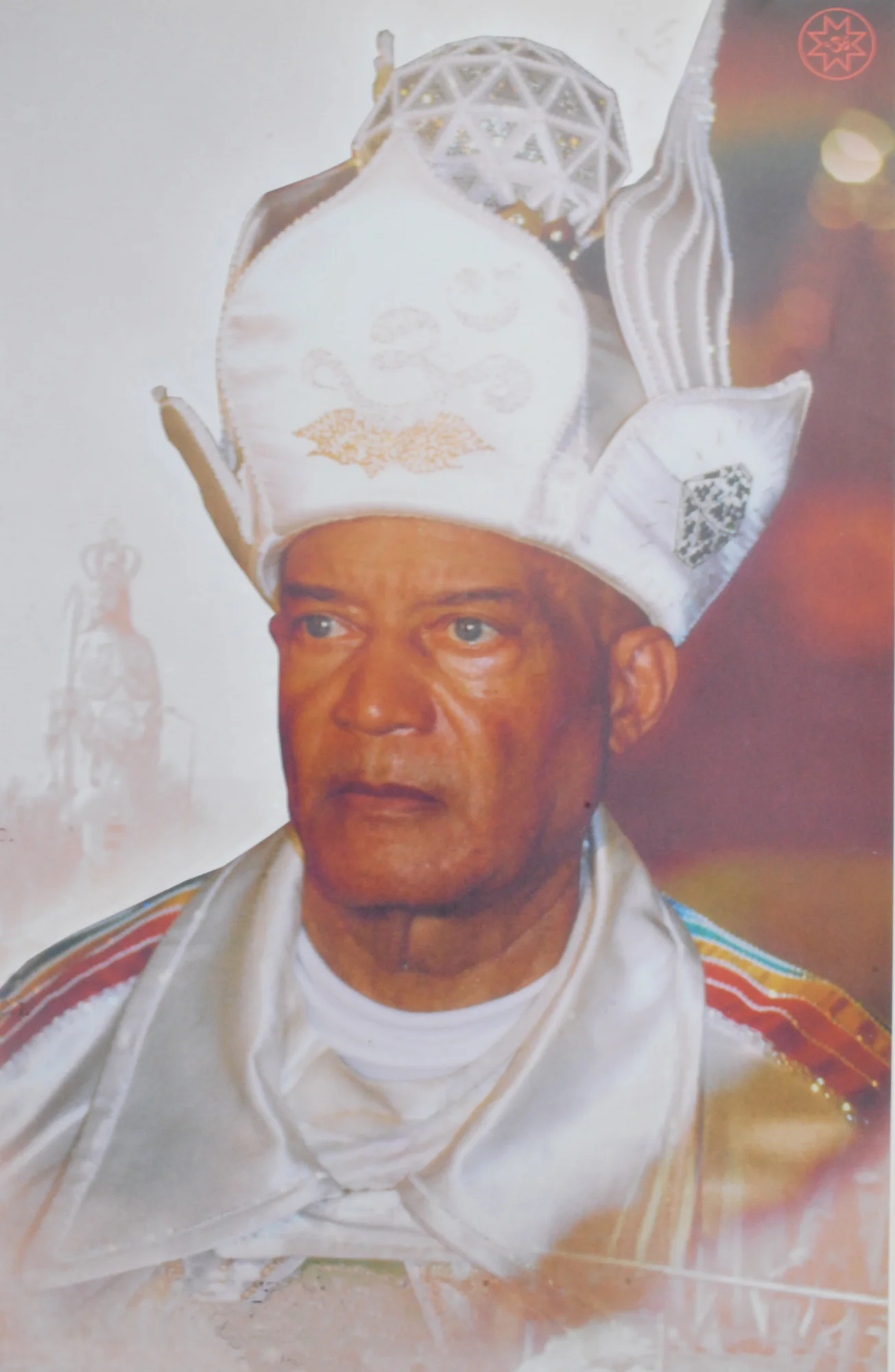
Lord HAMSAH MANARAH, founder of Aumism, calls for change at every level: “The improvement of social conditions depends as much on economic and social policy, on the transformation of structures and on solving many practical problems as on people’s work on themselves” [1]… an aspect we often forget. This symposium will therefore look at different ways of developing our own humanity and, in so doing, of helping humanity better in thought and in action, individually and collectively.
To guide those who wish to undertake this work of rebuilding, the Aumist Teaching proposes developing step by step, each at their own pace, the capacity for resilience, defined by the sociologist Stefan Vanistendael as “the capacity of a human being or a group to face difficult experiences and come out of them stronger (…)”. It is founded on “learning that leads us to grow (…) and to look ahead to the future”. [2]
In this talk, we will see how to develop this capacity in order to emerge from the suffering of division:
- Measuring the impact of divisions on humanity
- Changing perspective
- Mobilising the forces of a new beginning
I – MEASURING THE IMPACT OF DIVISIONS ON HUMANITY
Humanity suffers from having planted, with its own hands, the barbed wire that tears it apart. [3] Among the divisions that turn against it, let us mention three examples that concern us all:
The division between human beings and their environment
Subjected to the cult of profit and overconsumption, the Earth has been exploited and polluted irresponsibly. Yann Arthus-Bertrand’s film Legacy (2021) shows the damage done in the space of a single generation by the cult of unreasoned “progress”. [4]
This turns against our health, our life expectancy and that of the planet…
The division between human beings
To feel separate from others is to think that they do not belong to the same humanity. And those who declare themselves superior on the pretext of skin colour, sex, wealth, ideology, religion and so on, give themselves the right to enslave those they claim are inferior.
This culminates in barbarity, particularly the barbarity of war, with the dehumanisation both of the victims, stripped of their humanity, and of the executioners, who express nothing but their inhumanity.
The division between human beings and God
On the one hand, the intolerance of a certain materialism imposes the conception of a world reduced to the visible: the persecution of believers aims to eradicate every form of spirituality.
On the other hand, the sectarianism of religions that want to impose their truth on others gives rise to wars that incite people to kill in the name of God… forgetting that God is Love!
In Aumism, as in certain religions of Asia in particular, this mental state of violence is called the Iron Age.
Emerging from it requires cultivating the opposite mental state of brotherhood and unity, called the Golden Age.
“We are currently at a turning point,” says Lord HAMSAH MANARAH, “where we are witnessing the final convulsions of the Iron Age and its violence, while the first glimmers of the Golden Age are beginning to illuminate consciences.” [5]
To be in the Golden Age is to “fight for a world of Unity peopled by a reconciled humanity”. [6]
Helping humanity therefore means committing ourselves, starting now, to this long-term struggle.
To begin with, it means opening ourselves to another vision of existence and of human interaction.
II – CHANGING PERSPECTIVE
First of all, we need to free ourselves of whatever within us feeds resentment and the tendency to reject, segregate and divide.
Letting go of a past in which conflicts are rooted
Past suffering and the desire for revenge it brings are reactivated by memories. This state prevents us from living the present fully and from preparing the future freely.
That is why the Aumist Teaching offers techniques for freeing ourselves of the wounds of the recent, near or distant past [7]. Forgiveness will be discussed in another talk.
This inner work allows us to focus on a new beginning and to climb back up the slope.
And as the Envoy of the new times, Lord HAMSAH MANARAH tells us: “God does not judge you on your past mistakes, but only on the choice you make in the present.” [8]
And He repeats to us: “I show you the way, but I cannot take it in your place. Do not refuse the effort that must be made.” [9]
Gradually freeing ourselves from a past that generates conflict within us and with others allows us to open up to the feeling of unity.
Opening up to unity: a spiritual point of view
For Aumism and for other Traditions, the presence of the Divine in the whole of creation connects all the kingdoms of life. This is the foundation of Unity,
– which implies respect for nature [10]
– and which, at the level of humanity, has a consequence: taking care of others is doing good to oneself, while making others suffer draws suffering upon oneself.
Let us stress that God, as indivisible Energy, whatever the Name given to His Incarnations, is the same for all. Religions are “paths leading to Him”, as Ramakrishna says. This is the basis of tolerance.
We will see in another talk that prayer develops the feeling of Unity with God, who is present in each person.
Moreover, for those who believe in reincarnation, Aumists among them, the soul evolves through several lives, changing country, sex, religion and so on: perhaps yesterday we were, or tomorrow we will be, in the place of the person we reject or help today… Let us note with humour that, even if it is not the fruit of pure altruism, the right action may here be one of well-understood self-interest!
The Aumist point of view is imposed on no one.
But the conception of unity that flows from it concerns us all: “Accept others in their difference, for unity is not the crushing of those who do not think as you do, but the reconciliation of all those who think differently, while uniting their efforts for a better world.” [11]
Moreover, whatever our path, we can all become aware of the unity of humanity.
Believers and atheists: rediscovering what we have in common
– The human condition is the same for all.
From birth to death, we all know joys and trials. We are at the same school, the school of life.
For every man and every woman, the goal is to become fully human… by developing their human qualities through the ups and downs of daily life.
If each experience is placed back within the continuity of existence, calming the turmoil of emotions through reflection and prayer, it can become a lesson in life that brings us closer to ourselves and to others. But sometimes the shock is great and it is too hard; then let us accept our emotions and give ourselves time…
Taking this shared apprenticeship into account makes us more tolerant towards our fellow human beings.
– We are interdependent.
From birth, we need one another. This implies a de facto solidarity.
Another aspect of our interactions is described by Pope Francis: “No individual action remains isolated, for good or for ill, but has consequences for others, because everything is connected.” [12]
To remain positive, interdependence therefore calls for vigilance, particularly in matters of justice. For, at national and planetary level, those who lack the necessities of life or who suffer the law of the strongest are locked in a constant dependence contrary to Human Rights.
– We share responsibility.
To become aware of our unity and our interdependence, in whatever way, is to feel connected, and therefore jointly responsible for the fate of the humanity of which we are all an integral part.
“The overall progress of humanity depends on the improvement of each one of us,” says Lord HAMSAH MANARAH. [13]
“All that remains for us is to measure our responsibilities towards our own evolution and towards humanity, which needs individual progress.” [14]
This prompts us to take the future into our own hands, starting today.
III – MOBILISING THE FORCES OF A NEW BEGINNING
Everyone has moments of discouragement. The important thing is not to get bogged down in them. Our thoughts are creative. Imagining the worst opens the door to the worst, and vice versa.
So let us not allow ourselves to be enslaved by anxiety-provoking discourse that feeds fear and defeatism.
Lord HAMSAH MANARAH urges us to leave behind the feeling of powerlessness.
Becoming aware of our strengths
– At the individual level: “On the one hand, we are human beings with that well-known vulnerability. But on the other, we partake of the divine. This latter awareness must not only comfort us in moments of dejection caused by trials, but strengthen us enough to arouse Strength and Courage…” [15]
To strengthen ourselves, we can practise breathing and meditation techniques, and repeat energising affirmations such as:
“I am a centre of Strength, of Light and of consciousness.
I am in unity with the divine Consciousness.
I am divinely protected, inspired, enlightened, guided.” [16]
– At the collective level, the Lord stresses: “While it is true that humanity as a whole is today more than reluctant to see its prejudices overturned all at once, it is no less true that many human beings are already won over to this ideal of unity.” [17]
In every country, every sector and every religion, men and women are striving to build, through the small and great actions of their daily lives, not walls but bridges connecting them to others and to nature. We meet them every day. They are the living forces of our future.
– Seeing the forces of life within us and around us nourishes a clear-sighted optimism that allows us to make the most of situations, even unfavourable ones. It allows us to “see the good, the beautiful, the great… without falling into the blissful optimism of someone who has lost touch with reality…” [18]
In this positive attitude there is common sense: “It is better to light a candle than to curse the darkness,” says a saying attributed to Lao Tzu! There is love, which is “the light of hope”. And there is the will to build a happier way of living together.
It is important to share what gives us confidence with our fellow human beings, and in particular with the new generations.
Passing on to young people the strength of lasting happiness
– A happiness that cannot be bought
In the face of the fleeting pleasures of a consumer society, which also breeds dissatisfaction and frustration, it is important to develop in children an inner aptitude for happiness: the capacity to marvel, to feel joy and gratitude, which connect us to the beauty and diversity of life.
– A happiness that helps us grow
The happiness of living values that enrich children’s interactions, help them succeed in their socialisation and increase their self-esteem. Respect is one such value.
Respect, according to the UNODC, “involves caring about the impact of our actions on others and accepting others for who they are, even when they are different…” [19]
If they have the good fortune to be respected in this way and to follow the example of those around them, children will learn to respect others… and to make themselves respected “without confusing kindness with weakness”. [20] This is a step towards a rightly understood non-violence.
And we will end with what each of us can offer in the service of a humanity torn by discord.
Developing the strength of love
“It is because Love is absent from human relationships that humanity still persists in the darkness of war, intolerance and hatred.” [21]
Let us move beyond a conception of love that is purely emotional, selective and unstable. We can love beyond circumstances, in the name of what binds us deeply: against all odds, we are all an integral part of the same humanity. And this is lived out every day.
– Love allows us to experience unity in our relationship with others.
All of us have at some time felt empathy and altruism, even from afar, towards strangers.
Empathy allows us to put ourselves in another’s place in order to help them better, without identifying with them or drowning in their distress. It is the basis of compassion.
Altruism that seeks no personal gain generates unconditional solidarity [22]. It is also a remedy for individual suffering, because it protects us from withdrawing into ourselves.
– Love forges the weapons of peace in our thoughts every day.
To help humanity escape the spiral of war, we must reverse the process.
“The wars that drench the Earth in blood have their roots in thoughts of hatred sown over centuries, even millennia,” says Lord HAMSAH MANARAH. [23]
“Through your beneficial thoughts, generate a powerful current of peace, brotherhood and true love, strong enough to ward off war and social conflict… No one is too weak; no thought is lost.” [24]
– And finally, love grants everyone the right to evolve.
Within humanity there is each human being with their progress, but also with their falls, which sometimes make them say: “Love me when I least deserve it, because that is when I need it most.”
This encourages us, while resisting humanity’s destructive blindness, not to freeze it in its crises, and not to reduce it to its worst elements.
The great spiritual Figures who, from Age to Age, devote themselves to the service of humanity have the strength to love the worst sinners and their worst adversaries.
Lord HAMSAH MANARAH, whose Message of Unity aroused the opposition of the intolerant, never ceased to give them His love. “I do not despair of them,” He says. “I persist in contemplating the Supreme Self hidden within their being, of which they are unaware.”
He is a lighthouse in the storms, reminding us that “souls need love in order to emerge from hatred”. Whatever our differences, this ultimate help is something we can bring to our humanity.
Here are the words of a poet who encourages us to answer the call of this battle of love:
“Humanity, I love you.
Through your lights, those millions of examples and lives that give and share and make the world better, you prevent hatred from stealing my soul.
You help me to welcome you for all that you are: capable of the worst, but above all of the best.
Among the choices you leave to human nature, I want to inscribe within me what you hold that is greater than your crimes, all the promise, the impulses and the magnificent vocations you contain.
And with these colours I trace, like many others, my roads of hope, those of the hard battles we still have to fight so that brotherhood, justice and peace may stay alive in the face of barbarity.”
V. MANDAJA
Doctor of Education Sciences
*******
[1] Yoga et Sagesse, p. 241
[2] https://bice.org/fr/la-resilience-au-coeur-de-notre-action/quest-ce-que-la-resilience
[3] See the Proceedings of the 11th Symposium (2018), Sortir de la violence pour mieux vivre ensemble
[4] https://www.film-documentaire.fr/4DACTION/w_fiche_film/61846
[5] Le Yoga de l’Amour dans la Force, p. 209
[6] La Révolution du Monde des Vivants et des Morts, p. 64
[7] La Loi d’Évolution des Âmes, chapter 14, “The keys to success in becoming free”
[8] Une Loi pour détruire le Mal, p. 422
[9] L’Unité des Visages de Dieu, p. 197
[10] See the Proceedings of the 12th Symposium (2020), Écologie : changeons pour sauver la planète
[11] Une Loi pour détruire le Mal, p. 427
[12] Pope Francis, Dieu et le monde qui viendra, Michel Lafon
[13] Naturopathie et Yoga, p. 226
[14] Le Yoga de l’Amour dans la Force, p. 256
[15] La Réintégration divine par le Yoga, p. 97
[16] Le Yoga de l’Amour dans la Force, p. 234
[17] Le Flambeau d’Unité, p. 93
[18] Le Yoga de la Vie pratique, p. 160
[19] https://www.unodc.org/unodc/fr/listen-first/super-skills/respect.html
[20] Le Yoga de la Vie pratique, p. 278
[21] La Révolution du Monde des Vivants et des Morts, p. 344
[22] See the 2022 Symposium on the theme Réinventons la solidarité
[23] Vers un Âge d’Or d’Unité, p. 71
[24] L’Unité des Visages de Dieu, p. 390