SYMPOSIUMS
LECTURE
No. 2 – OUR RESPONSIBILITY TOWARDS ANIMALS
No. 2 – OUR RESPONSIBILITY TOWARDS ANIMALS
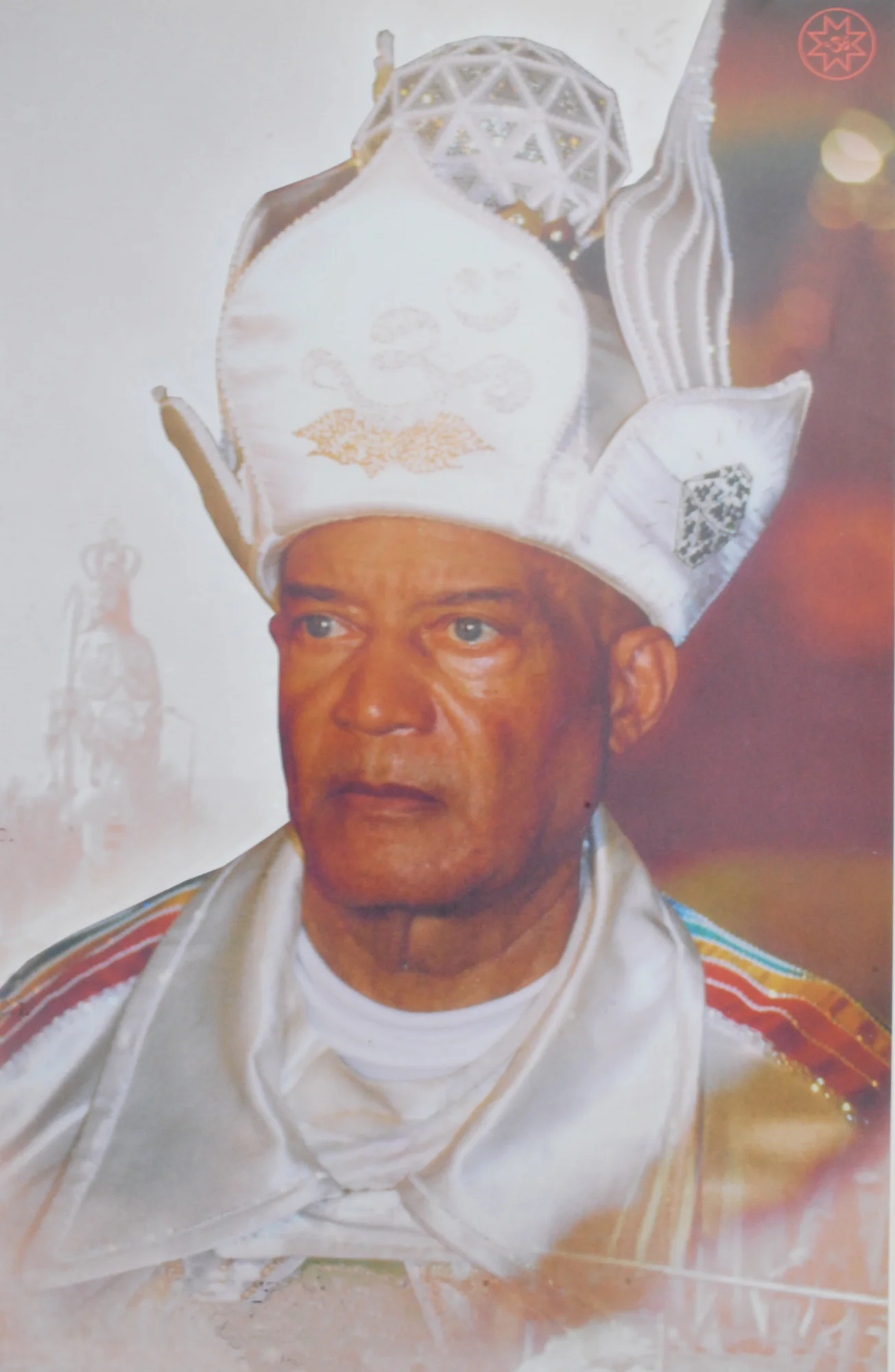
In the book Le Yoga de l’Amour dans la Force, our spiritual Master, His Holiness Lord HAMSAH MANARAH, devotes a chapter to animals. A prayer is given there to help them in their evolution, and we read this remark[1]: “With a little humour, and all things considered, one might wonder whether repeating this prayer would not do many humans good!” This echoes these words of a Sioux chief (quoted on p. 96): “All animals are important, for they are wise in their own way and are able to teach us bipeds many things, if we make ourselves humble before them.” We share life with animals on this planet Earth, which does not belong to man alone: every form of life has its place here! We must therefore respect the environment as a whole. The central question is the way we treat creation.
Our way of regarding animals and our relationships with them, whether wild or domestic, differ according to the period and the country. Eating dog or cat, for example, is unthinkable for us, whereas in China the ban on eating them is very recent. On the other hand, eating rabbit, mutton or beef does not shock Westerners… but this is changing.
– We will therefore review the current state of animal biodiversity,
– then we will discuss the sensitivity of animals,
– and we will see what our responsibility towards them is according to the Aumist Teaching.
1 – THE DAMAGE TO BIODIVERSITY IN THE ANIMAL KINGDOM
The findings reported by WWF leave no room for doubt: in half a century humanity has destroyed a large part of nature on earth and continues to make it decline. To date, an estimated one million species are threatened with extinction. The rate of extinction has never been so fast; never has man had so much impact on the planet… A few examples:
60% of wild animals have disappeared in 44 years, including emblematic species: bears, orangutans, elephants, lions, tigers, pandas… In 30 years, nearly 80% of insects have disappeared in Europe. With the extinction of insects, birds are disappearing. Moreover, pollinating insects such as bees, which appeared about 65 million years ago or even earlier, play an indispensable role in the plant world. It is therefore urgent to care for all the living species that are interconnected within ecosystems.
Since 10 May 2019, Europe has been in ecological deficit: in five months of 2019, we caught more fish, felled more trees and harvested more than nature can provide in a year. Every day, three million land animals and tens of millions of marine animals are killed! Lord HAMSAH MANARAH uses the term “animal holocaust”. It should also be noted that the question of animal experimentation has not been resolved, even though alternatives exist.
In light of these findings, here are four possible courses of action:
– reduce consumption by the human population
– adopt more environmentally friendly technologies
– curb the trade in endangered species
– help developing countries protect their biodiversity
Many associations are taking action, supported by increasingly aware citizens, and are doing remarkable work to save many species, advance the animal cause and also protect animals’ natural habitats.
2 – THE SENSITIVITY OF ANIMALS AND GROWING AWARENESS OF THEIR SUFFERING
The following words of Laurence Constantin, president of the association Global Earth Keeper France, sum up the issue well: “I do not feel I have the right to look away from animal suffering. For me it has always been obvious that we must fight the violence, discrimination and cruelty inflicted on animals and, by extension, on their environment.”
Another aspect is the struggle against man’s belief that animals are inferior to him and can be used for his benefit without regard for the suffering he inflicts on them! This is the key point of the anti-speciesists’ struggle… Animals are sentient beings, recognised as such by the European Union since 1997[2], and yet they are still treated as objects. But they suffer, whether they are animals regarded as game, animals held in captivity, or animals raised in unbearable conditions and ending their miserable lives in slaughterhouses…
The contribution of scientists
With the latest studies on animal “sentience”, scientists confirm that animals are sentient beings, to a greater or lesser degree. In other words, an animal experiences a whole range of feelings and emotions, positive or negative, from pain and fear to pleasure and joy. Some animals, whether wild, farm or companion animals, have mental abilities that were thought to belong to humans alone. Great apes and bottlenose dolphins recognise themselves in a mirror. Sheep can remember other sheep or humans for at least two years; a sheep also reacts emotionally to a face: it prefers a friendly sheep or human to angry ones! The animal seems to have an “inner life”. I invite you here to read Peter Wohlleben’s book The Inner Life of Animals…
Our pets are capable of unconditional love, especially dogs; they help us live. “Beasts” can support us with intelligence and sensitivity, and some help save human lives. Let us at least be grateful! All the new scientific data must speed up the change in our relationship with animals.
Change is under way
In recent years we have seen a shift towards taking animal suffering into account. Criticism of factory farming, which developed to meet demand but is a step backwards ecologically and ethically, is growing ever stronger.
“No wild animals in circuses, stop bullfighting, let us no longer wear fur…”, more and more citizens are demanding. Associations are winning progress, and on 29 September the Ministry for the Ecological Transition made proposals along these lines… The Minister, Barbara Pompili, declared that it is a matter of “inventing other models of coexistence with animals”. The Animalist Party won 2.4% of the vote in the last European elections!
There are more and more vegetarians and people reducing their meat consumption because they reject animal cruelty and for ecological reasons: this aspect will be discussed in the talk on food. The awareness is very real, despite opposition linked to profit, the rule of money and traditions… So the struggle continues for non-violence towards animals to become a planetary choice.
The place of this non-violence in religions
In Hinduism, Buddhism and Sikhism, the term “sentient being” is used for most animals; it implies non-violence, especially in Jainism, where the protection of animals is essential…
In Christianity, we must distinguish between the official Church, which over the ages has shown no particular consideration for animals, and the kindness of certain great Figures such as Isaac the Syrian (mid-7th century) or Saint Francis of Assisi… However, the Church’s view is changing with the encyclical Laudato Si’.
In Islam, according to the Quran, sura 6, verse 38…, animal species enjoy the status of creatures to be loved and protected.
Judaism also condemns cruelty to animals. Man is the steward of the universe; he cannot be a predator of nature and animals (Rabbi Philippe Haddad).
In Aumism, the position of Lord HAMSAH MANARAH is clear: animals are sentient beings whose evolution we must foster by taking care of them. “Through our love and our attention, we help their intelligence and their qualities to blossom.”[3]
3 – THE AUMIST VIEW OF THE KINGDOMS OF NATURE AND THE EVOLUTION OF CONSCIOUSNESS
The Evolutionary Pyramid of the kingdoms of nature
It represents the evolution of consciousness through these kingdoms. As Jalal ad-Din Rumi, the 13th-century Sufi poet, says:
“I died as mineral and became a plant.
I died as plant and rose to animal.
I died as animal and I was man.
I shall die to the human condition to be born to the divine condition.”
Human beings, having reached the top of this evolutionary pyramid, must themselves work to reach the Divine plane by developing greater love for all that lives. They therefore cannot set themselves up as predators; they have a responsibility to help the other kingdoms evolving in their wake. At the end of the Cycle the earth has just been through, during the Iron Age, human beings, forgetting prayer and evolution, showed violence towards one another and towards the kingdoms of nature. We are now leaving this Age and entering the Golden Age, which must lead to the reconciliation of man with nature, especially with animals.
It is therefore necessary to put an end to exploitation and cruelty and to treat animals well: we must move beyond our selfishness and love them for themselves…
“Every human being has many duties towards animals,” says the founder of Aumism[4].
“There are animals that are fortunate enough to be treated and trained by intelligent and loving people. Some are even fortunate enough to be born near yogis or initiates who bless them.”
On the other hand, “animals treated harshly, even cruelly, develop fear, anger, hatred and the desire for revenge, in other words bad feelings. These will leave traces when they pass to the human stage…”
Indeed, “the animal must progress until it reaches a point of perfection within its kingdom; then individualisation takes place”, that is to say, the passage into the human kingdom.
The evolution of the animal soul
We share the view of the occultist Leadbeater, who wrote in the book The Masters and the Path: “An animal, during its life on the physical plane, has a soul just as individual and independent as that of a man, only this soul does not reincarnate again in a separate body. It returns to a kind of reservoir of subtle matter… which we call the group soul. It is as if the group soul were a basin of water providing life to several animals of the same species… When the animal has developed sufficiently to pass into humanity, its soul at the end of its existence no longer merges into the group soul but remains an independent entity.”[5]
So it is possible, through prayer, to help animals evolve. If you are interested, you will find Christian, Hindu and Buddhist prayers in Le Yoga de l’Amour dans la Force, chapter IV. Aumists bless animals with the Sound OM, which atheists and believers of other traditions can also repeat.
Treating animals well fosters peace on Earth.
This fundamental aspect is explained in detail in L’Aumisme, la Doctrine de l’Âge d’Or, in the chapter entitled “The code of honour of man towards the kingdoms of nature”. “Any imbalance in the animal kingdom will inevitably be reflected one day in the human kingdom.”
Animals whose territory has been reduced too much, for example, are forced to come close to houses or enter towns to find food, or else they invade tourist sites, like the monkeys at the Taj Mahal… During the lockdown you may have seen pictures of animals that seemed joyfully to have regained more living space. Let us also learn the lessons of the current epidemic… Man is “the consciousness that allows all these kingdoms to evolve; hence the notion of setting an example…”[6]
“Animals are the generations of new souls, and if man sets them a bad example by tormenting them, later, when they reach the human condition, they will form new peoples who will make the old ones pay the price of the blood, the war and the suffering they endured.”[7]
We understand the importance of a change of mentality.
“It must always be remembered that the roots of the Iron Age are to be found in the relationships that exist between the animal kingdom and the human kingdom (…) From a transformation of the relationships between man and animal a new civilisation will be born, a new balance, and only this new balance will crystallise the Golden Age… The Golden Age is the end of karma for man but also for animals…”[8]
IN CONCLUSION
After these different perspectives and the awareness they bring, let us not be pessimistic, quite the contrary! It is with joy that we see progress today which, though it may seem slow, is really taking shape… Let us speed up this change, support actions that protect biodiversity on a planetary scale, and strive towards compassion for all sentient beings. All the kingdoms are interdependent for their survival and their evolution. Instead of exploiting them selfishly and destroying them, let us respect them, pray for their evolution and thank the whole of nature, without which we could not survive.
With gratitude and kindness, to finish, we will now chant the sound OM together three times, in a prolonged way.
At the same time, “let us mentally project onto the whole Earth a flood of seeds of Light and ask that they germinate in every mineral, every plant, every animal and every human being”[9].
OM OM OM
V. Shveta
Agrégée in German
*******
[1] Le Yoga de l’Amour dans la Force, p. 104.
[2] Treaty of Amsterdam of 2 October 1997.
[3] Le Yoga de l’Amour dans la Force, p. 101.
[4] Le Yoga de l’Amour dans la Force, chapter IV, p. 101 ff.
[5] Ibid., quotation p. 100.
[6] L’Aumisme, la Doctrine de l’Âge d’Or, p. 197.
[7] Ibid., p. 220.
[8] Ibid., p. 196.
[9] La Loi d’Évolution des Âmes, p. 263.