SYMPOSIUMS
LECTURE
No. 3 – BUILDING A GOLDEN AGE SOCIETY TOGETHER
BUILDING A GOLDEN AGE SOCIETY TOGETHER
Building the society of the new Age together means succeeding collectively in tomorrow’s society; it means succeeding in living together in harmony and balance. It means not only going beyond personal and partisan interests, but also rediscovering what unites us with the Great Whole, with the Divine.
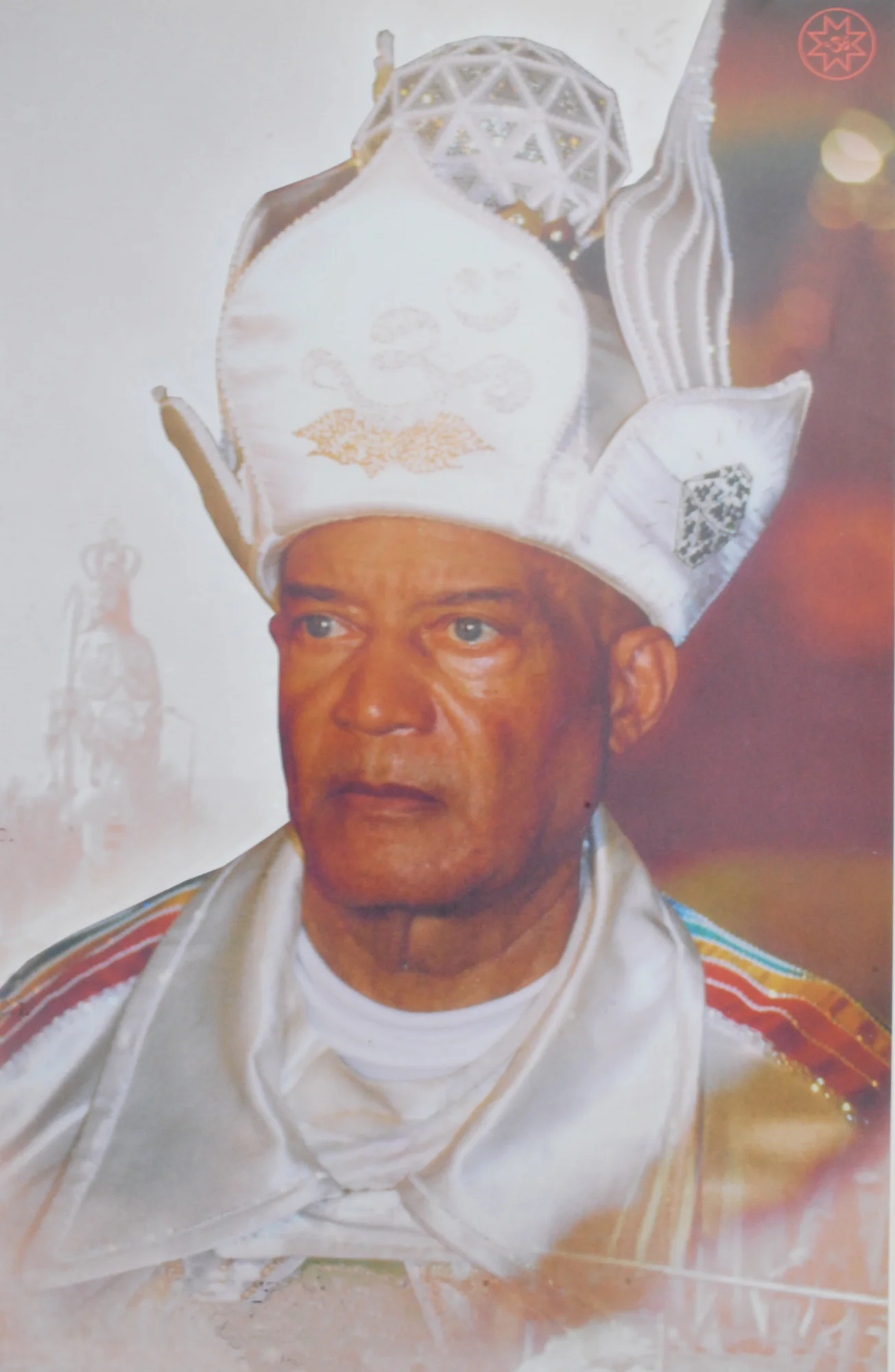
The Teaching of His Holiness the Lord HAMSAH MANARAH sweeps across every facet of society, sheds new light on many notions and proposes a considerable number of avenues to explore for all those who long for a harmonious world.
So how can we envisage tomorrow’s society? We hope to give you some elements of an answer through this talk, which we will approach in three parts:
- Observing the imbalance in today’s society
- What society should we build in the Golden Age?
- How can we move towards this Golden Age society?
1 – OBSERVING THE IMBALANCE IN TODAY’S SOCIETY
The many events that punctuate the daily life of our society lead us to wonder more and more often and more seriously about our future, and to ask ourselves a whole host of questions, among which may be this one: how can we escape suffering? We cannot go on like this; the cracks have become “fractures” that are harder and harder to repair. Indeed, today one can no longer switch on the television, go online or open a newspaper without reality catching up with us. We live in an ultra-modern, ultra-technological world, but we have to admit that Man still too often behaves like a primitive, as if he did not know the foreseeable consequences of his acts and decisions for his more or less immediate future. We therefore come to observe:
A very great disparity of situations between peoples, at several levels:
- very great inequalities of access to resources (water, natural wealth, etc.): 1 billion inhabitants of the Earth have no access to drinking water, and two billion have no access to sanitation.
- very great inequalities of access to knowledge, education and health
- a permanent imbalance between “too much” and “too little”.
According to the ranking by the American magazine Forbes, the world has never had so many billionaires: there were 1,426 in 2013, 200 more than the previous year, an all-time record for thirty years. Together, these ultra-rich were worth 5,400 billion dollars (compared with 4,600 billion a year earlier). Likewise, 46% of the world’s wealth is held by 1% of households.
A science not always in the service of humanity: many genetic manipulations are carried out, such as the fluorescent sheep created by a Uruguayan laboratory, admittedly anecdotal but revealing, under the guise of medicine but above all for obvious economic and commercial reasons.
The oppression of the kingdoms of Nature by human beings and the wars waged across the surface of the globe: they are closely linked.
- wars, precisely, with this painful observation: since the beginning of the 3rd millennium, the world has witnessed more than 35 major conflicts and some 2,500 disasters. More than two billion people have been affected, and millions have unfortunately lost their lives. These tragic events not only destroy infrastructure, cause population displacement and fundamentally weaken human security; they also worsen poverty and tear apart the fabric of sustainable development, which has already been put in place with great difficulty.
As you will have understood, today’s world operates far more often in “curative” than in “preventive” mode. Present-day society prefers to tell itself that it will always have the means to manage even the most delicate situations, notably thanks to science and its progress, rather than to anticipate (the constantly rising CO2 emissions and their long-term consequences for the planetary climate and the rise of the oceans are the perfect example). In spite of this, there are fortunately people of “good will” and positive actors, thousands of men and women from every society on the globe whose daily action aims to rebalance the world. Indeed, one can mention the many non-governmental organisations, the various associations and other local or international structures that work for a better world. Rest assured: presenting things in this way is not meant to darken the debate or to spread doom and gloom. His Holiness the Lord HAMSAH MANARAH is the first to wish for a revolution of consciousness, a salutary questioning for the good of all. For there is indeed a need to change.
2 – WHAT SOCIETY SHOULD WE BUILD IN THE GOLDEN AGE?
How might we envisage the humanity of the new Era? Let us try for a moment to make it a reality, not an idealistic or utopian one, but a truly concrete one. The Lord states: “A new humanism, averting all catastrophe and worthy of the radiant future of this world in the making, will foster the awakening of the cohesive forces of the soul, whose consequences will have repercussions on the happiness of the whole of humanity.”[1] It is therefore the happiness of every human being that is at stake. This requires work at the level of the individual, which inevitably has repercussions on the group. The Aumist solution is available to everyone. We are all concerned, believers or not. The aim is to build and spread the ideal of the Golden Age. To do so, one needs to rethink one’s relations with others and with one’s environment.
The Golden Age society can only be a society of justice, a society of solidarity.
A world distinguished by its social and economic justice, a world in which sharing is the watchword. The sense of the general interest regains its nobility. A world in which consumption is under control: the poorest people can satisfy their basic needs. Consumers take environmental and social issues into account, in addition to price, convenience and quality, in their purchasing decisions. We do have to consume in order to live. But why not gradually reorient our way of seeing and understanding things in this way?
Likewise, the notion of profit must be reformed and sublimated, if only on the moral level. Thrift takes precedence over the economy in general: the Golden Age society uses resources efficiently, with sustainable consumption and production in both developed and developing countries. Fostering solidarity with all that lives on Earth becomes the basis, the frame of reference, for our actions.
The Golden Age society can only be a society of respect, where unity prevails in respect for differences.
“Unity is not the crushing of opposites, but their reconciliation, their unification into one and the same caring and fraternal whole.”[2] Religious tolerance is no longer an empty phrase; there is no longer any racism, sexism or contempt for the environment. Thus the Golden Age citizen “loves his country faithfully and strives to be a conscientious citizen, concerned with increasing his moral, intellectual and spiritual worth and his efficiency. But he does not forget that he is a citizen of the world and of the universe,”[3] the Lord HAMSAH MANARAH reminds us.
The Golden Age society expresses its spiritual dimension: spirituality is no longer hidden or shameful, because it has been understood that it is indispensable to the proper running of the planet. The aim is to lead the Earth together, collectively, each person through their work, their attitude and their behaviour in daily life, on their own scale and according to their way of life, towards a Golden Age collective consciousness. “It is therefore a negotiated unity of nations that must be achieved, and when the miracle has been accomplished, then I tell you, the mental universe of the Earth will have changed, for it will have come into conformity with the Laws of the Golden Age.”[4]
3 – HOW CAN WE MOVE TOWARDS THIS GOLDEN AGE SOCIETY?
The help we can bring to humanity can take several forms. It can take shape first of all as specific actions carried out within society. This is direct material help that relieves suffering and misery and improves social well-being. Nevertheless, the “how” cannot be reduced to action alone, even action driven by the most humanist intentions. The Lord HAMSAH MANARAH points to the need, in a new Era society, to restore spirituality to its rightful place. There is no opposition between secular life and spiritual life, between action and prayer: they are in fact complementary. They are the different pieces of the same puzzle: they all have a different shape, but in the end, carefully assembled, they form a harmonious and coherent whole.
“My positions are clear,” says His Holiness the Lord HAMSAH MANARAH; “they urge everyone to transcend selfishness and to help their neighbour through prayer, but also in concrete ways.”[5] As we have seen, building the Golden Age durably must take concrete form through solidarity with nature and with our fellow human beings.
Prayer and action
Combining prayer and action is a key idea of Aumism. Prayer is a tool within everyone’s reach. Prayer for our fellow human beings and for the other kingdoms of nature is an act of spiritual solidarity: “Each of us,” says His Holiness the Lord HAMSAH MANARAH, “must be a redeemer for the kingdoms of nature and share the essence of our prayers of love with the spirits of minerals, plants, animals and other human beings.”[6] The Golden Age, inner and outer, is established as much through prayer as through action: humanity, like the whole Evolutionary Pyramid, awaits the sharing of prayers and constant action to relieve its sufferings. In prayer as in action, we must develop a sense of the collective interest, gradually going beyond mere personal profit.
In particular, let us not hesitate to pray for our leaders and politicians, in France but also throughout the world.
“All human beings, believers and unbelievers, should be invited to direct thoughts of benevolence towards heads of state, peoples and nations, in order to prepare a future of social harmony and peace.”[7]
It is only natural to speak of the sound OM. As this subject will be discussed in detail tomorrow, I will simply say that the Sound OM accelerates the evolution of all living beings. It represents “the ark of the covenant between man and nature”, the point of balance of the whole of creation. Believers and unbelievers must unite around this prayer of Evolution, which brings everything that lives back to GOD.
Finally, among the countless paths one can take to move towards this society of the New Era, I would like to address the education of children (and of parents), for this aspect is undoubtedly one of the major keys to the great successes of tomorrow’s societies.
Education
How can we prepare children to become Golden Age citizens? Swami Sivananda used to say: “Children are the builders of tomorrow. They are the future citizens. They are the destiny of the nation. Raise them, discipline them and mould them well.” So, very clearly, he is thereby addressing the instructors that we parents are. It will be very appropriate to “train” these parents, or at least to make them aware of certain realities. It is often said that being a parent is a hard job that cannot be learned. Admittedly, there is no school for parents as such, but Aumism offers parents a kind of “training”, without claiming to solve all individual and collective behavioural problems. It is important to make the task of the future adults easier in tomorrow’s world. In Aumism, the complete development of the child has many different aspects, on the physical, intellectual, psychological and spiritual levels.
Let us give a few examples:
– Developing balance between body and mind: in young children, physical development can be achieved through gymnastics, which will develop coordination of movement, attention and balance. Later, they will be able to strengthen their concentration and self-control through the practice of a martial art. Let us also make sure to give them a healthy and balanced diet, sparing them, if possible, excessive consumption of animal protein.
– Respecting all that lives on Earth, starting with themselves, their parents, their neighbours, the human race and the kingdoms of Nature. Aumism is not alone in insisting on this point, since Article 10 of the Universal Declaration of Animal Rights states: “Education and public instruction must lead man, from childhood, to observe, understand and respect animals.”
– Learning to develop critical thinking, to cultivate a taste for beautiful things and, finally, to open up to the world. Being at once a citizen of one’s country and a citizen of the world contributes to true happiness.
CONCLUSION
The road will be long from society as we live it today to a more coherent and fraternal society. The Lord compares human society to “a lump of clay that we must learn to shape and reshape together until we make of it a vessel of Light, a source of living water for the generations to come.”[8]
The Aumist religion is meant to bring a message of optimism and states very clearly that the best is possible. One of the aims of the colloquia and gatherings it offers is to recall regularly this message of what is possible, of greater well-being and of happiness, and to show the way (or ways) to achieve it.
*******
[1] Naturopathie et Yoga, p. 225.
[2] La Révolution du monde des vivants et des morts, p. 506.
[3] Yoga de la vie pratique, p. 279.
[4] La Révolution du monde des vivants et des morts, p. 444.
[5] Une Loi pour détruire le mal, p. 85.
[6] Vers un Âge d’Or d’Unité, p. 259.
[7] Le Yoga de l’Amour dans la force, p. 302.
[8] Une Loi pour détruire le mal, p. 425.