SYMPOSIUMS
LECTURE
No. 3 – RESPECT, THE KEY TO GOOD RELATIONSHIPS WITH OTHERS
RESPECT, THE KEY TO GOOD RELATIONSHIPS WITH OTHERS
Lack of respect lies at the root of all discord and of much human suffering. It opens the door to contempt and violence. This is why it is essential to place mutual respect at the heart of human relationships if we want both to be happier and to contribute to planetary peace.
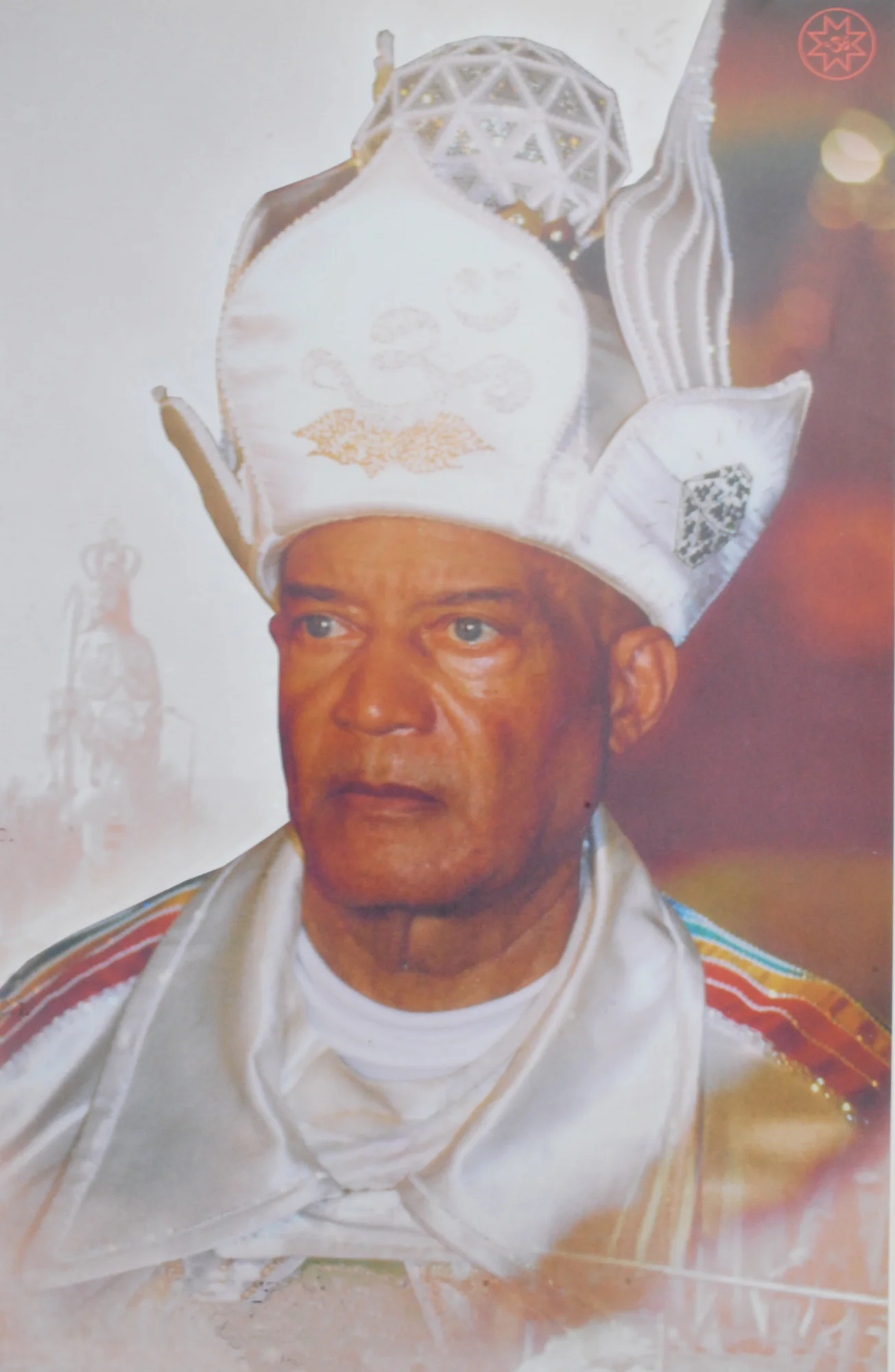
In Aumism, becoming aware of the Divine present in everyone, as in oneself, implies respect for others. His Holiness Lord HAMSAH MANARAH writes: “Every man and every woman deserves our respect, deserves that we pay attention to them and take them into consideration, which is the very basis of mutual respect. Imagine that every human being agreed to make the effort to respect their neighbour, whatever their qualities and faults: the Earth would then truly enter what could be called the Golden Age mentality.”[1]
In this talk we will therefore see:
- 1. How to progress in accepting others, which is inseparable from respect;
- 2. How respect improves communication;
- 3. How learning respect begins in the family.
I. RESPECT IS FIRST OF ALL ACCEPTING OTHERS
To respect is to take others into consideration, to express that their existence is worthy of our attention. This implies accepting who they are. Accepting others in their differences, and in what may displease us, is the fruit of a necessary personal journey.
Accepting oneself makes it easier to accept others
In a rapidly changing world, people are very often absorbed by the outside world, professional success, social life, the media, the Internet and so on, and they forget their relationship with their true Self, with the Divine present in everyone. This lack of a deep bond with oneself affects one’s relationship with others, who are perceived as strangers, which breeds indifference or hostility.
“Knowing oneself well in order to understand others better is a duty,” says Lord HAMSAH MANARAH. He offers us methods that effectively help us to know ourselves better. For example, we can deepen our introspection with a technique taken from chapter XI of Le Yoga de la vie pratique. It consists in taking the time to turn inwards in silence, to become aware of one’s thoughts and mental images, and to focus on the qualities that are the opposite of one’s faults. Little by little, we learn to accept ourselves with respect and kindness and, by resonance, to accept and respect others better. At the same time, so as not to get caught up in the whirl of outer activities and the stress that damages our relationships with others, it is good to regularly take the time to settle in a quiet place and concentrate on our inner world by repeating the Sound OM.
If you wish, we can get a glimpse of this technique together.
I invite you to sit comfortably, straighten your spine and relax your muscles.
With your eyes closed, you can repeat the Sound OM while staying focused on its vibration between the eyes.
OM OM OM OM…
Then mentally repeat the Sound OM at the level of the heart, the sternum:
OM OM OM OM…
Take a moment of mental emptiness and inner silence, and observe the effect of the Sound OM in your body, your mind and your inner state…
The Sound OM connects us to the omnipresent Supreme Self. Listening to the Divine within oneself leads to recognising and respecting the Divine in everyone.
Accepting difference
If we are aware of our own shortcomings, if we accept our faults, we can improve our relationships with others and respect those who are not like us. All human beings, like us, carry the divine spark. Of course, the road is long before we can understand others perfectly, as does the One who has experienced Fusion in God and Unity with Creation. His Holiness Lord HAMSAH MANARAH writes in Mémoires d’un Yogi: “I am not separate from you, I do not feel separate from the world, I reject no one, any more than I wish to tear out my heart when it hurts me.” Until we reach this state of unity and perfect love, let us begin by respecting others even when we cannot understand everything about them. This means not despising our neighbour on the pretext that they differ from us in appearance, opinions, culture, beliefs and so on. In Aumism, respect for differences is the key to peace between human beings, peoples and nations.
Not judging, learning to forgive
Others, like ourselves, may fall, but “it is not for anyone to judge the failings of others,” says Lord HAMSAH MANARAH.[2] He also encourages us to tolerate at least three faults in those around us. Indeed, respecting a person means accepting them with their capacity to evolve and transform. Of course, in daily life, we do not immediately succeed in transforming ourselves and expressing the best of ourselves. But what matters is to get up again after each failing and to move towards forgiveness, which, like a balm, heals all ills and all suffering.
- Forgiving oneself frees one from the guilt and repression that chain us to the past and sometimes generate a self-punishment complex and self-destructive tendencies.
- Forgiving others frees us from resentment and keeps us from remaining stuck and frozen in a conflict with no way out. It allows us to break the deadlock and make a fresh start in order to move forward.
Respecting ways of speaking, thinking and acting that differ from our own allows us to share and to build together. Of course, respecting someone does not mean turning a blind eye to reprehensible behaviour. Preventing someone from harming those around them and themselves is a service to render. We can reject unjust behaviour without ceasing to respect the person, to help them and to pray for their evolution.
II. MUTUAL RESPECT MAKES COMMUNICATION EASIER
The need for inner detachment
In our relationships with others, inner detachment keeps us from being the plaything of emotional reactions. This mental attitude prevents us from being disturbed by tensions, judgements and unpleasant memories. To free ourselves from the interference that can cloud communication, it is advisable to recharge frequently through the prayer of OM. Connected in this way to the Divine, we do not seek to dominate others but to become the most faithful instruments of the Divine expressing itself through us. Learning tolerance and mutual respect brings a gain in consciousness and love.
Respect is expressed through dialogue and listening
“Humanity is sick from not talking,” Lord HAMSAH MANARAH tells us. “Everyone ignores the other and turns them into an outcast.”[3] Discussing and engaging in dialogue means paying attention to what the other person thinks. It is therefore a special form of respect.
- In a meeting, it is a matter of letting others express their ideas without interrupting them, of remaining inwardly available and letting what they express resonate within oneself. We must not seek to impose our point of view at all costs in a spirit of domination. We must know how to listen before calmly and authentically expressing our agreement or disagreement, relying on the Divine within ourselves and in everyone. When a group works in this way, the resonance between its members makes it possible to build together while respecting each person. Of course, respecting different opinions does not mean following them blindly! Listening is essential to teamwork, in which everyone’s creativity must be able to find expression in order to contribute to the final success of an action.[4]
- When there is conflict, dialogue is essential for reconciliation. In chapter XIV of La Loi d’Évolution des Âmes, for example, you will find advice on renewing dialogue with members of your family: listening to one another helps to soothe resentment.
III. LEARNING RESPECT BEGINS IN THE FAMILY
We live in a world that is losing its bearings, where people prefer to highlight what is harmful and reprehensible. Adults therefore have a duty to instil in children the values that foster the birth of a Golden Age mentality, of which respect is the foundation. They must also set an example. The family is a privileged place for learning mutual respect.
Respect between generations
- Respect is an essential component of the love of parents, who must first of all respect each other.
- Parents’ respect for the child begins before birth. His Holiness Lord HAMSAH MANARAH suggests that parents pray that a soul wishing to build a world of peace may incarnate. Then respect will be present throughout the child’s upbringing: children are the builders of tomorrow’s society; they must enjoy a balanced lifestyle and the most complete education possible, underpinned by a moral discipline suited to their age. The books Naturopathie et Yoga and Le Yoga de la vie pratique are a precious help. Listening to children with interest and respect from an early age means recognising their worth, valuing the love, solidarity and respect they show, and valuing their differences and their creativity.
- But this does not mean giving in to all their whims! The Lord writes: “As for those who claim that the child is a king who must never be offended, I cry out to them: ‘Beware!’ And I say: look at the slackness of today’s youth, its lack of courtesy and refined manners, the disrespectful attitude of children towards their teachers, the shirking of effort and the neglect of responsibilities, set against the constant insistence on rights, as if the better to forget their duties, and you will understand that in this way we are preparing misfortune for society.”[5]
Today, as we see every day in families, in schools and in the street, the respect due to age, to experience, to knowledge and to the work of others must be restored. “The Code of Life of a Golden Age humanity”[6] therefore encourages children to respect their parents, their grandparents and their teachers. Learning respect in this way between the youngest and the eldest, who let them benefit from their experience, will foster social stability and peace.
Learning politeness and courtesy
“Parents,” says His Holiness, “have a duty to instil in their children the elementary rules of politeness and courtesy. In this way they will help to bring about a Golden Age civilisation founded on the principles of planetary solidarity, in fraternal respect for each person.”[7] Of course, this does not mean stereotyped and sometimes hypocritical behaviour, but politeness of the heart, which takes others into consideration with “a smile of affection, a word of welcome, a gesture of kindness…”[8]
The contribution of outside activities: the example of martial arts
The family will also allow the child to take part in outside activities that are both enjoyable and educational.
In my personal experience of practising martial arts, and OMKIDO, which you discovered this morning during a demonstration, I attach great importance to learning respect, for children as well as for adults. Martial discipline is underpinned by ethics and by rules of courtesy, propriety and good manners in a group: there is respect for tradition, for the master or teacher, for the seniors, for beginners, for the place, for the group, and for fellow practitioners, who are not opponents but partners. Respect for others goes hand in hand with self-control. Healthy combativeness is above all work on oneself.
On this subject, Lord HAMSAH MANARAH advises parents: “Use the influence of the martial arts on the formation of character: boys and girls will find in them a way to develop the strengths of the soul, self-control, mastery of the body and emotions, coordination of body and mind, courage, effective reflexes, a chivalrous spirit… Fearing nothing, they will be able to love without constraint, from a position of inner strength.”
Children who are respected and learn to respect others from an early age will fit better into society and make it more united.
CONCLUSION
In conclusion, let us recall the need for an education that gives priority to learning respect. A return to mutual respect is essential in order to reduce, and gradually put an end to, the contempt and violence that are destabilising today’s world. Cultivating respect for others, striving to accept and understand them, is the first step towards solidarity, towards the change of mentality that characterises the Golden Age.
We will therefore end with this sentence by His Holiness Lord HAMSAH MANARAH, which everyone will benefit from repeating before starting their day:
“I am in Unity of heart and mind with the Almighty God in everyone, and I henceforth settle in tolerance and respect for others.”[9]
*******
[1] La Révolution du monde des vivants et des morts, p. 461.
[2] La Révolution du monde des vivants et des morts, p. 80.
[3] La Loi d’Évolution des Âmes, p. 228.
[4] Cf. La Révolution du monde des vivants et des morts, p. 460.
[5] L’Aumisme, la Doctrine de l’Âge d’Or, p. 239.
[6] La Révolution du monde des vivants et des morts, chapter XVI.
[7] La Révolution du monde des vivants et des morts, p. 364.
[8] Cf. Le Flambeau d’Unité, p. 357.
[9] Vers un Âge d’Or d’Unité, p. 28.