SYMPOSIUMS
LECTURE
No. 4 – SCIENCE TO PROTECT THE EARTH
No. 4 – SCIENCE TO PROTECT THE EARTH
(Minerals, plants, animals, humans)
Introduction
Science, founded on evidence, allows us to understand and master the world in order to improve human life. It helps us foresee and prevent risks such as climate change, and it encourages the sharing of knowledge, notably through technological and medical advances.
In this talk we will address the following points: science to know the world and the universe; the sharing of knowledge for planetary development; science in medicine to protect life; the major challenge of our time, which is to reduce global warming; and, to conclude, Science and Conscience.
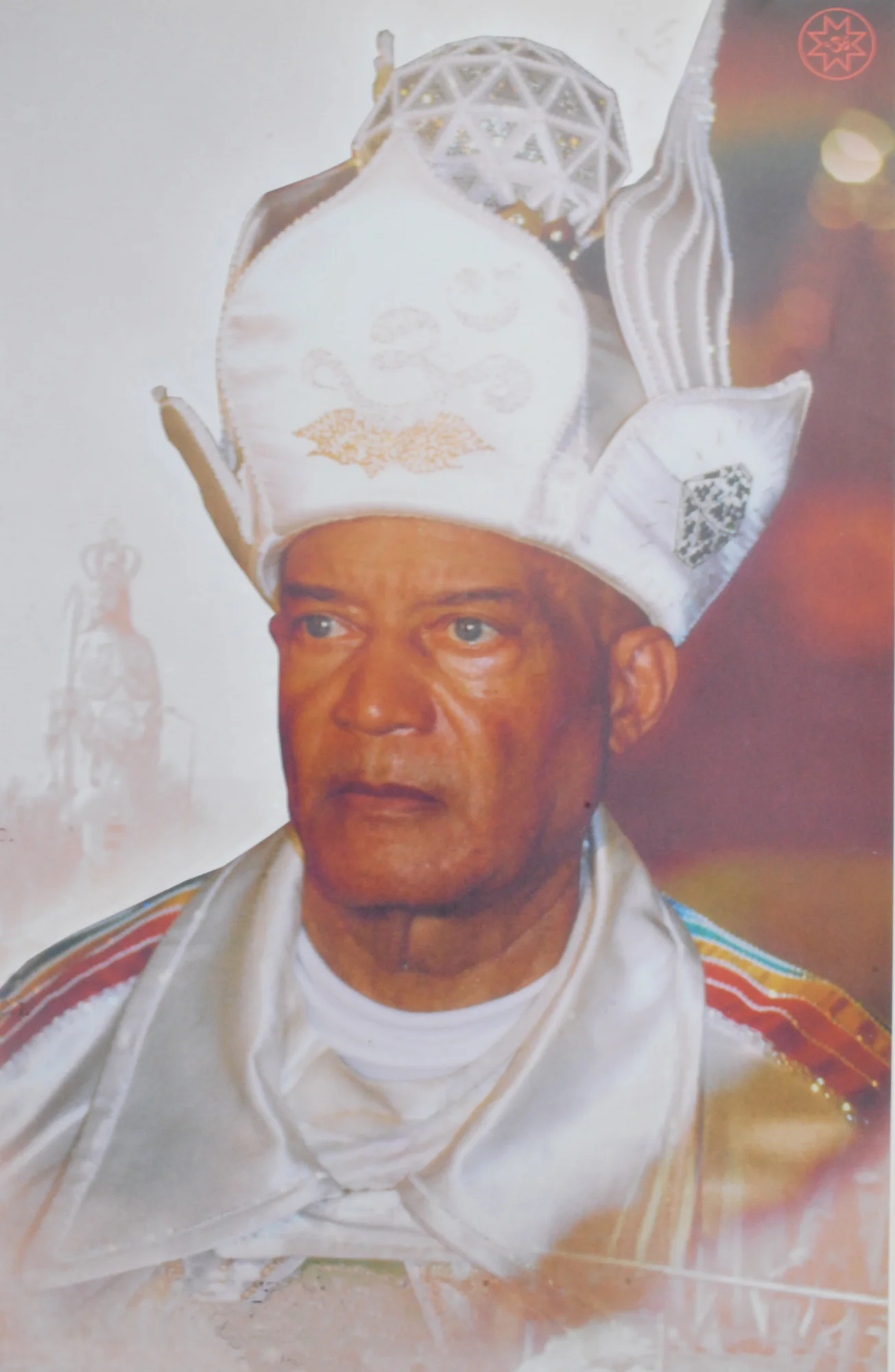
To address these different themes, we will use quotations from the book Une Loi pour détruire le Mal by His Holiness Lord HAMSAH MANARAH, which we will illustrate with examples.
1 – Science to know the world and the universe
Science is a body of logical and verifiable knowledge acquired through observation that enables us to understand our Universe.
“Science, used positively, can:
– Open human beings’ field of vision to the realities of the cosmos and help them find their rightful place in the Universe again.
– Make it easier to store billions upon billions of pieces of information vital to the future of humanity.” [1]
In 1609, Galileo built his first telescope, and the scientists of the time soon used telescopes to observe the Sun. They noticed dark spots moving across it. From then on, daily observations of these spots were recorded. Father Scheiner, a Jesuit priest who worked at the University of Ingolstadt in Germany, demonstrated the rotation of the Sun and noticed that it turned faster at the equator than at the poles. He is considered to have discovered the Sun’s differential rotation. [2] In 1843, Heinrich Schwabe found that the number of these spots peaked roughly every 11 years (the 11-year cycle), and in 1908 George Ellery Hale discovered the magnetic field of sunspots. The Sun’s magnetic field is dipolar, like that of the Earth, and it reverses every eleven years. The Sun’s differential rotation between the equator and the poles (about 25 days at the equator and about 35 days near the poles) twists the lines of the dipolar magnetic field, creating these dark spots, which are areas of intense magnetic field.
Three centuries were needed to understand the physical phenomenon. Without understanding their observations of sunspots, scientists recorded masses of data. It is important to note that knowledge of the world and the universe evolves and will continue to evolve. The masses of data acquired and stored will be useful for the future of humanity, because thanks to artificial intelligence (AI) they can be analysed very quickly. Each scientific discipline creates its own AI based on the data recorded over the years and on the knowledge scientists have acquired about these data. AI is a digital tool to help research. It complements scientists rather than replacing them. [3] AI has neither feelings nor spirituality, which are the hallmarks of human beings.
2 – The sharing of knowledge for planetary development
Before discussing the sharing of knowledge, it is important to present the tool that made it possible to globalise the space sciences.
Human beings have always travelled to get to know the Earth, and one of the first instruments for travelling was the compass. The magnetic compass (ancestor of the modern compass) was invented in China between the 2nd century BCE and the 1st century CE, during the Han dynasty. It was first used as a tool for geomancy, in Feng Shui. It was under the Song dynasty that the first reference to a specific magnetic “orientation instrument” appeared, in a book written in 1040-1044. [4] Towards the end of the 12th century, the compass appeared for the first time in the Mediterranean, used for navigation on the high seas. It originally consisted of a simple magnetised needle floating in a container of water. [5] The compass, made up of a magnetised needle that aligns itself with the Earth’s magnetic field, points to the north. To locate the North Pole, scientists equipped with compasses travelled on dog sleds to that point. The magnetic pole shifts over time, and its movements are a subject of study. Today, a model of the Earth’s magnetic field (IGRF), including the position of the poles, is available online. [6] This model is built from data gathered all over the planet and is updated regularly.
Today, to travel, we use the GPS system, designed and developed from 1973 by the United States for strictly military use. GPS became fully operational in 1995 with a constellation of 24 satellites. This instrument, used by scientists, has made it possible to develop the space sciences throughout the world. Other satellite navigation systems have been developed: GLONASS in 1996 by the Russians, BeiDou in 2000 by the Chinese and Galileo in 2016 by the Europeans.
“Science, used positively, can:
– Bring about a planetary awareness, leading peoples to understand one another and almost forcing them to unite so as to stop destroying one another.
– Encourage people to communicate with one another, from continent to continent, at the speed of television and radio waves.”
All these satellite navigation systems have a great many applications in everyday life: positioning, vehicle traffic, animal migration, agriculture, land registry, meteorology, geography, epidemiology, and so on.
They are now used in space science research. A ground receiver can pick up all the electromagnetic signals emitted by the satellites of the different constellations (GPS, GLONASS, BeiDou, Galileo). These signals are altered as they pass through the different layers of the atmosphere. The signal received on the ground makes it possible to characterise the space it has passed through and to approach many scientific disciplines. [7] Receivers are now present in every country, even the poorest, and so the space sciences have been able to develop all over the planet.
3 – Science in medicine to protect life
“Science, used positively, can:
– Cure hereditary diseases
– Prolong life
– Eliminate the deadliest epidemics from the Earth
– Prevent abnormal births, prevent the birth of monsters.” [8]
Vaccination has made it possible to eradicate smallpox and to eliminate or greatly reduce many other diseases, including measles, and yet these scientific results are being called into question. The three countries due to host the next football World Cup are facing measles epidemics.
Mexico is experiencing its largest measles epidemic in decades, with more than 10,000 confirmed cases and 31 deaths. The federal authorities have launched a mass vaccination campaign. The country, which is hosting the World Cup, wants to contain the spread of the virus and avoid losing its status as a measles-free country.
In the United States, the situation is worrying, with more than 2,200 recorded cases and three deaths, including two young children, in 2025, and infections continuing to rise in 2026. The United States could lose the “measles elimination” status it gained in 2000 thanks to vaccination.
Canada lost its measles-free status last year. In 2025, 5,450 cases of measles were recorded there, which led to the loss of its certification.
In the United States, in March 2026, a federal judge suspended the overhaul of American vaccination policy initiated by a vaccine-sceptic health secretary. [9]
In Galileo’s time, the religious Inquisition denied scientific facts. Today, it is the obscurantism of certain politicians and of social media that holds sway.
Vaccination, hygiene protocols and barrier gestures form an essential triad for protecting our collective health. When correctly applied, these measures can considerably reduce the transmission of infectious agents and save many lives. Hygiene, covering the personal, food and environmental dimensions, is a fundamental pillar of health. Its preventive role is often underestimated. A lack of hygiene, in whatever form, exposes us to many health risks, with significant direct and indirect consequences for our well-being, while good hygiene reduces epidemics.
Science is constantly evolving. On 16 November 2024, Dr Youness Aballal, a French surgeon, performed a radical prostatectomy from Shanghai (China) on a patient in Casablanca (Morocco). [10] On 25 November 2025, for the first time, heart surgery was performed in China by two surgeons operating from Bordeaux University Hospital.
Robotic telesurgery marks a decisive turning point for medicine. In particular, it offers promising solutions to unequal access to surgical expertise and to the shortage of medical resources in remote areas. Science knows no borders.
4 – Science to reduce global warming
“Science, used positively, can:
– Safeguard the climate balance and protect the North and South Poles from an industrialisation that could only destroy them slowly, century after century.
– Help those who govern to make the right choices in matters of medicine and the environment, in matters of preserving the chain of life at all costs.” [11]
The climate is interconnected on a global scale. What happens at the poles does not stay at the poles: natural climate variations across the planet are connected through atmospheric and ocean currents (North Atlantic Oscillation, El Niño Southern Oscillation, etc.). The large-scale melting of ice puts us in danger, as a study recently published in the journal Nature shows. [12]
The main consequences of global warming are reduced water availability affecting crop yields, increased risks of drought, biodiversity loss, forest fires and heatwaves, and an increase in natural disasters.
The scientific community is international, and scientists share their work regularly every year.
On climate, a network of scientists has been created: the IPCC.
The IPCC [13] “is the Intergovernmental Panel on Climate Change. It was created in 1988 to provide detailed assessments of the state of scientific, technical and socio-economic knowledge on climate change, its causes, its potential impacts and response strategies.”
The IPCC advises governments on the measures to take to limit global warming. Its advice is not always followed by governments influenced by industry lobbies.
The increase in natural disasters has led scientists to develop warning systems that allow all the inhabitants of an area threatened by an anticipated disaster to shelter in place or evacuate. We all remember the tsunami of 26 December 2004, caused by an earthquake in the Indian Ocean, which killed some 220,000 people. Since then, tsunami warning systems have been developed to save lives.
5 – Science and Conscience
“Aumism must spiritualise science in a marriage of Love and Reason. The next century will be essentially scientific; science must therefore be given an appropriate morality. The survival of our humanity depends on it.” [14]
Science enables the development of many technologies that can be used for good or for harm. Using Science positively depends essentially on the level of consciousness of human beings.
“The scientist of the Golden Age will avoid harmful experiments that could damage life on Earth in the short and long term.
The scientist of the Golden Age will undertake to respect a certain code of ethics.
The wise man of science will seek above all the happiness of his fellow human beings, with respect for the balance of the kingdoms of nature.” [15]
In the Renaissance, Rabelais wrote: “Science without conscience is but the ruin of the soul.” These words are more relevant than ever.
Conclusion
We are all concerned by the proper use of science and of the technologies that stem from it. Science informs us about the benefits or dangers of discoveries, but it is human beings who decide whether to use Science positively or negatively. Human beings must grow in consciousness so as to use Science only wisely.
Christine Amory
*******
[1] Une Loi pour détruire le Mal, p. 205
[2] Christoph Scheiner, Rosa Ursina sive Sol, book 4, part 2, 1630
[3] Luc Ferry, IA : grand remplacement ou complémentarité ?
[4] https://fr.china-sfcompass.com/news/history-of-electromagnetic-compass
[5] https://essentiels.bnf.fr/fr/
[6] http://www.iugg.org/IAGA/iaga_pages/pubs_prods/igrf.htm
[7] Sun and Geosphere, vol. 14/1, pp. 71-79, 2019
[8] Une Loi pour détruire le Mal, p. 204
[9] https://www.lemonde.fr/international/article/2026/03/16/vaccins-aux-etats-unis
[10] https://french.shanghai.gov.cn/
[11] Une Loi pour détruire le Mal, p. 204
[12] https://doi.org/10.1038/s41586-026-10196-1
[13] https://www.notre-environnement.gouv.fr/
[14] L’Aumisme, La Doctrine de l’Âge d’Or, p. 367
[15] L’Aumisme, La Doctrine de l’Âge d’Or, pp. 175 and 176