SYMPOSIUMS
LECTURE
No. 5 – YOUNG PEOPLE CUT OFF FROM SOCIETY: RESTORING THE SOCIAL BOND
No. 5 – YOUNG PEOPLE CUT OFF FROM SOCIETY: RESTORING THE SOCIAL BOND
For the social worker and the youth worker, “Together for peace” means trying to help adolescents climb out of the rut of violence and become reconciled with themselves and with society.
I – YOUNG PEOPLE “CUT OFF”
Adolescence is in itself a time of transformation, and therefore of breaking away from childhood.
But some go as far as defying society by breaking its laws and committing more or less serious offences. They feel “freer” working within a network with its own codes, earning money quickly to pay, among other things, for their drug use, whatever the risks.
For others, committing violence against others is a way of keeping their insecurity and fear in check, and of showing and proving their strength to their peer group. Stealing and burglary also wreck an adolescent’s life and have repercussions on society.
II – THE CONSEQUENCES
For the young people themselves, the consequences are damaged self-esteem, a lack of positive prospects and the self-destructive spiral of addiction: drug use becomes a refuge, a remedy. Others are perceived as strangers who do not offer support solid and secure enough to allow them to imagine any kind of future.
For their family, who do not recognise their child in what he has done, no longer understand him, and sometimes reject or overprotect him. The way others and institutions look at them is painful. The feeling of shame and guilt on both sides deepens the breakdown of communication within the family.
For society: the breakdown of communication and distrust of the adult world and of the institutions meant to help them push the adolescent to the margins.
The daily life of these young people is governed by immediacy, impulse and the refusal of all effort. They live in “their world”, with their own rules and laws. They thus challenge and reject the foundations and values of the society of which they are nonetheless a part.
It is in this context of suffering and violence that the youth worker steps in, to help them change perspective and evolve so as to recover their balance and a place in society.
III – THE YOUTH WORKER’S WORK IN THE LIGHT OF THE AUMIST TEACHING
The youth worker will try to change the course of a negative path and dynamic by acting at different levels, for example to encourage reintegration or to work on overall health. For several months, or even years, he will meet the adolescent, but also his family, who are a stakeholder in this support. The relationship is the social worker’s main tool.
The task will then be to put in place everything that seems necessary to change the situation, mentalities and relationships, in order to shift the paradigm.
In particular:
Setting a firm framework in order to build a strong bond
This begins with respect for timetables, appointments, dress and language…
Continuous effort is asked for, so as to chalk up victories, however small, for the young person who makes the effort; and if he struggles to do better, the attempts made over the weeks and months count just as much.
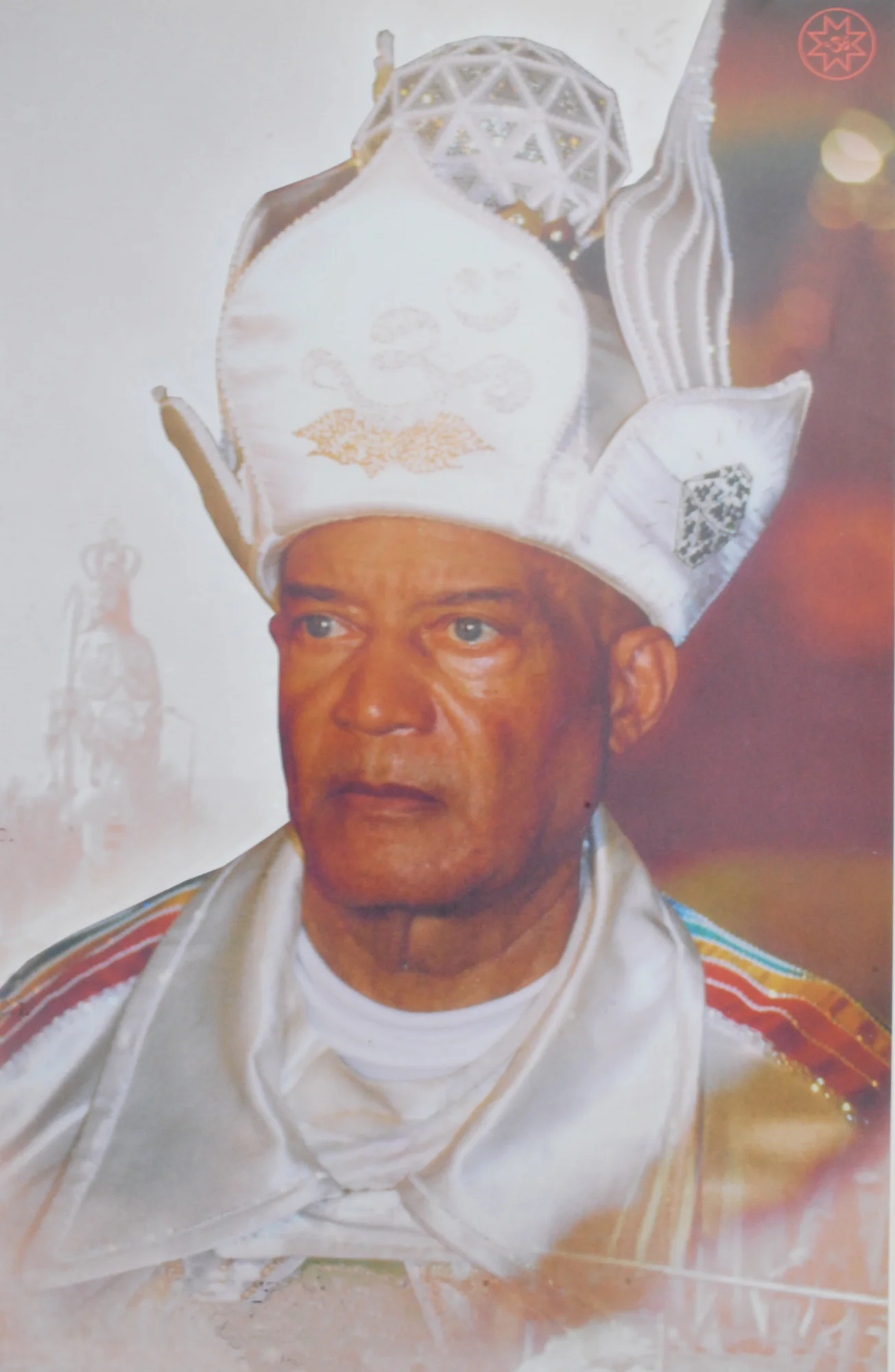
Lord HAMSAH MANARAH teaches us that daily acts are important if we want to achieve great things. Controlling our gestures avoids “those great losses of energy in disorderly gestures and thoughtless actions that we bitterly regret afterwards”. [1]
This requirement, from the very beginning of educational support, marks out a space in which the adolescent will be able to speak, provided one is not frightened by the lack of respect, the violence of his life stories or his words, or his denial. The youth worker’s kindly gaze, an unconditional love whatever the act committed, is a powerful cement in their relationship. It is not a starry-eyed love but a constant attentiveness that brings the adolescent back to his rightful place, to his status as a person responsible for his acts, words and thoughts.
Those who have acted badly in the past, who were unable to resist their impulses and their violence, also need to learn to regard themselves better.
Encouraging a better view of oneself
A person who has committed an offence or a crime is rarely satisfied with or proud of what he has done, even if he sometimes shows or says the opposite out of provocation or denial.
He knows that his family is affected; he is ashamed of causing worry to those around him, and he resents the justice system. He does not like himself.
The youth worker’s mission is to set the adolescent on a positive, evolving path. He accompanies him
- in breaking with his daily routine;
- in activities that prove to him that he is capable of respecting social rules, of experiencing success and also of analysing his failures in the presence of the adult.
The adolescent learns to know himself and to see himself differently, instead of complaining: “I’m a victim, nobody loves me, society has it in for me.”
According to the teaching of Lord HAMSAH MANARAH, knowing oneself well is a duty. [2] It allows us to understand others better.
Bringing out the notion of otherness
The youth worker does not reduce the adolescent who has committed offences to what he has done. He takes a fresh look at his situation. He believes in the best in him, which the young person may not yet know. He gives him, or lends him, his own capacity to hope for the best, and helps him stop identifying with his past mistakes.
He does not forget that everyone has good sides, for according to Aumism the Divine is in each person. [3]
His work also aims to engage the adolescent and help him to talk about what happened, even if it is difficult, to name it and to question it, for as Lord HAMSAH MANARAH says, what is stimulating is what prompts questioning and awareness of every situation. [4]
By talking about the person who suffered the harm, the youth worker helps bring out the notion of responsibility and otherness (the recognition of the other). For often, in the young person’s eyes, the victim does not exist, and he regards himself as the victim.
Let us note that restorative justice is an effective tool. By creating a space for dialogue between offender and victim, it restores the humanity of which both were deprived by the violence of the act. It is a possible path towards forgiving oneself and others, which allows us, as Lord HAMSAH MANARAH says, to move forward “free of all resentment, all rancour, all desire for revenge”. [5]
Helping the young person make peace with the adult world
The youth worker is already another person, a singular being, different and unknown, just like the one he accompanies. This mutual recognition is the first step towards accepting the other.
It is also important to work with the parents in order to:
- understand the family pattern and dynamic;
- break their isolation;
- encourage a return to a calmer relationship with their child;
- redefine, if necessary, each person’s place.
We can offer parents discussion groups, in which each participant can contribute to the well-being of the others by sharing experience.
It is also possible to draw on various institutional partners, through courses or meetings, in order to help calm relations on both sides.
CONCLUSION
Through his action, and if he can through prayer as well, the youth worker strives, together with the other social and institutional actors, to prepare the ground needed to restore the social bond. He plants as best he can seeds of respect, kindness and hope, and through his approach helps to reweave the bonds between everyone.
Thus, restoring the social bond has an effect on peace and moves towards a Golden Age society, which “must be rebuilt around the values of tolerance, unity, brotherhood and solidarity”. [6]
Pr. Florence
*******
[1] Vers un Âge d’Or d’Unité, p. 141
[2] Le Yoga de la Vie pratique, p. 59
[3] Vers un Âge d’Or d’Unité, p. 148
[4] Vers un Âge d’Or d’Unité, p. 48
[5] La Loi d’Évolution des Âmes, p. 319
[6] Vers un Âge d’Or d’Unité, p. 370