SYMPOSIUMS
LECTURE
No. 6 – EDUCATION: WHAT CONTRIBUTION TO PEACE?
No. 6 – EDUCATION: WHAT CONTRIBUTION TO PEACE?
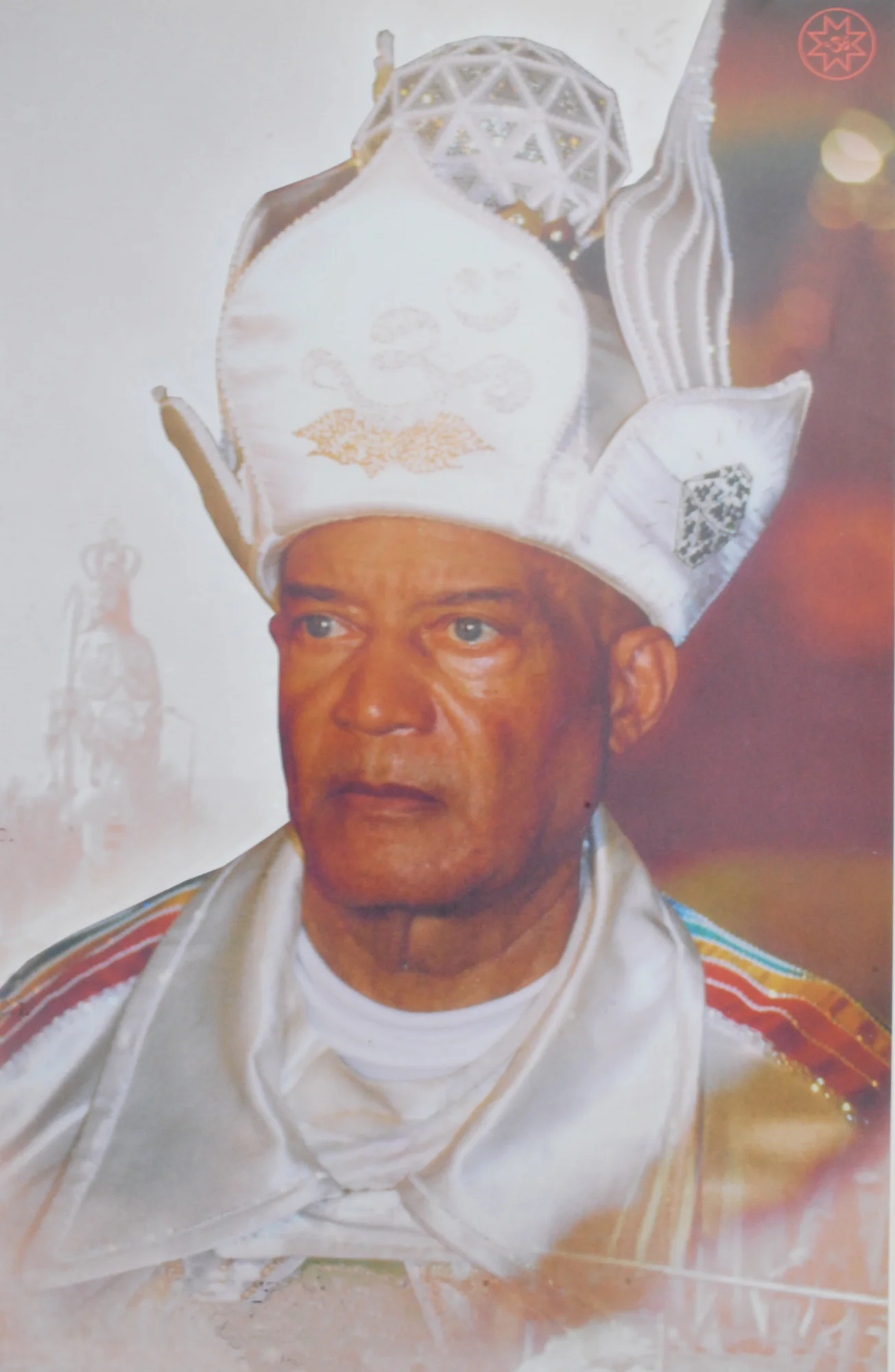
“The future rests on the education that will be given to future generations,” [1] declares Lord HAMSAH MANARAH: it is the spearhead of the change of mentality that is essential for escaping the spiral of war and moving towards true peace, the peace of the Golden Age.
It is not a matter of setting the bar too high. Education is a shared adventure in which adults and children enrich one another through the ups and downs of every human life. It requires humility and acceptance of the unexpected.
Children will make their own choices. But we can give them tools so that they can distance themselves from limiting conditioning and take part freely in making our life together more peaceful.
Here, then, are a few useful guidelines to help them
1 – take charge of their own lives,
2 – become actors for peace.
HELPING CHILDREN TAKE CHARGE OF THEIR OWN LIVES
At the root of education, whatever the circumstances, there is an unconditional love that knows how to set limits. Its importance was stressed in the testimony of a youth worker, “Young people cut off from society: restoring the social bond”.
Without going back over this, let us stress here the need for dialogue that leads children and adolescents to think. For today’s challenge is to foster their socialisation while sparing them the formatting of habits of thought and action that have generated so much selfishness and violence in our humanity.
Hence the importance of learning discernment, a sense of responsibility and a sense of effort, which are essential in the Aumist Teaching.
Discernment
Hamsananda, Bliss in the Absolute, is the initiatic Name of Lord HAMSAH MANARAH. Hamsah means the Absolute and also the Swan, which, it is said, can separate milk from water, distinguish the true from the false: in Aumism, discernment is a spiritual virtue.
– Discernment develops day by day, in every situation.
In a world where fake news, disinformation and propaganda push people towards reactions that are often herd-like and violent, this learning must begin at an early age.
It is good to ask children questions so that they find answers within themselves.
Little by little, they will learn to know themselves and get into the habit of exercising discernment in everything.
– An example: discernment in front of screens
The founder of Aumism wishes children to integrate into society and live with their times. But He insists on “the freedom of judgement that must be safeguarded at all costs as the guarantee of the fundamental freedoms of men and women living in a heavily mediatised world.” [2] As for social media, while some content is interesting, many scientists, with evidence to support them, warn of the risks of addiction.
What can we do to prevent it in young people?
Not be addicted to screens ourselves. Avoid using them as babysitters for the youngest!
Set rules before harmful habits take hold.
Talk with adolescents about what interests them on social media and elsewhere, encourage them to think for themselves about content, its sources and the possible risks. [3]
Show affection: if they feel recognised in their surroundings and helped when they are in difficulty, young people will be better able to escape emotional dependence on social media… or on AI playing the confidant.
In any case, to prevent dependencies that cut young people off from the world and accentuate psychological fragility, let us offer activities that develop social, sporting and creative skills. That is the aim of the “10 days without screens” challenge launched more than 20 years ago in schools in Quebec and later in France.
Let us remember that the content of the media, social networks and AI is directly connected to the level of moral consciousness of those who produce it and those who consume it.
Agreeing on an international ethic is essential.
It is also important to invest in education and to pass on the values of peace to children, who are the future designers and users of media and virtual worlds! Lord HAMSAH MANARAH warns us: “Raising the moral level of humanity by saturating human minds with optimistic, fraternal, unifying and constructive thoughts has become an urgent necessity.” [4]
The sense of responsibility
Together with the pursuit of profit, hyperconsumption creates a constant need for immediate satisfaction, with no concern for widening inequality, the depletion of natural resources and so on.
To escape such irresponsibility, we must bring back the long term and the collective interest.
An awareness: the relationship of cause and effect
– Every act has consequences.
Life teaches this at every moment. It is a matter of discussing with children certain facts of daily life or current events, looking for their causes, good or bad, sometimes distant.
– Reflection helps to foresee consequences.
We can encourage the budding adult to think before acting.
For themselves, they will ask what the benefits and risks of an action are.
For others, they will develop empathy: “How will so-and-so feel? What if I were in their place?” [5]
For the community, they will remember to ask themselves: “If everyone did as I do, what would happen?”
Thus, understanding over the course of their life that actions have an effect on the person who performs them, on others, on society and on our common future, children will forge their sense of responsibility.
The sense of effort
Too many human beings today seek to flee difficulties through self-destructive behaviour that weakens society. Lord HAMSAH MANARAH urges young people in particular to refuse all drugs and to take their lives into their own hands. “Will, courage and tenacity,” He says, “should be the watchwords of the children and adolescents of the Golden Age.” [6]
But how can we give children a taste for effort?
– Encourage their desire to grow
Help them cultivate positive thoughts: the book Le Yoga de la Vie pratique offers many effective techniques.
Support their ambition to succeed, with respect for others.
– Value their efforts
Do not freeze children in failure or in error, but encourage them to make the effort to get up again and change perspective and behaviour.
Teach them that the lessons of a failure prepare the next success.
To develop the strength to move forward, Lord HAMSAH MANARAH gives a precious Key for young people and adults alike: “You must adopt the attitude of the victor. Do not be afraid to move forward. Connect your mind to the current flowing from the divine Source, the infinite Power that governs all things; then you will be stronger in the face of trials, and obstacles will vanish before you.” [7]
HELPING CHILDREN BECOME ACTORS FOR PEACE
According to Kant: “Children ought to be educated, not for the present, but for a possibly improved condition of man in the future; that is, in a manner which is adapted to the idea of humanity.” [8] Today, the task is to prepare a change that will at last allow humanity to express the best of itself. The role of education is therefore to pass on human values, those of a citizenship extended to the whole world, without forgetting the value of happiness.
Human values
“It is because Love is absent from human relationships that humanity still persists in the darkness of war, intolerance and hatred,” [9] says Lord HAMSAH MANARAH.
To break the spiral of violence, we need to choose our principles of life consciously.
– Values founded on mutual respect
It is important that parents and teachers develop a feeling of brotherhood in all children: “Educating them in tolerance, respect for each person, true love and mutual help is giving them the character that will make society better.” [10]
Peace implies “the culture of non-violence, the absence of racism, sympathy for all nations, respect for all beliefs and religions, universal Love.” [11]
The example of adults is essential for going against the tide of prejudice: learning respect between girls and boys, and between children of different origins and cultures, happens every day, above all at school.
– A rightly understood non-violence
Non-violence does not abolish conflict. But verbal confrontation can avoid coming to blows and foster reconciliation.
Non-violence does not abolish resistance. “Children must not confuse kindness with weakness.”
Refusing revenge and hatred does not prevent us from defending ourselves or others. For boys and girls alike, the martial arts help to overcome fear.
From an Aumist perspective, telling children that the divine spark is present in them and in others reinforces the learning of respect, which is indispensable for moving beyond divisions, and indispensable for moving towards love for all beings.
The values of a citizenship extended to the whole world
They develop in young people a sense of belonging to the whole of humanity: “Each land is a domain of the immense human family, his own. He dwells on what brings people together rather than on what divides them. He loves his country faithfully and strives to be a conscientious citizen, concerned to increase his moral, intellectual and spiritual worth and his effectiveness. But he does not forget that he is a citizen of the world and of the universe.” [12]
– Kindness towards all the kingdoms
A symposium has already been devoted to ecology, “Let us change to save the planet”. Here is a brief reminder: according to Aumism, Consciousness develops through successive lives in the mineral, plant and animal kingdoms up to the human. The human being has the duty to protect the nature that has served as the setting for its evolution. Being alive, nature reacts to love as to contempt, and mistreated animals will become violent humans who perpetuate wars. We must therefore stop mistreating them and take care of them.
Quite apart from Aumism, friendship between a child and an animal is a joy. And young people who love animals and the whole of nature will later strive to reconcile human beings with their environment.
According to the Earth Charter (2000), “peace is the wholeness created by right relationships with oneself, other persons, other cultures, other life, Earth, and the larger whole of which all are a part.” [13]
– Kindness towards all peoples
How can the family help children express it?
By sending thoughts of love, for example: “May love, peace, harmony and brotherhood reign among all people, all peoples, all nations”, knowing that “wishing happiness and prosperity for all fosters one’s own happiness.” [14]
Through prayer, which radiates beyond borders: in Aumism, the OM is repeated at every age.
By contributing to acts of solidarity.
Let us not forget that cultivating the values of peace requires effort. As we saw in an earlier talk, conquering inner peace means moving beyond one’s own violence. To make the youngest aware of this, let us summarise a Native American story. A grandfather tells his grandson that two wolves are fighting inside every being: the wolf of goodness, love and peace, and the wolf of spite, hatred and war.
“Which one wins in the end?” asks the little boy. “The one you choose to feed!”
The value of happiness
Lord HAMSAH MANARAH links the learning of human and spiritual values with learning happiness. Cultivating happiness is a duty towards oneself and others, for it is contagious. It is a form of resistance to pessimism, which depresses and is contagious too.
How can we foster in children the aptitude for happiness?
– Offer an attractive example
Adults who love and respect each other, settle their conflicts without rancour and express joy despite life’s ups and downs make children want to follow this model.
An attractive example also offers a positive experience: “Love one another; as I have loved you,” says Christ to His apostles.
– Offer sources of fulfilment
Freeing oneself from guilt and resentment through reparation and forgiveness.
Living the present fully, without giving free rein to a catastrophising imagination…
Cultivating, even in difficulties, an optimism that, while remaining aware of reality, brings hope and confidence and helps us seize opportunities and better overcome trials.
Showing attention to others, which attracts the sympathy of those around us and improves relationships.
Children who know how to appreciate the small joys of their life can share them, and in return they share the joy of others. It is a way of discovering little by little that “he who loves his neighbour is the happiest person in the world.” [15]
CONCLUSION
In the end, this education for peace meets the fundamental needs of the human being, which the psychologist Maslow arranged in the form of a pyramid. From bottom to top: physiological needs, safety, love and belonging, esteem, and at the summit, self-actualisation.
Self-actualisation, the purpose of life, here means becoming fully human by developing more and more love, until one becomes, following the spiritual path of Aumism or of other traditions, a pure channel of divine Love.
Those who offer the youngest the means to cultivate love and the strength to become actors for peace are themselves actors for peace.
That is why Lord HAMSAH MANARAH blesses the families who take on this responsibility.
And this blessing extends to all the members of the great human family, parents or not, who strive against all odds to prepare a peaceful future for the new generations.
V. Mandaja
*******
[1] L’Aumisme, La Doctrine de l’Âge d’Or, p. 243
[2] Le Flambeau d’Unité, p. 200
[3] See the websites of UNESCO, UNICEF and the CLEMI (French centre for media and information literacy).
[4] Le Yoga de l’Amour dans la Force, p. 302
[5] See Eduscol, teaching kit for empathy sessions at school, 2024
[6] Une Loi pour détruire le Mal, p. 339
[7] L’Unité des Visages de Dieu, p. 282
[8] Immanuel Kant, On Education
[9] La Révolution du Monde des Vivants et des Morts, p. 344
[10] Vers un Âge d’Or d’Unité, p. 143
[11] Le Yoga de la Vie pratique, p. 277
[12] Ibid., p. 279
[13] The Earth Charter (2000) is an international declaration of fundamental values and principles which its supporters consider useful for building a just, sustainable and peaceful world in the 21st century (Principle 16f).
[14] Le Yoga de la Vie pratique, pp. 166 and 173
[15] Vers un Âge d’Or d’Unité, p. 146