SYMPOSIUMS
LECTURE
No. 6 – THINKING BETTER TO LIVE TOGETHER BETTER
No. 6 – THINKING BETTER TO LIVE TOGETHER BETTER
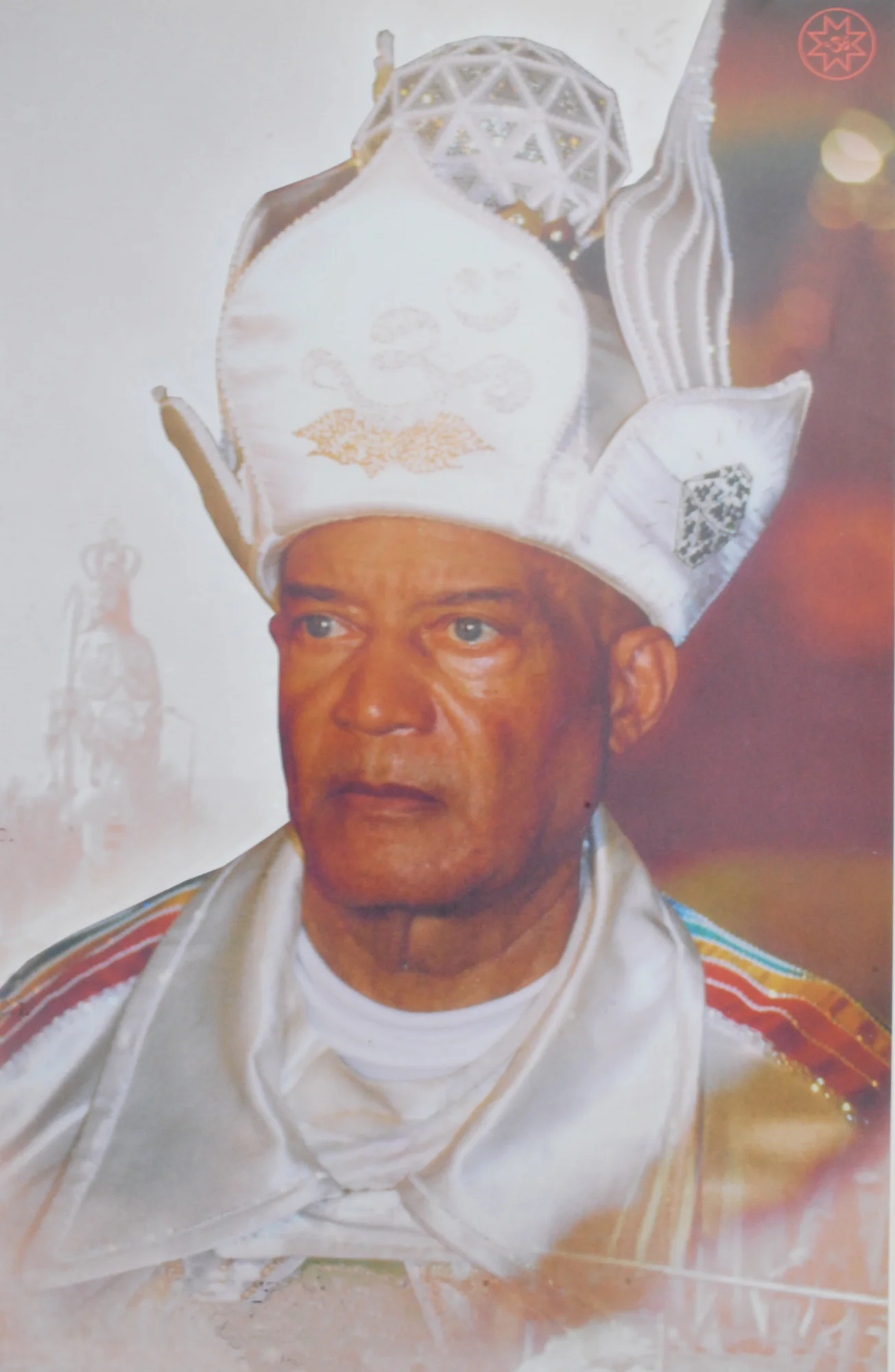
“The Earth of the present is the result of the thoughts of the billions of human beings who have succeeded one another on its soil,” says His Holiness the Lord HAMSAH MANARAH.
That is why learning to think better is the precondition for a world of peace in the future. The purpose of this lecture is to present what each of us, on our own scale, can put into practice to take part in building a future in which peace will no longer be a hope but a reality.
We will therefore look at:
- How violence creeps into our lives
- What the mechanisms of thought are
- How to manage to think better
I – SOME ASPECTS OF VIOLENCE IN OUR DAILY LIFE
We meet violence constantly in our daily lives. It is present in our consumer society. Advertising, for example, urges us to have a great deal and fill our cupboards, but also to buy before our neighbour and to buy more than he does: it is a real competition. Violence is on our screens. Video games and films show images that end up getting us used to seeing violence as normal, to trivialising it. For some it can even become a model to follow. We also find it in the prevailing doom and gloom fed by certain media. We are bombarded with “bad news” on a constant loop. Through the small screen, war, murders, accidents, immigration… hit us full in the face. So much so that we end up seeing nothing else and becoming demoralised.
Violence is conveyed by our prejudices and stereotypes. We often hold hostile opinions about people because of their religion, their political ideas, their race or their sex. There is much talk at the moment of violence against women, and racism is also often in the news. Considering others inferior because they do not have the same skin colour or the same religion becomes a licence to humiliate them on social media, for example, or to beat them up because they are different. We find violence, again and again, in social inequalities. Being unable to obtain the minimum needed to live decently while others consume, throw away and waste gives reason enough to revolt. Inequalities within our societies, but also the divide between countries of the North and countries of the South, with the shameless plundering of the resources of some by others. All these forms of violence have a direct impact on our way of thinking and of living together.
However, let us ask ourselves: are we strangers to this violence? We forget that thought is creative: “What you think, you become.”[1] By this we understand that violence has its roots in ourselves, in the form of our selfishness, our anger, our hatred, our spirit of revenge, but also our fears, our envy, our desires, and so on. We know that any of us may, for one reason or another, wish harm on our neighbour.
In Yoga et Sagesse we can read: “Society has the misfortunes it has brought upon itself.”[2] And also: “The improvement of the social condition depends as much on economic and social policy, on the transformation of structures and on the solving of many practical problems, as on man’s work on himself.”[3] So we need to change our way of thinking: “If you think wrongly, you will act wrongly. If you act wrongly, you will perpetuate wars. If wars are perpetuated, you will increase the misfortune of your planet.”[4]
II – CONSEQUENCES AND MECHANISMS OF OUR THOUGHTS
Thoughts are “waves recalling the succession of circular ripples produced when a stone is thrown into calm water”.[5] Thought waves spread instantly to infinity. From the moment we have sent them out, they go on spreading. Good or bad, these waves will produce the same type of vibration in the minds of those they reach. Indeed, “our thoughts, our bad actions, our hatred feed ‘rivers’ of the same nature”, the Lord HAMSAH MANARAH explains (…) “We are all individually and collectively responsible for the wars that occur, through the actions performed and the thoughts emitted in the present life and during previous incarnations.”[6]
Of course, no one wishes to live in a nightmare world where violence rules in families, in societies and between peoples. So how and why do we come to generate this world of violence through our thoughts?
“Thought is a pearl that very often becomes corrupted on contact with the unconscious, the synthesis of all repressions,”[7] says the Founder of Aumism, who reveals to us the existence of a karmic double in every human being. “The double is a crystallisation of negative energy specific to each individual. It is the dark counterpart of each person, created in the course of past incarnations.”[8] I will not go into the details of how this double is constituted, which is not the subject of this lecture. It is important, however, to consider its reality in each of us, for it directly influences our thoughts, often without our knowing, since it crystallises our unconscious. La Loi d’Évolution des Âmes reminds us that the world is the image of our thoughts, and that we need to police our thoughts, to separate the good seeds from the bad and to burn, in the fire of prayer, those that prepare a bad destiny.
The Buddha Shakyamuni recommended: “Have right thought.” The Lord HAMSAH MANARAH adds: “Have continuity in right thought, for on this perseverance depend the daily gestures, words and actions, which have their roots in the mind and in the aerial double.”[9] This is advice we must keep constantly in mind if we want living together one day to mean living in peace.
III – THINKING DIFFERENTLY TO LIVE TOGETHER BETTER
“Thought is a double-edged weapon: in the positive, it can generate love, peace and brotherhood; in the negative, war, hatred and destruction.”[10] Knowing its mechanisms allows us to take our destiny in hand. In the moral and psychological work that Aumism invites us to undertake, we find in particular the mastery of thoughts, emotions and passions… We saw earlier that violence, conscious or unconscious, is born within us. It is therefore essential to transform our being in depth so as no longer to feed the violence of our societies. To this end, Aumism offers practical and effective keys.
A fundamental key: cultivating the feeling of Unity
Aumism teaches that man is “Divine in essence”. Since the Divine is in each one, all human beings are brothers. But “our incomplete education does not lead us to consider deeply enough the Unity of all living beings; that is why there are so many oppositions in societies”.[11]
Let us note that, through reincarnation, we are in turn man or woman, and we are led to be born in different countries. Consequently, “by harming my brother, I harm myself”.[12]
Seeing the Divine in each person frees us from the prejudices that divide us. “All religions are worthy of respect, provided they help man to take himself in hand and to respect certain moral values,” says the Lord HAMSAH MANARAH.[13] “Every man, every woman deserves our respect.” Aumism is open to people of all religions and all races, and also encourages the sharing of responsibilities between men and women, all of whom can enter the priesthood.
Another key: making one’s mind positive
The practice of autosuggestion helps us to do this. It consists in regularly repeating positive sentences, especially at bedtime and on waking. It is “a powerful means of developing our qualities and our inner strength. By making the subconscious positive, which reaches the deep layers, we transform ourselves physically as well as morally; we attain worldly happiness as well as true happiness.”[14]
By calming the mind, positive thoughts foster self-confidence, tolerance and kindness. They encourage favourable situations in our lives. In practice, we can use small notices or signs, carefully placed in our living spaces, on which we have written key ideas. A few examples:
“I am more and more master of myself.” “I cultivate love and compassion towards my neighbour.” “I master my thoughts, my emotions and my feelings better and better.” “I am non-violent in deeds, in words and in thoughts.” And so on.
These exercises in positive thinking make us more and more aware of the thoughts we generate. So when a negative thought escapes us, we can cancel it:
“I cancel the thought of hatred sent against so-and-so and send him a thought of love, peace, harmony and unity. May his soul forgive me and be reconciled with my inner God.”[15]
This leads us to generate kind thoughts:
We can send thoughts of peace, love, health and prosperity in all the directions of space. It is a very simple act, accessible to all, which can do a great deal to improve living together. “Through your beneficial thoughts, generate a powerful current of peace, brotherhood and true love, strong enough to ward off war and social conflict.”[16]
Deliberately generating kind thoughts is a key constantly built into Aumist meditations and blessings. In particular, let us remember to pray for our leaders and politicians in France, but also throughout the world. “All human beings, believers and unbelievers, should be invited to direct their thoughts of goodwill towards heads of State, peoples and nations, in order to prepare a future of social harmony and Peace.”[17]
The extension of kind thought is prayer, and in particular the repetition of the sound OM. As this subject has already been discussed during the colloquium, I will simply say that the Sound OM accelerates the evolution of all living beings. It represents “the Ark of the Covenant between man and nature”, the point of balance of the whole of creation. Believers and unbelievers can unite around this prayer of Evolution, which raises all that lives back up to GOD.
It is important to help children cultivate positive and kind thoughts. Children are the adults of tomorrow. Let us teach them to think in a way that is beneficial, first of all for themselves. When I hear one of my children say “I’m useless!” or some other negative judgement about themselves, I immediately have them say “I am a good person, I have confidence in myself, I develop my qualities better and better” or some other positive thought. And it becomes a game: they think of it automatically (and so do we, by the way, because they learn to correct us!).
Education is a force for the future of our humanity. We see terrorists who have succeeded in converting children and young people to violence and hatred. Children follow the example of adults, so let us teach them to build a world in which we can all live in harmony. “Prepare your children to become knights of universal peace,” says His Holiness the Lord HAMSAH MANARAH. “This implies the culture of non-violence, the absence of racism, sympathy for all nations, respect for all beliefs and religions, the greatest tolerance, universal Love.”[18] Let us remember that kindness must not be confused with weakness. Non-violence requires strength of character.
This education fosters the ability to live better among one’s fellow beings. In this way it prepares a better future for all the new generations.
To conclude, let us keep in mind this sentence from La Doctrine de l’Aumisme to encourage us on the path of our transformation:
“No one is too weak and no thought is lost. The silos of rice and wheat that feed the population of the globe are made up of tiny grains.”[19]
So let us set to work in joy and in the hope of a better world. Each of us, on our own scale, can contribute a great deal to emerging from violence.
“May love, peace, harmony and brotherhood reign among all men, all peoples and all nations.”
S. Pragam
*******
[1] La Loi d’Évolution des Âmes, p. 167.
[2] Yoga et Sagesse, p. 240.
[3] Ibid., p. 241.
[4] La Doctrine de l’Aumisme.
[5] Le Yoga de l’Amour dans la Force, p. 298.
[6] Ibid.
[7] La Doctrine de l’Aumisme, p. 401.
[8] Ibid., p. 403.
[9] La Doctrine de l’Aumisme, p. 401.
[10] La Loi d’Évolution des Âmes, p. 167.
[11] Le Yoga de l’Amour dans la Force, p. 300.
[12] Ibid., p. 300.
[13] Le Flambeau d’Unité, p. 65.
[14] La Doctrine de l’Aumisme, p. 546.
[15] Vers un Âge d’Or d’Unité, p. 185.
[16] La Doctrine de l’Aumisme, p. 348.
[17] Le Yoga de l’Amour dans la Force, p. 302.
[18] Le Yoga de la Vie pratique, p. 277.
[19] La Doctrine de l’Aumisme, p. 348.