AUMISM
READINGS
Texts, teachings and news of Aumism.
TO READ
A story for the generations of the present time
November 7, 2020
Extract from: “LE FLAMBEAU D’UNITE” by S. HAMSAH MANARAH
Chapter VIII, ERASING THE MIRROR OF THE PAST, page 173
A story for the generations of the present time
Once upon a time there was a well-off family: the father was a senior civil servant, the mother a doctor of the body. From their union were born two boys and two girls, and on their offspring they pinned all their hopes. “The Earth has certainly evolved,” they both thought. School could now be done, for those who wished, through the television. All it took was a connection and an annual subscription to spare oneself the torments of a hellish life in motorway traffic jams, or the children who might be forgotten in the evening in the yard of a deserted school. The father came home from work only late in the evening, the mother saw her last patient after nightfall and was sometimes woken with a start for an emergency she had to deal with at a moment’s notice.
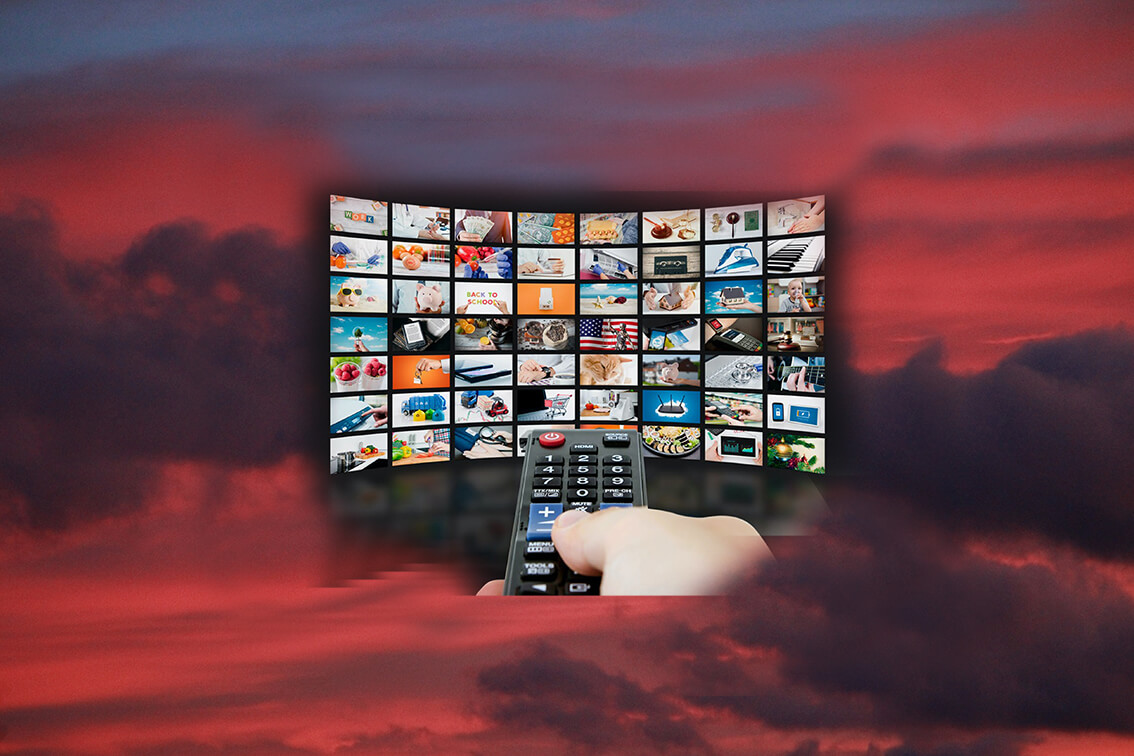
In all this bustle, the children knew nothing of life but the school of television, talking through a sound screen with a distant teacher who gave lectures without knowing whether his studious pupils were listening, playing marbles or fighting over trivial matters. If a cartoon, a western or a series on another channel caught the children’s interest, there they were, forgetting their homework and playing truant at the press of a remote-control button. The parents, who had thus spared themselves every worry, were soon disillusioned.
Their two sons and their daughters had become so selfish that the suffering of others no longer touched them, if indeed it had ever touched them at any moment of their lives. They spent their time squabbling over the precious television remote. Each being of a different age, each wanted to impose his or her programme on the others.
To put an end to this civil war within the home, the accommodating parents bought each of them a television of their own. Very pleased to have won their case, the children each shut themselves up in their room, hooked as they were on their television programme. They came to talk as in the films, to be violent as in the films, in love as in the films, and perverse and vicious as in the films. And so television gave birth to four little monsters, each trying to satisfy on the others the instincts dulled by watching demonic films. They seldom left their comfortable house. The few friends they had made in the neighbourhood were quickly abandoned when the time for the favourite series approached. The streets emptied of children’s cries as the cartoon of the day drew near.
One day these completely disoriented young people arrived at university. One after another, the children of the senior civil servant and the doctor failed, on account of their many absences due to television. Some cleverer students had tiny television screens in their open satchels, an earphone in the ear, and the trick was done. The professor could shout himself hoarse; the young man was secretly watching the latest fashionable film of wild love.
This society of overconsumption of images brought about a rise in violence, debauchery, and crimes and offences of every kind. The new professions that attracted young people longing for heroes were those of gangsters, swindlers, or else policemen and cowboys, because they were so present on television screens. To do as on TV, some gangs of youths organised themselves, amusing themselves by kidnapping innocent people whom they subjected to all the refined tortures seen on TV.
The rulers, panic-stricken, tried to limit television time for young people, but the image addicts took to the streets and brought down the government. The riot provoked by the attempt to police images was such that the press spoke of a “telerevolution”. The new government, wishing to win over the rising generations, decreed among the Fundamental Rights of man the Freedom of access to images, whatever their nature and whatever the age of the viewers. So it was that from the age of 5, the little ones, left to themselves, learned from television how a woman is raped, how a man who refuses to talk is tortured, how cars are stolen and many other sins, turning society upside down.
The father, the senior civil servant, no longer recognised his children. One day the eldest of his sons slapped him in the middle of a family gathering: the father had just switched off the television, which was broadcasting the latest rock concert live! The father’s ashen face said a great deal about his stupefaction. He finally understood what catastrophe his desire for peace and quiet with regard to his children had produced. Opening his eyes to the reality of his home, he saw that his children were acting like the heroes of the great films or like the worst swindlers they had taken as idols. One of them had even secretly bought himself a submachine gun, to be like the mercenary.
The police in the street, overwhelmed and themselves programmed by the myth of the TV detective, used more and more the brutal methods of their heroes. The civil war passed from the family home to the theatre of the street, from the theatre of the street to the local cinema: from neighbourhood to neighbourhood, the city went up in flames all at once. The government resigned, giving way to the heads of television channels who, to please the image addicts, invented tele-government, in which decisions were taken after consulting the viewers, invited to vote.
The greatest electoral quarrels of course revolved around television programmes. Parties were organised, the war of the channels raged, each one striving to cast scandal and discredit on the best-placed rival or rivals. The assembly of deputies was henceforth elected through televised polls. Ministers could be dismissed outright on a mere fit of anger from viewers unhappy with the film being shown. Of culture there was no more; televisual anarchy had infected all the electronic circuits of the hyper-mediatised society. The behaviour of children, adolescents and adults was utterly stereotyped. Knowledgeable psychologists could stamp on each of their gestures the phrase that had now become sacred and hallowed: “As seen on TV”.
Those dissatisfied with this televised dictatorship then founded the party for the liberation of image-addicted men. These ecologists of a new kind tried by violence to deprive television addicts of images, sabotaging aerials and satellites and jamming broadcasts. The declared war of images ended in a bloody confrontation between a mediatised society and the supporters of a healthy life without images, of a return to nature without television programming.
This story, My brother, My sister, will seem to you absurd in every respect. You will say to yourself: “That has no chance of ever existing”, and you will laugh at Me, thinking: “What an imagination!” Verily I say to you, if you are not blind to the realities of your mediatised world, if you know how to look the truth in the face, you will know that I have only enlarged out of all proportion the features of our present society. Have you not learned from the history of mankind that reality often goes beyond fiction?
In this Work I prefer deliberately to paint a dark picture of the small screen and its perverse effects, so that one day people may remember this far-fetched story which they had classed among the good or bad science fiction films. Never forget, My brother, My sister, that television is the reflection of the collective unconscious of planet Earth. If thefts, rapes, swindles and violence of every kind top the bill on the small screen, it is because the whole of humanity demands its daily share of images of horror. Skilful programming demons, specialists in collective brainwashing, know what they are doing in accustoming generations to this excessively mediatised way of life.
Will television devour its children? No one knows, but if I intervene in this chapter, it is because there is still time to control the process by which children are programmed by television. Rest assured, pilgrim of modern times, I am not going to war against the media God of the image. I am simply drawing attention to the happy medium that society and the rulers of the future will have to find between a life that is morally and physically healthy and a life robotised by the daily drug of the same images of hatred and violence.
*******