SYMPOSIUMS
LECTURE
No. 2 – HOW TO MASTER ONE’S EMOTIONS IN DAILY LIFE
HOW TO MASTER ONE’S EMOTIONS IN DAILY LIFE
SUMMARY
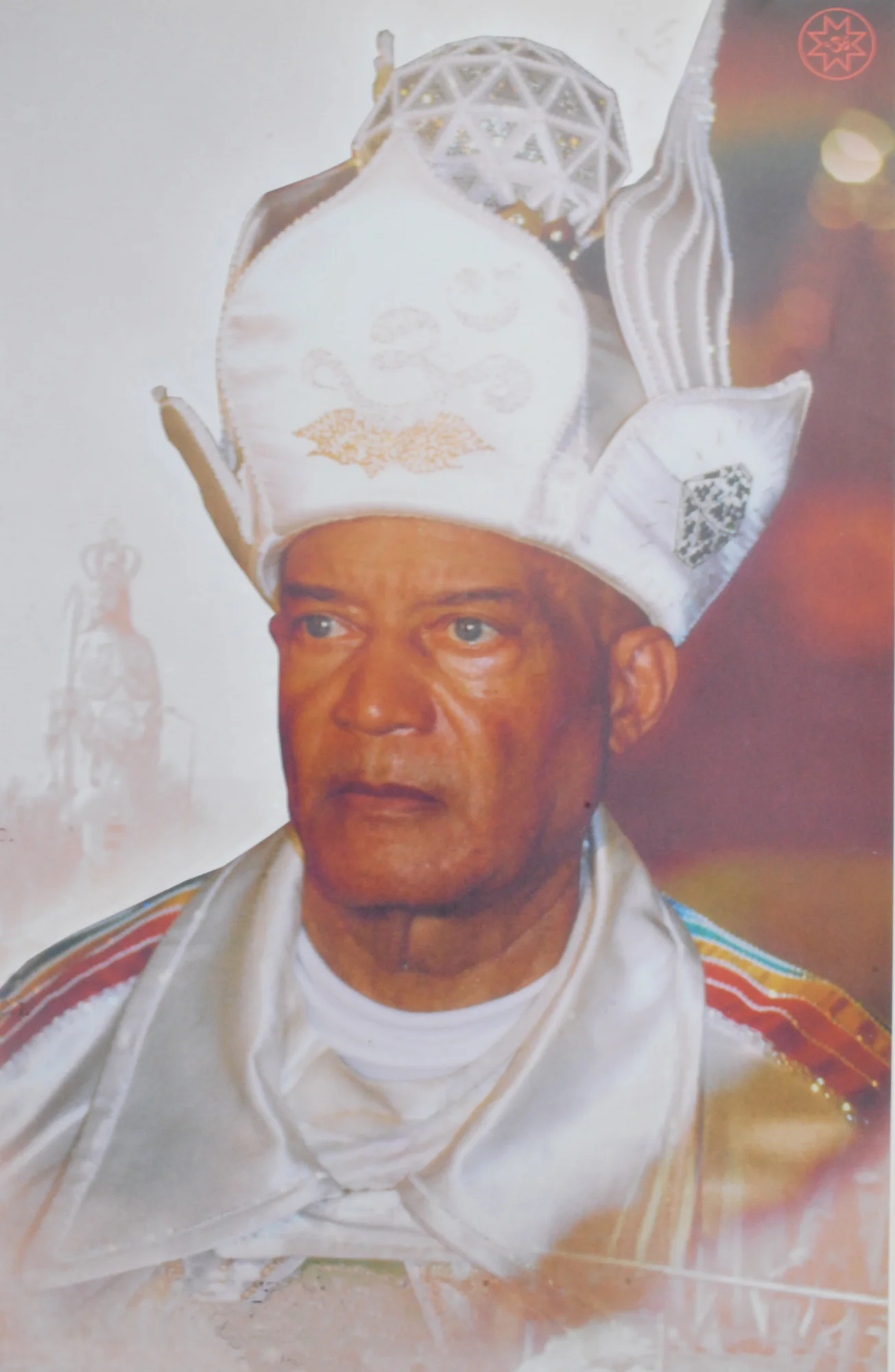
Destabilising emotions are an obstacle to happiness. To help us strengthen ourselves inwardly, His Holiness Lord HAMSAH MANARAH offers many techniques suited to daily life.
This talk will discuss in particular a balanced lifestyle; awareness of one’s reactions, the springboard for mastering emotions; specific breathing exercises that soothe and regenerate; and practices that foster the union of body and mind, such as Hatha Yoga and martial arts oriented towards non-violence, for example Vigildynjaya. The spiritual path and the repetition of the sound OM foster the conquest of serenity. Those who free themselves from fear “will be able to love without constraint, from a position of inner strength”, says His Holiness Lord HAMSAH MANARAH.
The conquest of inner strength makes it possible to refuse the spiral of violence: it is a way of contributing to social balance.
TALK
An emotion is a more or less intense inner disturbance, pleasant or not, caused by an unexpected situation, which, depending on the individual, is expressed through physical reactions.
“When you are happy,” says His Holiness Lord HAMSAH MANARAH, “you enter the palace of beneficial emotions, rekindling the flame of the body’s health and the soul’s harmony. But when, like a pendulum, you swing into unhappiness, then how many storm clouds burst from your mind, how many uncontrolled emotions devastate everything in their path!” (La Loi d’Évolution des Âmes, p. 423). The Lord then compares emotions to “a cyclone that destroys health, balance and the harmony of body and mind“ (p. 421).
According to traditional Chinese medicine, excessive emotions cause energy imbalances that are sources of illness. For example, excessive anger unbalances the liver; prolonged fears, the kidneys; anxiety, the spleen, and so on.
Nowadays, family and work difficulties, a hectic pace of life, fears stirred up by intense media coverage and various forms of insecurity often generate destructive emotions that are hard to manage in daily life.
How, then, can we avoid being destabilised by negative emotions?
His Holiness Lord HAMSAH MANARAH teaches many ways of mastering them. Here are a few:
I. A HEALTHY DAILY LIFESTYLE
II. OBSERVING ONE’S REACTIONS
III. BREATHING AND RELAXATION
IV. HATHA YOGA, THE MARTIAL ARTS, AND VIGILDYNJAYA, A MARTIAL ART OF SYNTHESIS
I. A HEALTHY DAILY LIFESTYLE
- Diet
A healthy, balanced diet, vegetarian if possible, helps maintain good health.
During meals, let us remember that malevolent thoughts poison the body, hinder digestion and turn food into poisons that cause illness.
Let us take the time to chew and to breathe. Let us welcome the positive thoughts that foster good assimilation. “A healthy soul in a healthy body.”
- Rest
Sufficient sleep is fundamental to avoid becoming irritable and thus falling under the sway of emotions.
- Following a schedule
The feeling of being overwhelmed with work is also a source of stress. A simple way to master one’s time is to follow a schedule and thus plan how one’s days will unfold. It is important to include moments of relaxation and breathing in the day and, if possible, prayer and meditation.
Of course, it is wise not to lock oneself into overly rigid principles, which risk creating inner tension.
II. OBSERVING ONE’S REACTIONS
A balanced life provides a favourable context for observing oneself.
As a first step, it is important to become aware of what happens within us in different situations. It is a matter of being a spectator of oneself, of observing oneself. The second step is to recognise and accept what is happening within us without judging ourselves. The third concerns liberating action, linked to the power of positive affirmation, which will be discussed in the next talk.
As an example, let us look at an easy technique.
Here it is. If I say to you now, you who are here: “Stop! Stay in your position, stay frozen and observe yourself”…
Then become aware:
- of the attitude in which you are frozen,
- of your position, whether you are tense or relaxed,
- of your gaze, your face, your mouth, your body as a whole, your breathing,
- of your inner state, whether you are calm or anxious, distressed, stressed, etc.,
- observe yourself as if you were analysing a third person.
This “Stop” technique, recommended by His Holiness Lord HAMSAH MANARAH, can be practised alone or in a group under the guidance of a leader.
We become spectators of ourselves.
Note that this observation of our reactions reveals elements of the unconscious. His Holiness Lord HAMSAH MANARAH writes: “Emotion is an instinctive, impulsive force, bursting forth when one least expects it from the depths of the erupting unconscious.” (La Loi d’Évolution des Âmes, p. 419)
But above all, when we accumulate destructive emotions of fear, anger, jealousy or revenge, observation makes us realise that we should accept a change of lifestyle or mentality and that, very often, we must learn to forgive.
Forgiving oneself and forgiving others allows us to let go of a disharmonious inner state: anger, anguish, guilt…
To sum up:
First, become aware of one’s inner state, observe oneself, analyse oneself, and learn to detach oneself by using the “Stop”.
Second, accept being where we are and accept the emotion, for one cannot change what one has not accepted.
Third, learn to forgive oneself and to forgive others, and make positive affirmations so as to avoid crystallising these emotional shocks in the body.
Alongside work on oneself, exercises that foster the union of body and mind are of proven effectiveness.
III. BREATHING AND RELAXATION
His Holiness Lord HAMSAH MANARAH reminds us:
“Control of the breath allows control of the emotions. A man who is angry or gripped by some fear is short of breath and breathes rapidly. A nervous person generally breathes insufficiently. It is enough to apply oneself to breathing slowly, gradually and deeply to regain one’s calm and serenity.” (Naturopathie et Yoga, p. 52)
The Lord offers us many exercises, including “calm breathing” and “walking breathing” (Naturopathie et Yoga, p. 52).
In Le Yoga de la Vie Pratique, the “remarkable exercises for mastering emotionality and for preventing and eliminating the influence of emotions”, those that “foster self-mastery”, combine breathing, contraction and relaxation, muscular movements and positive thought (pp. 76, 77, 100).
Let us not forget that progress must be balanced. One must “apply oneself to breathing often and deeply, but naturally, without forcing” (Le Yoga de la Vie Pratique, p. 78).
Breathing is indispensable to relaxation, which is a pause, a break that allows us to eliminate the worries, stress, conflicts and tensions of daily life. Bodily relaxation combined with breathing and autosuggestion quickly allows us to recharge nervously and physically and to settle into a state of serenity.
According to some relaxation specialists, 20 minutes of relaxation is equivalent to 4 hours of sleep.
If you wish, you will find in Naturopathie et Yoga a relaxation technique that you can practise at home (chapter III).
Let us emphasise here the importance of repeating the Sound OM, which “calms frayed nerves, sweeps away emotions, erases agitated thoughts and restores serenity” (La Loi d’Évolution des Âmes, p. 435). Let us also emphasise that “meditation allows the restoration of harmony and inner serenity” (L’Unité des Visages de Dieu, p. 316).
And since nothing beats practice, here is a short exercise (which we have adapted) offered in Le Yoga de l’Amour dans la Force (p. 155).
- Let us choose four qualities to develop, for example these: Calm, Strength, Courage, Serenity.
- Relax all your muscles.
- Breathe in, thinking: “I absorb the universal forces that bring me calm, strength, courage and serenity.”
- Hold your breath, repeating mentally: “I anchor within me calm, strength, courage and serenity.”
- Breathe out, thinking: “I expel the air with all the impurities of my heart and my mind, and I settle into peace and serenity.”
IV. HATHA YOGA, THE MARTIAL ARTS, AND VIGILDYNJAYA, A MARTIAL ART OF SYNTHESIS
His Holiness Lord HAMSAH MANARAH offers us other techniques that foster the conquest of inner peace, in particular Hatha Yoga, presented in the book Naturopathie et Yoga. He writes:
“Hatha Yoga, thanks to its high applications, will have a special place. It can accompany and take over from the practice of the Martial Arts when these are part of a true conquest of body and mind enlightened by a transcendent aspiration (…). Whoever practises Hatha Yoga regularly, in the spirit and under the conditions indicated, gains certain benefits common to both sexes: health, vigour, dynamism and optimism.” (Naturopathie et Yoga, p. 38)
On the subject of the Martial Arts:
“Use the influence of the Martial Arts on the formation of character. Boys and girls will find in them a way to develop the strengths of the soul, self-control, mastery of body and emotions, coordination of the physical and the mental, courage, effective reflexes and a chivalrous spirit; fearing nothing, they will be able to love without constraint, from a position of inner strength.” (L’Aumisme, la Doctrine de l’Age d’Or, p. 241).
Lord HAMSAH MANARAH is the inspirer of the Aumist martial art, Vigildynjaya, which combines the main Martial Arts of East and West with Yoga and Qi Gong. The aim is to bring together, without distinction and in a single discipline, men and women of different cultures. Beyond its technical aspect, Vigildynjaya brings together the principles common to Yoga and the Martial Arts. In this Martial Art, we do not use physical force, but the inertia and weight of our partner in addition to our own.
The techniques combine the use of visualisations, positive affirmations and the repetition of Mantras. We practise sequences called Katas, as well as Hatha Yoga postures.
Many combat sports rely on aggressiveness to be effective. But in the practice of Vigildynjaya, which is dynamic and non-violent, the practitioner is an observer of himself. He practises introspection to detect physical blockages (tension, stiffness…) and inner tensions (fears, anger, complexes). The movements are supple and powerful, fluid and natural, and require no special aptitude.
The Japanese say “Do shu sei ari”, meaning “keep a calm heart at the centre of action”. To be like the ocean: raging on the surface, calm and unchanging in its depths.
His Holiness Lord HAMSAH MANARAH recommends practising the Martial Arts as non-violent Arts aimed at developing true self-mastery free of aggressiveness and fear. The conquest of inner strength makes it possible not to respond needlessly to outside provocations, and to use physical force only as a last resort. Thus, striving to master one’s emotions is not only a factor of personal balance; it is a way of contributing to social balance. The person who masters himself knows how to adapt to circumstances and to a rapidly changing society. He helps to foster a world of peace, tolerance and solidarity.
In conclusion:
The person who wants to master their emotions learns to observe themselves and to become more and more aware of their gestures, their breathing, and their words, actions and thoughts in daily life. They practise exercises that foster the union of body and mind, leading to inner peace.
Moreover, the best way to acquire mastery of the emotions is to live in full awareness of one’s spiritual dimension and to affirm, as His Holiness Lord HAMSAH MANARAH advises:
“I am not these disturbing emotions (…)
I am the immortal soul in the process of transformation,
I am One with my inner God
And I settle into peace, calm and serenity.”
(La Loi d’Évolution des Âmes, p. 435).
Bibliography:
Books by His Holiness Lord HAMSAH MANARAH, Éditions du MANDAROM
Naturopathie et Yoga
Le Yoga de la vie pratique
Le Yoga de l’Amour dans la Force
L’Unité des Visages de Dieu
L’Aumisme, la Doctrine de l’Age d’Or
La Loi d’Évolution des Âmes