SYMPOSIUMS
LECTURE
No. 2 – THE BALANCE OF BODY AND MIND
THE BALANCE OF BODY AND MIND
For a long time the body was regarded as an obstacle to spiritual life, the flesh being associated with sin. Mortifications and violence against one’s own body expressed the aspiration to be freed from the chains of matter.
Today, on the contrary, we are witnessing a veritable cult of appearances, with the body at the centre of people’s concerns.
But any opposition between body and mind creates an imbalance that shows itself in physical and psychological disorders. The human being cannot live torn apart.
Balance requires unity to be restored between body and mind, and the fulfilment of the individual in all their dimensions.
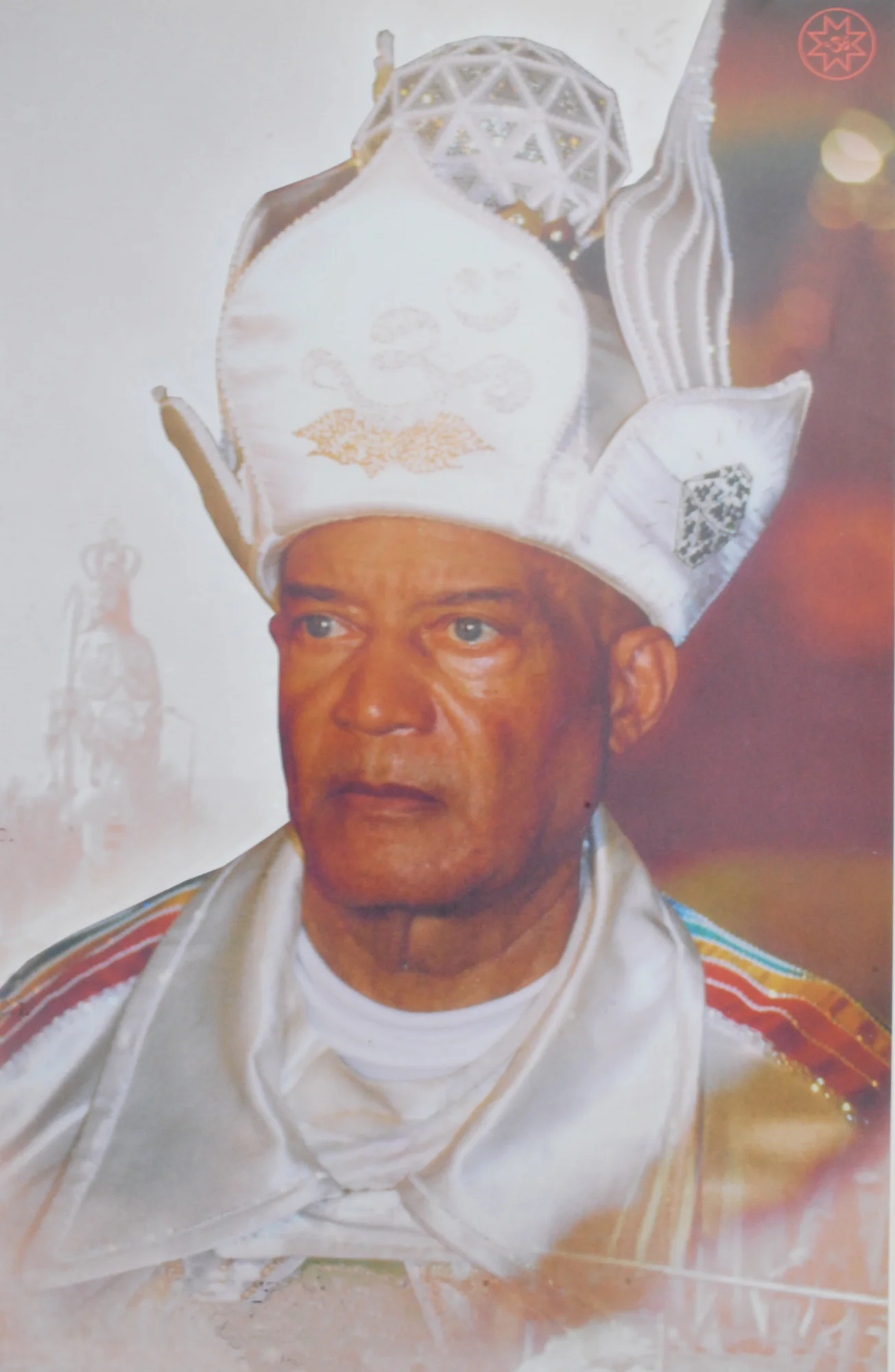
I personally found this direction in the books of His Holiness Lord HAMSAH MANARAH, Founder of Aumism. My first readings, Naturopathie et Yoga and Le Yoga de la vie pratique, met my need for concrete elements and practical keys to lasting happiness. And above all I wish to express my gratitude to His Holiness for His example and His Teaching.
Physical and mental health and lasting harmony with oneself, with others and with the world rest on three pillars:
- mental attitude;
- diet;
- physical exercise.
These three pillars are described as the three major techniques of naturopathy (there are seven others, known as minor techniques).
This is what I will discuss in this talk, drawing mainly on Naturopathie et Yoga and Le Yoga de la vie pratique. These books deal with these three points through a concrete approach that embraces both body and mind, is firmly rooted in daily life, and can be applied independently of any religion.
I. MENTAL ATTITUDE
Mental attitude guides all human actions. It multiplies the positive effect of a healthy diet and of physical exercise, which contribute to the balance of the human person. Mental attitude must preside over every action.
Knowing oneself well
We know ourselves very little, and this lack of self-knowledge is the source of most of man’s ills and of the misunderstandings in society. We busy ourselves with dominating the outside world and forget to establish better mastery of ourselves. “Know thyself and thou shalt know the universe and the Gods.” Knowing oneself better means adapting one’s life to what one is, in terms of diet, choice of profession, place of residence, way of life and so on. Whoever knows themselves well understands others better and avoids projecting their own faults onto them. Whoever knows themselves well ends up fulfilling what they are destined for.
Self-knowledge requires vigilant attention to everything that reveals inner conflicts. It means:
- observing one’s reactions in all circumstances and getting into the habit of being aware of what one is doing;
- following the fluctuations of one’s thoughts in order to discover the chains of association that govern them;
- observing one’s dreams, regarded as the language of the unconscious perceived during sleep, and reading books that help to interpret them;
- having the moral courage to acknowledge one’s faults and wrongs. Discovering one’s faults is a first step; the second is to cultivate the qualities opposite to those faults;
- taking stock of one’s physical, intellectual and emotional capacities.
Our nervous balance depends on our vigilance in cultivating the mind and psyche: our serene tranquillity, our success, our well-being, our happiness. Man is a universe in miniature. Thus, working on oneself to become a luminous consciousness is the surest way to improve the world around us.
Man becomes what he thinks
Where thought goes, the energy of action goes. Positive thoughts should therefore be cultivated. A positive thought neutralises a negative thought that may have been emitted, provided one is aware of it. There is a psychologically limiting belief: identifying with one’s personality, that more or less stubborn veneer, instead of identifying with the divine consciousness or universal consciousness, the “Supreme Self”, that Kingdom of God within us of which Jesus speaks. Getting into the habit of repeating “I am the Supreme Self in unity with the Divine Consciousness” helps us release energies that were previously blocked within us.
In Le Yoga de la vie pratique, Lord HAMSAH MANARAH tells us: “Practising autosuggestion gives access to the deepest layers of the being, so as to govern one’s actions better by making the subconscious a surer ally of one’s deliberate will.”[1] Among other things, He suggests combining positive thinking and breathing to master emotionality: steering our mind in a positive direction, towards love, forgiveness of offences, kindness and joy, benefits those around us and promotes health and longevity. But if the nature of our thoughts influences our body, a healthy diet and suitable physical exercise in turn promote our mental balance.
II. DIET AND NUTRITION
“The nature of our thoughts,” says His Holiness Lord HAMSAH MANARAH, “is influenced by the food we are eating at the moment and, in general, by our diet.”[2] “Food influences health, passions, inner dispositions and behaviour in general. (…) That is why those who practise yoga are invited to choose healthy food according to certain standards.”[3]
Why do Aumists adopt a vegetarian diet?
First of all, from a physiological point of view, man’s constitution is not that of a carnivore such as the lion, for example, which has a much shorter digestive tract allowing faster digestion. Man’s digestive system encourages the development of various toxins, which is not the case for a carnivore, whose teeth are also far better suited to eating meat. Moreover, apart from the omega-3s provided by fish, it is animal fats that clog the arteries most.
Next, from an economic and ecological point of view, vegetarian food could meet the needs of humanity. Yet it takes 16 kg of plant protein to produce 1 kg of beef: more than half of the world’s annual protein goes into animal production! Eating meat impregnated with the enormous stress of an animal that is killed, and all too often raised in deplorable conditions, does human beings no good. In addition, for Aumists, the animal has a consciousness destined to develop: human beings must protect animals, care for them and pray for them.
However, whatever diet is adopted, it is important to mention a few rules.
Moderation
Hygienists of every era advise filling the stomach only to three quarters of its capacity.
Quality is better than quantity. It is important to choose healthy, fresh foods, grown without harmful pesticides, that provide a good supply of vitamins and enzymes. It is also important to eliminate whatever can harm the body, in particular the abuse of alcohol and stimulants. His Holiness Lord HAMSAH MANARAH specifies: “Eating just anything when one could do otherwise amounts to despising one’s own body. Man must learn to understand the marvellous mechanism of his body and use effective means of maintaining it. He must never forget that food is of paramount importance, for it influences not only the body of flesh but also has effects on his subtle bodies.”[4]
All excesses harm health. The right measure is necessary for balance.
In the Aumist Teaching, the tenth Law of the Golden Age is that of healthy eating: eating neither too much out of greed nor too little out of mortification, and adapting one’s diet to one’s physiology and living conditions, promotes physical balance and longevity.[5]
Eating in a sober and balanced way, not eating just anything in just any way, develops self-mastery, which is indispensable to the overall balance of the personality. “Whoever masters their belly will master their destiny,” as the saying goes.
Moral hygiene before and during meals
Moral hygiene and mental attitude while preparing and eating meals are fundamental.
“Energies of hatred, revenge and death can be carried by food.” The Lord speaks of “psychic poisoning”, and it is not for nothing that so many traditions recommend blessing meals.[6]
Preparing a meal therefore calls for a calm atmosphere and thoughts of peace and kindness on the part of those who do the cooking. At table, joy, contemplation and gratitude act as beneficial catalysts of digestion. It is better to refrain from eating under the influence of a destabilising emotion such as anger, fear, stress or annoyance, says His Holiness Lord HAMSAH MANARAH. Visualising white light, with its purifying virtues, and blessings raise the vibratory level of food. The Aumist blessing said before each meal purifies the food, contributes to the evolution of the plants, and if need be the animals, that are eaten, and expresses solidarity with all beings through beneficial wishes. Here is an extract:
“May blessings spread over all plants, all animals, all humans (…)
Let us bless this meal we are about to take so as to sustain our bodies and serve better. (…) May all who are hungry and thirsty be satisfied, may abundance and prosperity be for all…”
III. PHYSICAL EXERCISE
Each of us has experienced the influence of emotions on physical fitness, and of health on morale! An emotional upset can cause heart palpitations, blushing or a change in bowel movements; a liver upset can make one depressed. Likewise, physical exercise acts directly on one’s mental state. Good oxygenation of the brain makes intellectual work easier; a brisk walk or a jog calms the emotions.
“Various methods exist for toning the body,” says His Holiness Lord HAMSAH MANARAH. “Everyone remains free to choose those they prefer.”[7]
The Law of correspondences of Hermes Trismegistus, “All is in all; what is below is like what is above, and what is above is like what is below, for the greater glory of unity”, reminds us how intertwined body and mind are.
Hatha Yoga
Practices that aim to unite body and mind in concentration are particularly useful for achieving balance. The martial arts are a school of mastery of gesture and thought: immediate action requires perfect coordination of intention and action. This balance gradually permeates daily life. Let us pause for a moment on Hatha Yoga, which also holds an important place. Hatha Yoga is the best-known form of yoga in the West. It is based on mastery of the body and of the vital energies, so it can be practised whatever one’s religion of origin.
Hatha Yoga nourishes body and mind. Its work rests on the following aspects:
- the postures, called asanas;
- breathing;
- concentration;
- cultivating inner release;
- relaxation.
The postures
Yoga means union; Ha is the moon, which can be associated with mental activity, and Tha is the sun, which can be associated with physical effort. Hatha Yoga makes it possible to unite the two and achieve inner balance. Inner mastery is acquired through mastery of the postures. It is a long and gradual journey that requires the guidance of an enlightened master, but from the very beginning one can feel the well-being of body and mind united in concentration.
Pranayama
Prana, in Sanskrit, is the vital breath. Prana can be defined as the vital energy contained in the air, which permeates the whole of creation. It is controlled breathing, or pranayama, that allows us to make this energy circulate within us. The physical and mental effect of pranayama is felt quickly: “Breath control,” says His Holiness Lord HAMSAH MANARAH, “makes it possible to control the emotions, combats shyness and fear, and develops assurance, confidence and the joy of living.”[8] What is vital to remember is that breath and mind interact: Prana is influenced by thought. This fundamental point therefore has great repercussions for spiritual exercises. One need only wish to place the energy of prana under the influence of the mind, visualising this energy as circulating light, to feel its happy effects. In this way, the practice of autosuggestion is combined with control of energy. One can therefore say that “the breath is the mount of the mind”.
We can understand that there are different stages on the path of Yoga, and that it should not be approached without caution, patience, humility, perseverance and, above all, the help of a spiritual master or experienced guide.
Hatha Yoga brings everyone better physical and mental balance. Concentration in the practice of the postures gradually fosters awareness of the divine presence within. And for those who make the required efforts, Hatha Yoga opens access to higher states of consciousness in which body and mind are one. In any case, let us remember these words of wisdom from Swami Sivananda: “An ounce of practice is worth more than a ton of theory.”
For those who wish, here is a technique in which positive thinking is combined with breathing. It is a simple and very beneficial exercise that can be directed towards achieving health, success or particular qualities.
Sit with your back straight, legs uncrossed, hands resting comfortably on your thighs. Breathe gently, calmly, slowly and passively.
Relax the different parts of the body, moving up from the toes to the head. Pause at each segment: feet, legs, knees, thighs, hands, arms, shoulders, abdomen, chest, neck and the whole head.
Breathe in without tension, hold the air for a few seconds, then breathe out. Repeat the process three times.
Affirmation: “I am in Unity with the Divine Consciousness. I know that I am divinely inspired, enlightened, protected and guided.”
Consider what this radiant energy could bring you at this moment: health, strength, joy, courage, prosperity…
The following exercise, taken from Naturopathie et Yoga, has three phases: inhalation, retention with full lungs, exhalation.[9]
During the slow and gradual inhalation, we will absorb a white light crystallising the quality or need chosen for the moment.
During the retention, we will fix this energy in the physical body and beyond its limits.
Finally, during the exhalation, we will expel all negative conditions in order to reach a state of quietude and bliss.
The exercise itself:
Affirmation on the in-breath: “I absorb Prana, this universal force that brings me energy, dynamism, happiness, health and success.”
During the retention: “I fix within me this energy that fills my cells and floods my body and mind.”
Exhalation: “I breathe out the air with all negative conditions and settle into peace, calm and inner serenity.”
When you feel ready, slowly open your eyes and return to the outside world.
This type of exercise can be repeated as often as you like during the day, or at the end of a Hatha Yoga session, during the final relaxation, or between postures.
In conclusion, cultivating a right mental attitude, adopting a healthy diet and maintaining our body with physical exercise suited to our abilities allow us to maintain our balance. Setting aside a space and preserving the time needed to pray, meditate and recollect ourselves every day without being disturbed helps us manage stress in the whirlwind of modern life. Finally, I will quote His Holiness Lord HAMSAH MANARAH:[10]
“I say that Peace in the world is prepared through the conquest
of inner peace, serenity and universal love.”
“My Message is a message of hope. I insist that
every man should know that his destiny depends on the nature
of the thoughts he entertains in the field of his consciousness.”
“Sow a thought, reap an act.
Sow an act, reap a habit.
Sow a habit, reap a character.
Sow a character, reap a destiny.”
*******
[1] H.H. HAMSAH MANARAH, Le Yoga de la vie pratique, p. 157.
[2] H.H. HAMSAH MANARAH, Le Yoga de l’Amour dans la Force, p. 299.
[3] H.H. HAMSAH MANARAH, Naturopathie et Yoga, p. 78.
[4] H.H. HAMSAH MANARAH, La Doctrine de l’Aumisme, p. 426.
[5] See H.H. HAMSAH MANARAH, La Loi d’Évolution des Âmes, 1993, p. 328.
[6] H.H. HAMSAH MANARAH, L’Aumisme, la Doctrine de l’Âge d’Or, p. 217.
[7] H.H. HAMSAH MANARAH, Naturopathie et Yoga, p. 16.
[8] H.H. HAMSAH MANARAH, Naturopathie et Yoga, p. 98.
[9] H.H. HAMSAH MANARAH, Naturopathie et Yoga, p. 74.
[10] H.H. HAMSAH MANARAH, La Doctrine de l’Aumisme, p. 601.