SYMPOSIUMS
LECTURE
No. 4 – LIVING WITH RESPECT FOR NATURE: AN URGENT NEED!
LIVING WITH RESPECT FOR NATURE: AN URGENT NEED!
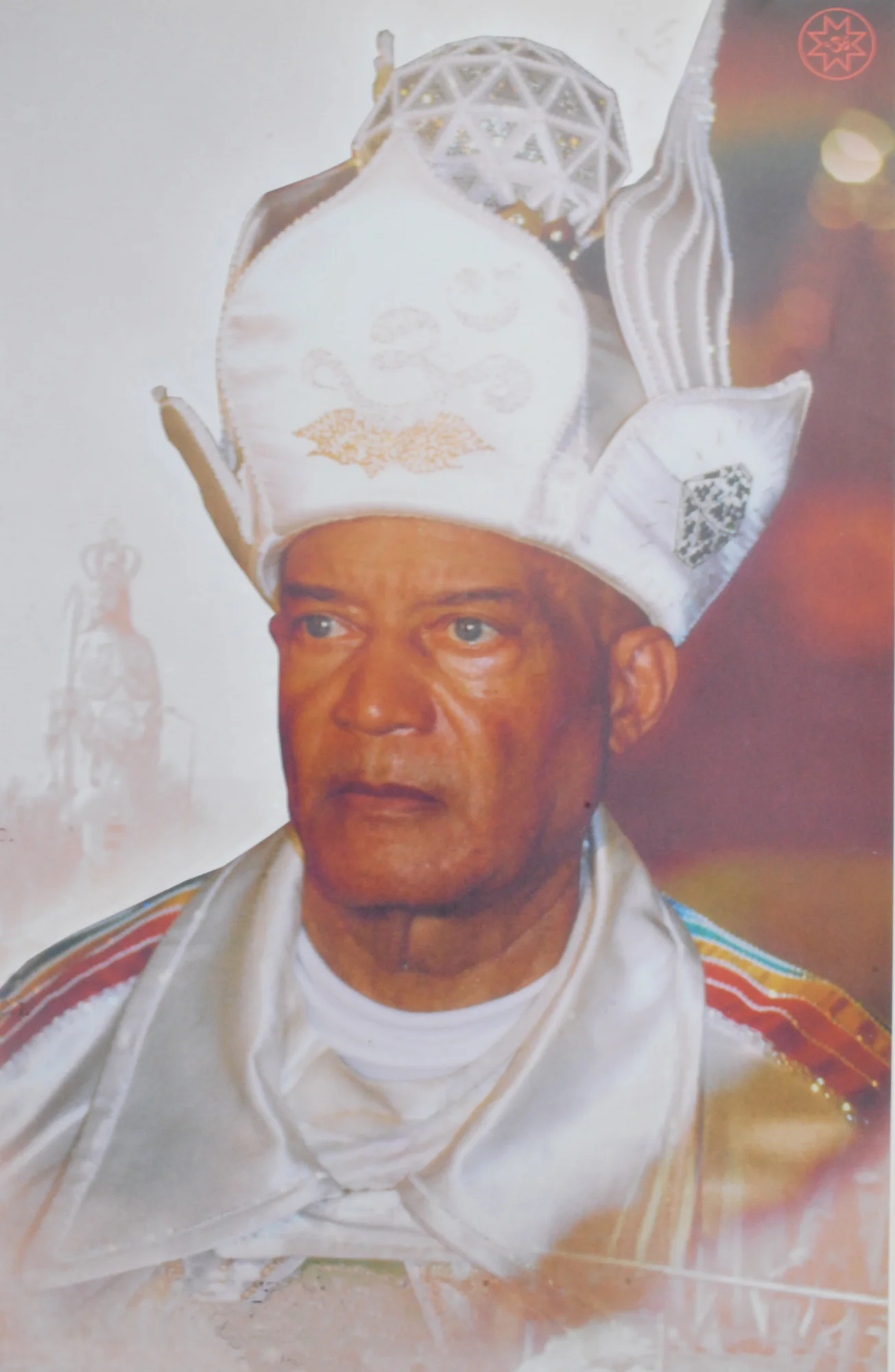
Not a day goes by on our planet without the protection of our environment being the subject of a newspaper article, a specific regulation, a spectacular action or even a conference of specialists. The fate of man is undeniably linked to that of nature: we see it through the consequences of various forms of pollution, food contamination and natural disasters, which unfortunately bring suffering, illness and death. Stressing the osmosis between man and nature, His Holiness Lord HAMSAH MANARAH warns: “If you destroy your living environment, you destroy yourself.”[1] He writes: “Ecology and the protection of the environment are an integral part of Aumist Mysticism, for man can no longer squeeze nature dry and abuse its riches.”[2] In Aumism, learning to respect all the kingdoms of nature is both fundamental and urgent.
This talk will therefore discuss:
- I. Today’s world facing the consequences of contempt for the environment;
- II. The osmosis between man and nature according to Aumist ecology;
- III. Our duty: to respect nature and help it in its evolution.
I. TODAY’S WORLD FACING THE CONSEQUENCES OF CONTEMPT FOR THE ENVIRONMENT
a) The consequences of contempt for nature
Various religions urge us to respect God’s creation and, as such, the kingdoms of nature. The belief that the Divine is present in everything implies respect for the different kingdoms of nature. But the secularisation of our contemporary societies leads people to neglect religious precepts and to contradict the principle of respect for the environment. Moreover, in our materialistic societies, short-term profitability prevails over foreseeing the consequences. This choice is the cause of many imbalances that harm the expression of life.
There is no catastrophism in the few examples that follow, only an undeniable reality: the subsoil is turned into waste storage areas, soils are sterilised by air pollutants or by the pesticides poured onto them in intensive farming, forests are devastated, animals are used in laboratories or abandoned by the roadside. And more generally, human activity is leading to global warming whose consequences are as predictable as they are disastrous: rising sea levels (which can continue for decades after temperatures stop increasing), an overall degradation of ecosystems, and so on. Nature nevertheless seems to react, for example by turning oil drilling sites into mud volcanoes (Sidoarjo, on the island of Java, in 2006) or by devastating crops with swarms of locusts in certain regions of Africa (famine for millions of people in Ethiopia)…
b) This situation challenges our contemporaries
The state of our planet challenges several national and international organisations that work for respect of the environment and of nature. For example, the United Nations is concerned about the state of the planet and runs a programme, UNEP (the United Nations Environment Programme), to protect the environment, thus sharing the concerns expressed by Aumism. “We have a pressing obligation,” we read in the 2007 report, “to ensure that future generations can continue to live on this planet.”
Another example is the Charter for the Environment adopted on 28 February 2005: annexed to the French Constitution, it now places the principles of environmental protection on the same level as the 1789 Declaration of the Rights of Man and of the Citizen. In its first article, it recognises in particular everyone’s right to live in a balanced environment that respects health. But it also imposes duties: its second article states that “everyone is under a duty to participate in preserving and enhancing the environment.” In civil society and among NGOs, let us recall that the 2007 Nobel Peace Prize was awarded to “environmentalists” for their efforts to build up and disseminate greater knowledge about man-made climate change, and to lay the foundations for the measures needed to counteract such change.
“It is too late to be pessimistic,” says Yann Arthus-Bertrand, ecologist and photographer of Earth from Above. “Giving up is a luxury we can no longer afford; we no longer have time simply to talk about the state of the planet and lament it: we must act now.”
This resolve is the only possible way to ensure the survival of the planet.
II. THE OSMOSIS BETWEEN MAN AND NATURE ACCORDING TO AUMIST ECOLOGY
To act in depth, we must change our mentality and our behaviour. We must emerge from the ignorance that has bred contempt for the environment. Lord HAMSAH MANARAH helps us become aware of the interdependence that exists between man and nature.
a) The journey of consciousness through the different kingdoms
Aumism teaches that consciousness evolves slowly through the mineral kingdom, the plant kingdom and the animal kingdom up to the human kingdom, within the Evolutionary Pyramid of the Kingdoms of Nature. This is the “chain of life”[3], which creates an interaction and a de facto solidarity between all living beings.
“Human souls come from the Evolutionary Ladder: before walking on the Earth, they were stones on the path that took on a plant body, then soared on the wings of the bird, before coming back to run on four legs on the earth and slowly straightening up to finally become human.”[4] Man is in a way the “chemosynthesis of all the kingdoms of nature”[5], “the summary of nature”[6]. Human consciousness is the most evolved, at the top of the Evolutionary Pyramid, on the threshold of divinisation. Human beings therefore bear a heavy responsibility: they serve as a model for the kingdoms of nature.
Humanity sets a good example when it moves in the direction of evolution and progress. It sets a bad example when it moves in the direction of involution and the fall.
Humanity sets a bad example to the other kingdoms whenever:
- it provokes wars and divisions;
- driven by the lure of profit, it no longer respects the laws of life;
- having become materialistic and too focused on the growing and immediate satisfaction of its artificial material needs, it no longer respects God present in every human being and in all that lives;
- it no longer protects the other kingdoms;
- it no longer helps minerals, plants and animals to progress through its prayers.
These destructive behaviours provoke a reaction from nature which, imitating human beings, lets itself be drawn down the slope of violence and revenge. This is the cause of many natural disasters and cataclysms. It is therefore urgent to repair the harm that man has done to his environment for his sole profit, and to treat nature with the respect it is due, in order to stop the spiral of revenge:
“If man becomes respectful of nature,” says His Holiness Lord HAMSAH MANARAH, “nature will repay him in kind.”[7]
b) The Law of Evolution
The interdependence between man and nature within the Evolutionary Pyramid of the Kingdoms of Nature goes hand in hand with the Law of Evolution taught in Aumism.
“The Divine is everywhere,” says His Holiness Lord HAMSAH MANARAH, “yet the degrees of its manifestation vary from things to beings, by way of animals.”[8] This is why “in the Golden Age (the Age of peace and solidarity), mentalities must evolve towards a great respect for nature and a deep understanding of the laws of the universe.”[9]
The Law of Evolution is the Law of Life, which requires each kingdom to climb to the next level of the Evolutionary Pyramid.
Every man and every woman must progress towards divinisation, which is the next stage of their evolution. When man strives to divinise himself, the animals in his wake seek to become human, plants to pass into the animal kingdom, and minerals to reach the plant kingdom. In this sense, we understand why Teilhard de Chardin describes man as “not the static centre of the world, as he long believed himself to be, but the axis and arrow of evolution…”[10]
Thus, to respect the Law of Evolution within the Evolutionary Pyramid, we have a duty to help the planet, in all its components, to reach the Golden Age. This is the theme of the third part.
III. OUR DUTY: TO RESPECT NATURE AND HELP IT IN ITS EVOLUTION
Collective action is needed to preserve the planet. But each of us is also personally responsible for the future of the planet and must act on both the material and the spiritual level. Through prayer and action, we contribute to the evolution of the kingdoms and to harmony between all living beings.
a) It is up to us not to harm the different kingdoms of nature
Minerals have a right to respect
“Stones sing, cry out or weep depending on man’s attitude towards them.”[11]
Stones and minerals, through their many uses and virtues, can improve our daily lives. The simple act of not throwing waste on the ground is a mark of respect. It is important not to soil the earth, nor to clutter it with waste, toxic materials or radioactive waste. The overexploitation of gravel quarries in rivers must also be banned. In the case of mineral extraction, the subsoil is devastated by destructive techniques that pollute the environment, such as the use of mercury in gold mines. And what can be said of uranium, which is extracted from the earth in a barely radioactive state and returned to it as waste that remains extremely dangerous for thousands of years? The principle of economy must therefore prevail: the more our everyday actions are marked by economy, the fewer resources we will need to live.
Plants have a right to respect
His Holiness Lord HAMSAH MANARAH reminds us that without plants, life would not be possible on Earth. Plants, so useful to human beings, have a scientifically recognised sensitivity: “we must treat them as friends, not as mere ornaments or guinea pigs. Their evolution, their blossoming and the length of their life depend on the physical and psychic treatment to which they are subjected. Our loving care and our love are necessary to them.”[12] One example is the Swiss Federal Ethics Committee on Non-Human Biotechnology, which published a press release on 14 April 2008 on the question of respect for plants on account of their moral value.
Let us teach children every day to behave well in nature, to take care, for example, not to pick plants needlessly and not to pull up their roots. The plant kingdom brings so many benefits to man that we owe it to ourselves to recognise it as such and to give it the place of honour it deserves in our daily lives. Eating plants grown organically improves the food quality of the plants themselves while reducing the chemical pollution of soils.
Animals have a right to respect
Some people think that animals are incapable of thinking or reflecting. “And yet,” the Lord assures us, “if they could perceive the thoughts of these lower beings, they would no longer doubt for a single moment that they are facing a living being endowed with intelligence and ardently wishing to evolve.”[13]
Rescue dogs and guide dogs for the blind show how much animals can help man in certain difficult situations, and how much they deserve respect. In this respect, let us recall that the Universal Declaration of Animal Rights was solemnly proclaimed in Paris on 15 October 1978, at UNESCO House, and that its article 2 stresses that “All animal life has the right to be respected.” It is very important, both individually and collectively, to banish cruelty towards animals: Aumism recommends, for example, a vegetarian diet. Such a diet protects the animal kingdom, but also the plant kingdom and the planet’s water resources: we should know that producing 1 kg of beef takes 15 tonnes of water and more than 15 kg of soya! Moreover, it spares human beings from absorbing, through meat, the energy of suffering, hatred and revenge felt by animals before they die.
Various religions limit the consumption of meat, subject it to rules or forbid it. Many Buddhists and Hindus, for example, abstain from eating it; Jains, who strictly apply the principle of non-violence towards all that lives, advocate a strictly vegetarian diet. Aumism insists on the consequences of the suffering inflicted on animals: mistreating them, individually and collectively, has serious consequences for humanity. In the light of the Law of Evolution, the animal kingdom must evolve towards the human kingdom: if they are mistreated, animals will therefore keep a painful memory of the suffering inflicted on them and will become human beings filled with a desire for revenge, hatred and violence.
“Wars between men,” says Lord HAMSAH MANARAH, “begin with an open war between man the dictator and the sacrificed animal.”[14]
On the other hand, if they are loved and well cared for, if they become humanised by learning to communicate with us and to behave without violence, animals will become trusting and peaceful human beings capable of solidarity. Respect for all the kingdoms, and for the animal kingdom in particular, therefore has a strong impact on humanity’s path towards social and planetary peace. It is essential to the Golden Age.
b) It is up to us to make our spiritual contribution to the evolution of nature
Aumism does not separate action from prayer. Respect is also expressed through “spiritual action”. “Only the binding force of a Golden Age spirituality and morality will be able to restore the necessary balance and allow the ultimate Reconciliation between man and the Evolutionary Pyramid.”[15]
Praying for nature is a spiritual act of daily life, for example:
- Before meals, it is important to bless the kingdoms that provide our food. Prayer is necessary to foster the evolution of nature: “Each of us must be a redeemer for the kingdoms of nature and share the essence of our prayers of love with the spirits of minerals, plants, animals and other human beings.”[16]
- During walks, Lord HAMSAH MANARAH advises us to bless all the kingdoms of nature “wishing that they become better and evolve towards Wisdom and perfection.”[17] For those who are not believers, thoughts of love take the place of prayers.
Praying by repeating the Sound OM, the Creative Word, accelerates the evolution of all living beings and helps animals to reach the human kingdom. The Sound OM represents “the ark of the covenant between man and nature”[18], the point of balance of the whole of creation. Believers and non-believers can unite around this prayer of Evolution which, beyond religious differences, brings souls back to GOD. Let us note that, since all the kingdoms are linked to one another, when human beings contribute to the evolution of their younger brothers, they also foster their own evolution.
His Holiness Lord HAMSAH MANARAH thus helps us to change our mentalities and our behaviour in order to ensure the survival of the planet: He offers us “The Code of Honour of man towards the Kingdoms of Nature”, in fifteen points, in La Doctrine de l’Aumisme. Our duties are clearly defined there, and it ends as follows: “Man must at last understand that all the kingdoms, human, animal, plant and mineral, within the Earth are part of a Whole, like a branch of the Tree of Life, like a wave of the ocean, like a facet of the Diamond of Creation.”[19]
CONCLUSION
Respect and kindness towards nature are essential to the survival of man.
In the eleventh Law of the Golden Age, known as the law “of the natural contract”[20], Lord HAMSAH MANARAH reminds human beings of their threefold responsibility:
- man prays for the blessings bestowed each day by Mother Nature;
- he refrains from upsetting the balance of nature, otherwise the earth will not fail to tremble beneath his feet;
- he is the guide of the so-called lower kingdoms and sets them an example.
Applying these three principles inevitably leads to mutual respect, to the Great Reconciliation between man and nature that is needed for peace to return to Earth.
******
[1] La Loi d’Évolution des Âmes, p. 278.
[2] La Doctrine de l’Aumisme, p. 198.
[3] La Loi d’Évolution des Âmes, p. 456.
[4] Ibid., p. 273.
[5] Ibid., p. 456.
[6] Le Yoga de la Divinisation, p. 108.
[7] La Loi d’Évolution des Âmes, p. 287.
[8] Yoga et Sagesse, p. 246.
[9] La Doctrine de l’Aumisme, p. 199.
[10] Pierre Teilhard de Chardin, The Phenomenon of Man (Le Phénomène humain).
[11] La Doctrine de l’Aumisme, p. 193.
[12] Ibid., p. 195.
[13] La Révolution du monde des vivants et des morts, p. 24.
[14] La Doctrine de l’Aumisme, p. 196.
[15] La Loi d’Évolution des Âmes, p. 285.
[16] Vers un Âge d’Or d’unité, p. 259.
[17] Le Yoga de l’Amour dans la Force, p. 88.
[18] Vers un Âge d’Or d’unité, p. 258.
[19] La Doctrine de l’Aumisme, p. 207.
[20] La Loi d’Évolution des Âmes, p. 328.